Neighbor News
How Long Can Humans Live For?
The average cell will divide between 40-70 times before cell death.

The oldest documented living person in modern times was Jeanne Louise Calment. She was French and she lived from February 1875 to August 1997. She was 122 years old upon death.
The oldest person to ever live, according to the Hebrew Bible, was Methuselah, who lived before Abraham and allegedly died at the age of 969.
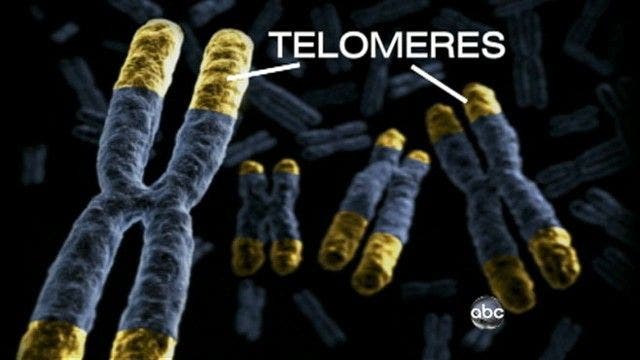
Chromosomes have tails called telomeres. These telomeres have extra DNA base pairs, which are made up of the DNA building blocks called nucleotides. Telomeres are between 8,000 to 15,000 base pairs long. Every time a cell divides, these telomeres shorten by about 25 to 200 base pairs.
Find out what's happening in Ramseyfor free with the latest updates from Patch.
When the telomeres shorten too much, cell division can no longer occur and the cells will die.
The Hayflick Limit is the theory that due to the telomeres shortening through each division, the telomeres will eventually no longer be present on the chromosome. This end stage is known as senescence, at which cells can no longer divide.
Find out what's happening in Ramseyfor free with the latest updates from Patch.
In 1961, American anatomist Leonard Hayflick demonstrated that cultured human fetal cells, will divide between 40 and 60 times, prior to entering a senescence phase. Hayflick's work had contradicted the theory of Nobel laureate Alexis Carrel, which was that normal cells are immortal.
Telomeres can also be lengthened. This can be accomplished through exercise, intermittent fasting and by taking certain supplements. There are a number of these telomere extending supplements on the market. I have been taking a telomere lengthening supplement called Protandim for about six years now. Telomere lengthening requires a reverse transcriptase that adds base pairs to the chromosome, which can in theory bank longevity.
It is interesting that this process of telomere shortening does not take place in most cancer cells. This is due to an enzyme called telomerase. This enzyme maintains telomere length, which results in the telomeres of cancer cells never shortening. This gives these cancer cells an extreme, if not infinite life potential.
Some cancer treatment research in focused on telomerase inhibitors that would prevent the maintaining of the length of the telomeres. This inhibition causes cancer cells to die, just as would any other body cells.
A side note to this research is that telomerase activators might be able to extend the telomeres of healthy cells, thus extending their Hayflick limit and life expectancy.