Health & Fitness
Kids' Sports With the Highest Concussion Rates
Concussions are being taken a lot more seriously today than they were a decade ago.

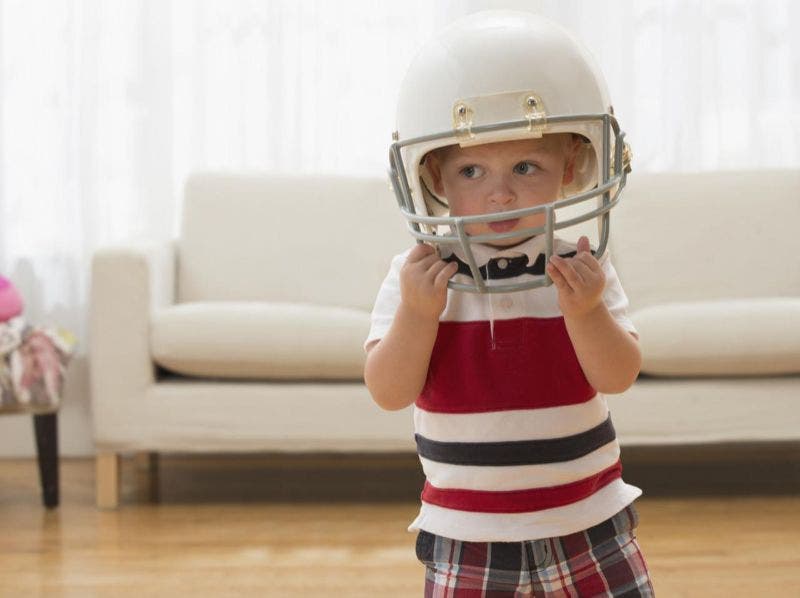
The rates of concussions vary widely across youth sports, with the greatest injury risk in higher-contact sports, such as rugby, hockey and football.
The problem that occurs more so in contact sports, is the sudden acceleration or deceleration of the head. The brain is suspended in the skull and attached at the brainstem. There is a space between the brain and the skull, but when the head suddenly changes velocity, the brain takes a while to catch up to this movement and can strike the inside of the skull, causing a bruise on the brain or a concussion.
According to recent analysis, young athletes experienced an average of no more than one concussion for roughly every 5,000 minutes of participation time in youth sports. That amounts to around one injury for every 83 hours of practice time and competition.
Find out what's happening in Ramseyfor free with the latest updates from Patch.
This is the overall average among youth sports. Some sports have much higher and others have much lower concussion rates.
The study examined the relative concussion risk for some of the most popular youth sports: American football, rugby, hockey, lacrosse, soccer, basketball, baseball, softball, wrestling, field hockey, track, taekwondo, volleyball and cheerleading.
Find out what's happening in Ramseyfor free with the latest updates from Patch.
The concussion rate was about 18 times higher than average for rugby, five times greater for hockey, and roughly double for American football, the study found. In my opinion, I think that the football findings were too low.
Altogether, they reviewed data from 23 previously published studies on concussions in these sports, and then did a pooled analysis of injury rates from 13 of the prior studies.
For each of the sports, they looked at concussion rates based on minutes of athletic exposure (AE), which includes competitions or practices with the potential for injury.
The overall concussion risk across all of the sports included in the analysis was 0.23 injuries per 1,000 AEs.
By comparison, the concussion risk per 1,000 AEs for rugby was 4.18, while it was 1.2 for hockey and 0.53 for American football.
At the lower end of the spectrum in terms of injury potential, the concussion risk per 1,000 AEs for volleyball was 0.03, while it was 0.06 for baseball and 0.07 for cheerleading.
Concussions can occur in any sport. The faster and stronger the athletes become, especially in contact sports, the greater the risks become. When you double the velocity of impact, you quadruple the kinetic energy of the impact. When you triple the velocity of impact, the kinetic energy increases by a factor of 9!
Rules have changed and will continue to change to try to protect the athletes. Protective equipment has also improved. In my opinion, strengthening athlete’s neck muscles is an important factor in concussion prevention. The stronger the neck is, the less the instantaneous change in velocity will occur to the head after an impact.
I believe that the additional research that is now being done in this field, will shed more light on the seriousness of head trauma. The fact still remains that concussions are to a certain degree unavoidable during athletic competitions.
If parents are concerned about this problem, they should be proactive, in order to ensure that teams and leagues in which their children compete in, promote safety, as well as follow accepted concussion protocols.