Neighbor News
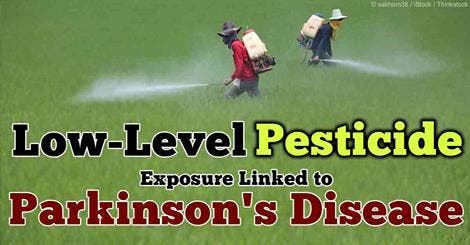
Low-Level Pesticide Exposure Linked to Parkinson's Disease
Parkinson's disease is a neurological disorder in the region of dopamine-producing cells within your brain.

Parkinson’s disease is a neurological disorder in which neurons in a region of dopamine-producing cells within your brain, known as the substantia nigra, which are required for normal movement, begin to die.
As the disease progresses symptoms include increasingly slow motor function, tremor when at rest, muscle rigidity, and abnormalities in your walk. Up to one million Americans currently have Parkinson’s disease and 60,000 more are diagnosed each year.
The risk of Parkinson’s disease increases with exposure to certain environmental toxins. Pesticides, herbicides and fungicides contain toxins that may cause disruptions or damage to the nervous system, including the brain.
Find out what's happening in Ramseyfor free with the latest updates from Patch.
Commonly Used Pesticides Linked to Parkinson’s, Even at Low Levels:
Last year, UCLA researchers linked a fungicide known as benomyl to Parkinson’s disease. Benomyl was banned by the US Environmental Protection Agency (EPA) after it was determined to be a potential carcinogen.
Find out what's happening in Ramseyfor free with the latest updates from Patch.
Certain people appear to be especially sensitive to the effects of pesticides. The study revealed that people with a common genetic variant, had a two to six times greater risk of developing Parkinson’s disease when exposed to pesticides compared to those without the genetic variant.
Unfortunately, unless you’ve been specifically tested you’ll have no way of knowing whether you have this particular genetic variant. And even those who do have it will have a hard time completely avoiding pesticide exposure, since their use is so widespread.
Can We Still Say Parkinson’s Disease Has No Identifiable Cause?
Parkinson’s disease is still classified as idiopathic, meaning it has no identifiable cause. But one reason it is likely on the rise is due to many environmental toxins that now bombard us on a daily basis. Pesticide exposure is becoming an undeniable risk factor.
Some studies have demonstrated that prolonged occupational exposure to certain chemicals is associated with an elevated risk of Parkinson’s disease. These include the insecticides permethrin and beta-hexachlorocyclohexane (beta-HCH), the herbicides paraquat and 2,4-dichlorophenoxyacetic acid and the fungicide maneb. In 2009, the US Department of Veterans Affairs added Parkinson’s to a list of diseases possibly associated with exposure to Agent Orange.”
Separate research has further revealed that ambient exposure to organophosphate pesticides also increased the risk of developing Parkinson’s disease. Rotenone and paraquat are two additional pesticides linked to an increased risk of Parkinson’s disease and both are lipophilic, meaning they resist breaking down in water and accumulate in your fat. Both are also known to cross your blood-brain barrier.
Dousing our crops with large amounts of glyphosate, which is the active ingredient in Monsanto’s broad-spectrum herbicide Roundup, may be another factor in the rising rates of Parkinson’s disease we’re now seeing. These residues are found in all virtually all food containing genetically modified ingredients.
What Can You Do?
Avoiding pesticide exposure, around your home, in your community and in the food that you eat.
Exposure to industrial solvents, including TCE, a common degreasing agent and dry-cleaning chemical, has also been linked to Parkinson’s disease.
Another important and often-overlooked environmental risk factor is “silver” amalgam dental fillings, which actually are more than half mercury. Mercury becomes a biochemical train wreck in your body, causing your cell membranes to leak, and inhibits key enzymes your body needs for energy production and removal of toxins. Mercury toxicity can lead to major inflammation and chronic illnesses such as Parkinson’s disease.
For More Information: