Neighbor News
Salt & High Blood Pressure
Just as there are healthy and unhealthy fats, there are healthy and unhealthy types of salt. But salt is salt, right? Wrong!

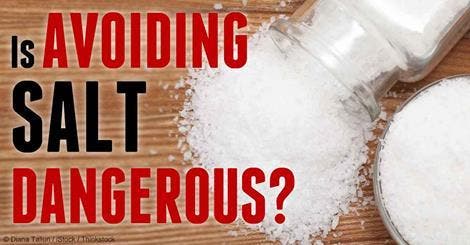
The media has been on their low sodium kick for years now. An important thing to realize that just as there are healthy and unhealthy fats, there are healthy and unhealthy types of salt. But salt is salt, right? Wrong!
Salt provides two elements, sodium and chloride, both of which are essential for life. You cannot make these elements on your own, so you must get them from your diet. Salt is so vital to life, that it was traded ounce for ounce for gold during biblical times.
The good salt is natural, unprocessed salt - One choice is unprocessed sea salt, but the best choice is unprocessed Himalayan salt, which is from the ancient oceans of the earth. Himalayan salt contains about 84% sodium chloride. The remaining 16% consists of 84 naturally-occurring trace minerals, including silicon, phosphorus, and vanadium.
Find out what's happening in Ramseyfor free with the latest updates from Patch.
The not so good salt is processed (table) salt, which contains 97.5% sodium chloride. The rest consists of man-made chemicals, such as moisture absorbents and flow agents. Ingredients can include ferrocyanide and aluminosilicate. Besides the basic differences in nutritional content, the processing involves drying the salt above 1,200 degrees Fahrenheit. This heating detrimentally alters the chemical structure of the salt.
According to the research presented at last year’s American Heart Association meeting, excessive salt consumption contributed to 2.3 million heart-related deaths worldwide in 2010. It is unfortunate that most Americans and other Westerners, get the majority of their sodium from commercially available table salt and processed foods, not from natural unprocessed salt.
Find out what's happening in Ramseyfor free with the latest updates from Patch.
Current dietary guidelines in the US recommend limiting your salt intake to anywhere from 1.5 to 2.4 grams of sodium per day, depending on which organization you ask. The American Heart Association suggests a 1.5 gram limit. One teaspoon of regular table salt contains about 2.3 grams of sodium. An average American consumes roughly four grams of sodium per day, which has long been thought to be too much for heart health.
Too little salt in your diet may be just as hazardous as too much salt. The balance between sodium and potassium is important in determining if your salt consumption is harmful or helpful.
A four-year long observational study including more than 100,000 people in 17 countries, found that while higher sodium levels correlate with an increased risk for high blood pressure, potassium helped to offset sodium’s adverse effects.
The results were published in two articles: “Association of Urinary Sodium and Potassium Excretion with Blood Pressure” and “Urinary Sodium and Potassium Excretion, Mortality and Cardiovascular Events”.
In this study, those with the lowest risk for heart problems or death from any cause were consuming three to six grams of sodium a day, which is far more than US daily recommended limits.
It was concluded that more than six grams of sodium a day raises the risk for heart disease, but so did levels lower than three grams per day. There is a relationship between sodium and blood pressure, which is not a linear one.
The authors propose an alternative approach. Instead of recommending aggressive sodium reduction across the board, it might be wiser to recommend high-quality diets rich in potassium instead. This, they surmise, might achieve greater public health benefits, including blood-pressure reduction.
As noted by one of the researchers, Dr. Martin O’Donnell, of McMaster University, “Potatoes, bananas, avocados, leafy greens, nuts, apricots, salmon, and mushrooms are high in potassium and it’s easier for people to add things to their diet than to take away something like salt.”
According to a 1985 article in The New England Journal of Medicine, titled “Paleolithic Nutrition”, our ancient ancestors got about 11 grams of potassium a day and about 700 mg of sodium. This equates to nearly 16 times more potassium than sodium. Compare that to the Standard American Diet where daily potassium consumption averages about 2,500 mg (the RDA is 4,700 mg/day), along with 3,600 mg of sodium.
According to a 2011 federal study into sodium and potassium intake, those at greatest risk of cardiovascular disease were those who got a combination of too much sodium along with too little potassium. The research, published in the Archives of Internal Medicine. Those who ate a lot of salt and very little potassium were more than twice as likely to die from a heart attack as those who ate about equal amounts of both nutrients.
Some rich sources in potassium are; Lima beans (955 mg/cup), winter squash (896 mg/cup), cooked spinach (839 mg/cup) and avocado (500 mg per medium). Other potassium-rich fruits and vegetables include; papayas, prunes, cantaloupe, bananas, broccoli, Brussels sprouts, asparagus and pumpkin.