Neighbor News
Tips To Avoid Fire Retardants
The Environmental Working Group (EWG), has come up with some major tips to avoid toxic fire retardants.

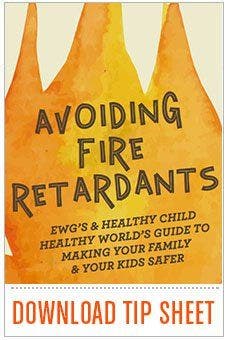
Chemical fire retardants are all around us. They are extremely common in consumer products, such as furniture, electronics, appliances and even in baby products. Fire retardants are required by law in many jurisdictions. When they are required by law, it is often the situation that the fire retardant that is used, isn't even disclosed to the consumer on the product packaging information.
One class of fire retardants are called PBDEs (for polybrominated diphenyl ethers). This class has been taken off the market due to toxicity concerns. PBDEs have been replaced with compounds such as TDCIPP (also known as “chlorinated tris”) and chemical mixtures such as Firemaster® 550. But this change is a hollow victory, since these other fire retardant chemicals are also linked to toxicity concerns, such as cancer and endocrine disruption.
Until non-toxic fire retardants can be formulated, or all toxic fire retardants are removed from consumer products, the EWG suggests that you avoid contact with these toxic chemicals as best as you can.
Find out what's happening in Ramseyfor free with the latest updates from Patch.
If you live in modern society, it is virtually impossible to avoid them all entirely, but fortunately you now have more fire retardant-free choices!
Why Should You Reduce Your Exposure To Fire Retardants?
Find out what's happening in Ramseyfor free with the latest updates from Patch.
Scientists have found that exposure to toxic fire retardant chemicals, at critical points in development, can damage the reproductive system and cause deficits in motor skills, learning, memory and behavior. Some are also carcinogenic.
Fire retardants can come off of everyday items, such as furniture, computers, televisions and other electronics. These items are spread through the home and could expose children to amounts that exceed the Environmental Protection Agency’s health risk guidelines. EWG’s tests found much higher levels of both PBDEs and TDCIPP in young children than in their mothers. This is probably because children frequently put their hands, toys and other objects in their mouths. Fire retardants migrate out of products and can also contaminate household dust, which accumulates on the floor where children play.
As long as toxic fire retardants are still in consumer products, people and especially children, will continue to be needlessly exposed.
Which Household products Contain Toxic Fire Retardants?
Fire retardants are commonly added to furniture containing polyurethane foam, including couches and upholstered chairs, futons and carpet padding. They also turn up in children’s products such as car seats, changing table pads, portable crib mattresses, nap mats and nursing pillows.
Some TVs, remotes, cell phones and other electronics, as well as building materials, also contain chemical retardants, but these sources are much more difficult to avoid.
Foam products made before 2005 may be the most hazardous, since they can contained PBDEs, which were taken off the U.S. market. The EWG recommends buying products made without fire retardants whenever possible. Unfortunately, the only way to check on this is with the manufacturer and that assumes that they are telling the truth.
You Can Reduce Your Family's In Home Exposure:
Fire retardants are nearly impossible to avoid completely, but if you take these simple precautions from the EWG, you can minimize your exposure:
- Do your homework before you buy baby products. Although many baby products have been exempted from fire safety regulations that prompted companies to add chemical retardants, some manufacturers still use them. Find out before you buy and choose products that don’t contain any fire retardants.
- If you’re buying a new couch, choose one made without fire retardants. New regulations make it much easier for furniture makers to market products that have not been saturated with fire retardants, but there’s no easy way to tell which is which. Contact the manufacturer to ask if its furniture contains these chemicals.
- Planning to reupholster your couch? Replace the foam, too. If you’re planning to reupholster your couch, consider replacing the old foam. It likely contains fire retardants. Ask your upholstery shop to find retardant-free foam.
- Inspect foam cushioning for damage. Make sure cushion covers are intact since exposed foam can allow fire retardant chemicals to escape more quickly. Items such as car seats and mattress pads should always be completely encased in protective fabric.
- Use a vacuum cleaner fitted with a HEPA filter. These vacuums are more efficient at trapping small particles and will likely remove more contaminants and allergens from your home. High efficiency "HEPA-filter" air cleaners may also reduce contaminants bound to small particles.
- Be careful removing old carpeting. The padding is typically made of scrap foam that contains fire retardants. Old carpet padding can break down by the time it’s exposed for replacement. Isolate the work area from the rest of your home.
What About Pajamas?
Some parents worry that fire-retardant pajamas will expose their children to these chemicals. To The EWGs knowledge, children’s pajamas are not currently being treated with chemical fire retardants. Still, as a precaution, you might want to choose pajamas made from natural fibers that are inherently fire resistant. Also, use precautions to keep children away from matches, candles and cigarettes.