Health & Fitness
Your Workout Should Change After 40
As you age, it is important to work on balance, flexibility, endurance and strength.

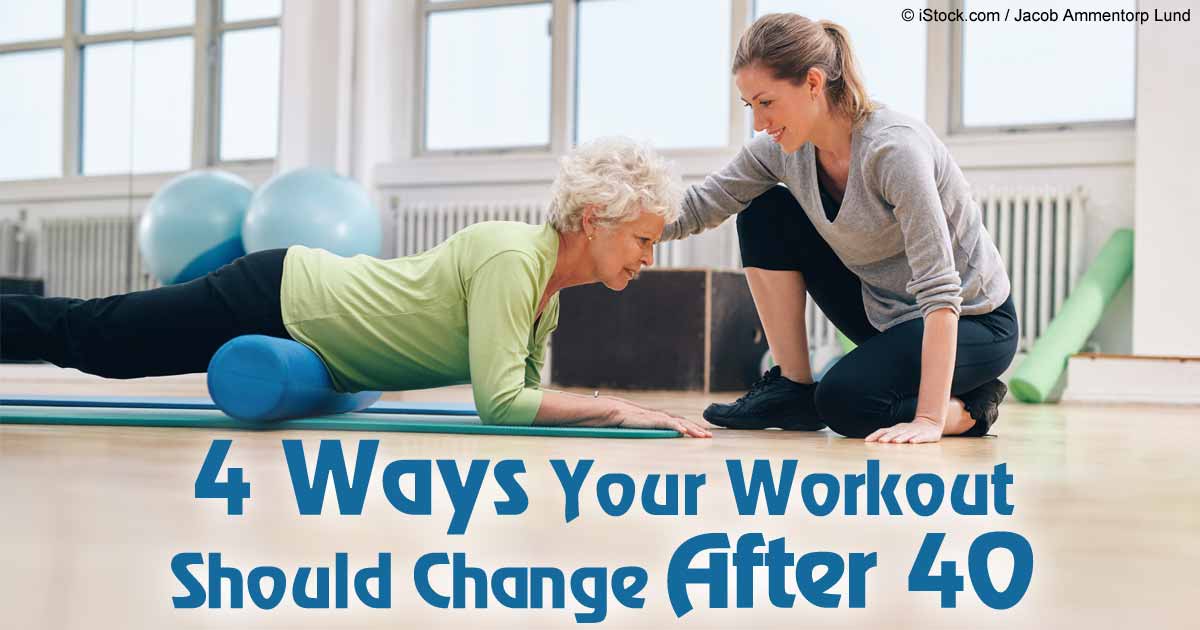
There are many significant benefits to exercise. Getting fit and staying fit at any age is a plus. But, when you are younger, your body recuperates faster than when you are older. There are other changes that also occur as you age. It therefore makes sense that you modify your workouts accordingly.
What Happens After 40?
From the time you are born until you reach age 30 your muscles continue to grow larger and stronger. Starting around the age of 30, you begin to lose muscle mass, up to 3 to 5% each decade, if you are not active. The medical term for this is sarcopenia with aging.
Find out what's happening in Ramseyfor free with the latest updates from Patch.
As you age, it is important to work on balance, flexibility, endurance and strength. The core is vital. Core strength is as important as is not carrying excessive weight around your core.
Even if you are active, you continue to lose muscle mass, but at a much slower rate. Your reflexes and coordination can also suffer from the biological changes associated with aging. You may have noticed that your body doesn’t respond the way it used to. Changes in body weight and bone loss may also affect your height. People typically lose almost ½ inch in height every 10 years after age 40.
Find out what's happening in Ramseyfor free with the latest updates from Patch.
Use It or Lose It:
The old adage, “use it or lose it,” is true when it comes to your physical abilities. Inactivity results in muscle loss as well as an increase in body fat. It is a misconception that muscle turns to fat, although that may be what appears to be happening. This may not result in a significant overall weight gain, but the percentage of lean muscle mass decreases, as the percentage of body fat increases. Although your body weight may increase only slightly, your frame may appear much larger because fat takes up 18% more room on your body than muscle does.
Fortunately, it’s never too late to start exercising and taking care of your muscles.
Start With Flexibility and Balance:
Since the aging population can suffer more injuries from the result of falls, stretching and balance training can significantly cut down on these types of injuries.
Foam rolling not only helps improve your flexibility but also helps to reduce muscle tissue and connective tissue of adhesions. Foam rollers are relatively inexpensive and can be purchased online or at your local department store or sporting goods store.
Dynamic stretching is a much safer method and achieves better results than static stretching. Static stretching can actually damage your muscles and tendons, which may be why studies show it worsens muscle performance, particularly when the stretch is held for 60 seconds or more.
Static stretching involves taking a muscle to full length and holding for 15 to 60 seconds, such as touching your toes. Dynamic stretching involves movement, such as walking lunges, squats or arm circles, to accomplish flexibility of the muscle groups. The benefits of dynamic stretching include more power, less injury, better coordination and balance and efficient neuromuscular activation. This means that dynamic stretching will help address both your need for improved flexibility and balance.
A simple daily routine would be to incorporate dynamic stretching with foam rolling. It is also beneficial to practice standing on one foot and then the other, every other day. You should notice improvements in your balance over even a short amount of time.
Modify Your Strength Training:
As you age, you need to build functional strength . The idea behind building functional strength is to improve your abilities using groups of muscles you would normally use in everyday life.
For example, working the quadriceps, without improving the strength of the hamstrings, may result in not being able to climb stairs efficiently.
Your ability to perform your activities of daily living is important, such as walking, climbing stairs, getting up and down from chairs, lifting, pushing, bending, pulling, twisting and turning.
You can accomplish these types of activities by swimming, using free weights, medicine balls and kettle bells, all of which work your body through multiple planes using multiple groups of muscles.
If you are sedentary, you should consult a physician prior to starting any exercise program.