Corrections appended.
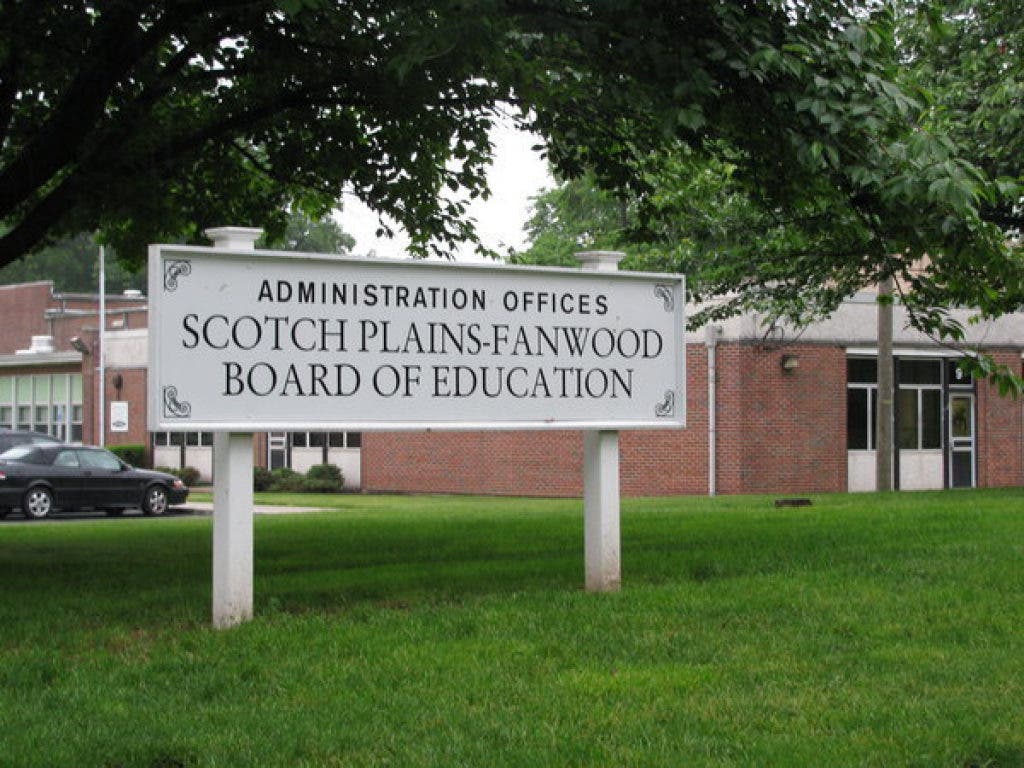
The seven candidates for the Scotch Plains-Fanwood Board of Education stated their cases Monday at the board’s “Candidates Night.” Scotch Plains residents Victor DeVizio, Douglas Layne, Melanie Root and incumbent Warren McFall are seeking election to two open seats. Fanwood residents Jeanne Cleary, Michael Lewis and Maggie Savoca are vying for one open seat.
PTA Council president Gina Giacona moderated the debate. It consisted of opening statements and three questions posed by Giacona, followed by five questions from the public and closing statements.
Find out what's happening in Scotch Plains-Fanwoodfor free with the latest updates from Patch.
The election takes place Wednesday, April 27, from 2 to 9 p.m. For video interviews of the candidates, .
Opening Statements
Find out what's happening in Scotch Plains-Fanwoodfor free with the latest updates from Patch.
The three Fanwood candidates spoke first, leading off with Jeanne Cleary. She pointed to the 15 years she and her husband have lived in the borough and her volunteerism in the district and around town. “For the last several years, I have been involved with the PTA and was PTA President at McGinn School for two years,” she said. “I am currently completing a year as an adviser as past president. The last two years I have also served on the district legislative team. Outside of the PTA I have been involved in the church community as well.”
Cleary was followed by Fanwood candidate Michael Lewis. The father of a daughter who attends Terrill Middle School, he praised both the district’s teachers and current board members, but added that he could bring “fresh eyes” to the board.
“Some items, such as the soccer field at the high school, have impacted the budget and operating costs will be unrelenting,” he said. “Our infrastructure will need continuing maintenance and the teacher's contracts will be coming up in about another year or so. Funding education based solely on our present taxes is unfair and how the state allocates the money is unfair. Much of this is beyond the control of any board but not beyond the control of the voters in November. We do need to spend what money we have as carefully as possible on technology, teachers, shared administration and rationalization. I am running because if we are to have any chance at all, we will need to establish priorities, distinguish between needs and wants, be able to say no, and we will have to be able to lobby Trenton and expect more than excuses from them.”
Maggie Sovoca, the mother of three sons in the Scotch Plains-Fanwood school district, also pointed to the apparent relationship between high property taxes and state funding of public schools.
“In the last decade the average New Jersey property tax bill has raised by 70 percent,” she said. “For every dollar our community sends to Trenton, we get about two cents back. Parents and other taxpayers must get involved so our children are valued equitably by the state.”
For the Scotch Plains candidates, two-term incumbent Warren McFall was the first to speak. He highlighted both his experience on the board and the 46 years he has lived in Scotch Plains and Fanwood, saying simply, “I know our community, and I know our schools.” He added that, as a board member, “I have been chair of the policy and facility committees.”
He also pointed to his educational and professional background. “I am a graduate of Lehigh University with a BS in electrical engineering and worked as an engineer with AT&T and Lucent/Bell labs…. I want to continue serving on the Board of Education because I was to ensure that our students receive the best possible education.”
Victor DeVizio opened by describing his and his wife’s extensive volunteerism in Scotch Plains and Fanwood. He went on to state that, if elected, he would “follow six main points: The first is that educational excellence is the first and only priority of this board. Second, I believe that any fees and things of the like that raise property taxes for citizens is unfair and should not be used. Utilizing worthwhile programs should be preserved and should be the last choice in making needed reductions. Number four, the tax burden on our residents is too high. It has risen way too rapidly in the years I have lived in Scotch Plains. I think we have set a bad precedent by raising taxes to fulfill too many wants. I believe in zero-based budgeting and prioritized spending. Lastly, I believe in open, honest, and respectful communication where no one is threatened or feels threatened about voicing their views.”
Melanie Root, the mother of three children in the district, spoke next. A former “executive, director and strategic planner at Dun and Bradstreet,” and the current co-owner of a home-inspection business with her husband, she argued that, if elected, she could “apply my business experience to this position, as well as my experience as a mother and from my community service…. I coach, participate in Cub Scouts, help with variety shows at the schools, and run the science fair among other things. I am looking to bring my community service to a different level.”
Douglas Layne was the last candidate to speak. The father of two children who graduated from or currently attend district schools, Layne opened by discussing his volunteer experience. “I have been volunteering most of the time that I have been in this town,” he said. “I've had 12 very pleasant years as the Recreation Commissioner, I've coached in many leagues, started a Scotch Plains basketball league and helped found a middle school initiative for students of color called Prepare to Excel.”
Layne added that he remains “very active” in his church, and works as a real estate taxation consultant at Tener Consulting Services, which is based in New York City.
Moderator’s Question One: What is your vision for education in the community?
Candidates answered Giacona’s question in the same order they delivered their opening statements. Cleary, introducing a theme that would be revisited by the candidates throughout the night, said she would aim to provide students greater access to digital information sources, such as online databases, textbooks and similar resources. She also said she would seek to ensure that district curricula are uniformly applied throughout the schools.
Lewis said simply that he would remain dedicated to continuing the district’s tradition of providing “sound education” to every Scotch Plains-Fanwood student.
Savoca echoed Lewis’ pledge, adding that as teachers, administrators and board members work to ensure that students receive the best possible education, students and parents must also appreciate what is being provided through the combined efforts of the community.
DeVizio turned to financial matters, stating that his vision included a district that would “run more smoothly” when it comes to the budget. He added that the district can become an educational and financial leader for neighboring school systems.
Moderator’s Question Two: If you had the choice of enacting one change in the district, regardless of cost, what would it be?
Lewis was the first to answer, stating that he would like students to learn more about American government. He added that he would also choose to more fully implement digital technology into district curricula and operations.
McFall spoke next. He reiterated Lewis’ argument regarding technology, and added that he would choose to extend kindergarten classes from a half-day to a full-day schedule.
Cleary said that she would seek to decrease the district’s reliance on textbooks by turning to digital resources – a strategy she argued would ultimately reduce spending. She said she would also like to provide students remote access to classrooms around the world, such as through web cameras.
“Our children are growing up in a very different world in regards to multimedia, and they know it better than we do mostly,” Cleary said. “And if we are going to give them the twenty-first century education that they deserve, we need to step away from our twentieth century plan and step into that direction with technology.”
Layne said that he would use his experience with “initiative programs” – such as Prepare to Excel – to create a new one for students, one specifically geared toward motivating them to succeed.
Root said she would seek to make curricula and lessons more personalized, with certain programs directed at particular individuals. She said that providing greater support for teachers would help accomplish these goals.
Moderator’s Question Three: What do you see as the board’s role/responsibility?
Clearly, who spoke first, argued that the board members have an obligation remain up to date on both educational and legislative issues “We have to conduct educational research to ensure that we can have intelligent discussions with our professionals and teachers to help them implement their ideas,” she said.
Cleary added that board members should also “look for alternative sources of revenue,” and pointed to an art auction organized by the Friends of the Educational Enrichment Foundation as an example.
Lewis argued that the board should “be providing oversight over the administration and creating communication between the board, the administration and the public. It is very important for the public to vote for the members that will get their needs taken care of. So in that way, the public has control over the situation, as well.”
Savoca stated that the board’s role is to “oversee the budget, approve curriculum, evaluate administration, represent the public during contract negotiations, and serve as means of communication between the community and the school system.”
McFall’s answer was brief. “Our role is to set policy, provide a high quality education to the students, prepare students for college and to contribute to society,” he said.
DeVizio said that the board is tasked with providing students the best “possible education,” while also ensuring that the board and district administrators serve the taxpayers’ interests, such as by staffing schools with “courageous and innovative individuals who can motivate students,” and creating a system to effectively evaluate educators.
Layne said that the board “has to prove that they believe every year they can do a better job than the last year. Set clear expectations, define targets, and define goals. Hold the system accountable for success or lack of success. Create conditions for the administration and educators to be successful.”
Root said she agreed with the candidates’ arguments, adding, “I also think that making the school system better increases property value for people that would like to move here.”
Public Question One: If you could not vote for yourself, whom would you vote for?
Each candidate answered this question, but spoke mostly in general terms. Rather than selecting any one person, the candidates instead took the opportunity to praise everyone there. Lewis, however, added wryly that he would still vote for himself – an answer that produced laughter among the candidates and attendees.
Public Question Two: The next person who came to the microphone offered commentary regarding educators’ salaries, rather than asking a question. When Giacona instructed the person to yield the microphone if she did not plan to ask a question, the person concluded her remarks by stating that salaries constitute the vast majority the district’s budget, and asked simply, “What do you think?"
Lewis answered first. He acknowledged that the system that is used to fund school budgets is flawed, and that it would have to be renegotiated at some point. However, in a statement that was subsequently echoed by the other candidates, he added that one of the board’s primary goals is to also maintain a strong working relationship with district educators.
Root said that the board should partner with district staff to analyze how other towns draw-up their budgets and to see where and whether the Scotch Plains-Fanwood district can make improvements.
DeVizio, offering a refrain that was repeated throughout the evening, said, “I think that every piece of spending that we have in this district is fair game when making reductions.”
Public Question Three: How do the candidates feel about Governor Christie's continued demonization of the NJEA?
Of the New Jersey Education Association, which is the state’s teachers’ union, Lewis said, “Personally I have a problem when the NJEA has approximately $7 million dollars to spend on ad campaigns and lobbying when I think the second-largest lobbyist in Trenton last year had about $700,000,” Lewis said.
McFall, however, characterized Christie’s rhetoric as “unfortunate,” and said that he hopes it ceases soon.
DeVizio said that he did not feel it was appropriate to comment on the thoughts of others.
Root argued that the press distorted the issue, stating, "I don't like the media."
Public Question Four: Do you think that it is fair that charter schools don't receive any public oversight but are the beneficiaries of public funds?
DeVizio said that charter schools provide a service to the community. “They are not taking money from the public” DeVizio said. “They are taking money from taxpayers that is being used to educate our children. If they provide a better product, then so be it.”
Root agreed, arguing that charter schools fill needs that public schools cannot meet. She said that charter schools do not directly compete with public schools.
Layne argued that it is up to a town's school district to accept the challenge knowing that there is somewhere else that students can go. By accepting that challenge, Layne said, public school districts will commit to providing a better product and creating an academic environment that allows the children to succeed.
Cleary and Sovoca both stated that they do not believe this district is in danger of having a charter school open.
Public Question Five: Will all of you actively support this year's budget?
The candidates said they will vote to approve the budget. DeVizio, however, expressed concern that expenses are continuing to rise.
Public Question Seven: What will you use to evaluate the situation going into the next round of salary negotiations?
Root said she would take student and teacher performance into account, but would also turn to neighboring districts for guidance on how to approach contract negotiations.
DeVizio also stated that he would examine student performance.
Lewis, however, offered a different opinion. He argued that it would not be acceptable to make students’ performance a defining factor in determining teachers’ salaries.
Public Question Eight: Is there a way we can know the negotiation table with teachers? We see in the papers that they are disagreeing on terms and they aren't reaching an agreement. Is there a way that the public can get in on how negotiations are progressing?
DeVizio said that he felt it is up to voters to select the person they think would do the best in a given situation.
Root deferred, saying she was not sure what could be disclosed and what must to be kept from the public.
Lewis, meanwhile, cited a state law that prevents contracts from being negotiated in public.
Closing Statements
The candidates offered their concluding statements in the opposite order from their opening remarks. Layne, who spoke first, kept his conclusion brief. “I think that the discussion has been very fruitful,” he said. “I am committed to excellence, innovation, and equity.”
DeVizio used his closing statement to call for further budget reductions. “If you can spend less on something, then you have more money to spend on something else,” he said.
McFall pointed to his experience serving on the board, and his role in upgrading district facilities, such as the construction of the turf field at the high school and the installation of solar panels on the roof of Terrill Middle School. “I have the knowledge and the commitment to be able to serve on this board,” he said.
Root pledged to “work as hard as I can to make the schools better” to benefit her three children in the district, “and to benefit the community that I chose prior to even having a family.”
Cleary emphasized her participation on the PTA Council, her frequent attendance of board meetings. “I have gotten to know how these decisions are made, and I have gotten to know how things work,” she said. “I have also educated myself on the changes on the horizon."
Savoca kept her remarks short. “Now that you've heard my opinions on some of the issues facing our district and you think I would be best to serve you in this district, then I ask for your vote in the election,” she said.
Lewis was the final candidate to speak. “All of us have a vested interest in our children and their education,” he said. “Finding the right balance is difficult. I personally think that our budget and priorities are more balanced than in years past, and we have to continued to work hard and explore any direction to be able to do it. If you agree then I ask for your support. Regardless of who you choose, it is important that you participate.”
The school election takes place Wednesday, April 27, from 2 to 9 p.m. The district’s budget will also be on the ballot.
This article has been amended to reflect the following corrections made Friday, April 15, 2011:
Due to an editorial editor, a previous version of this article incorrectly described the format of the debate. Originally, it was stated that the debate consisted of one question posed by moderator Gina Giacona, and seven asked by members of the public. Instead, three questions were presented by Giacona, and five were asked by debate attendees.
In addition, the previous version of this story omitted the third moderator's question, which was, "What do you see as the board's role/responsibility?" Patch regrets these errors.