Community Corner
Summer Scorch
Horticulturist Janet Dillon discusses leaf discoloration during the summer, and how to properly irrigate trees year-round.


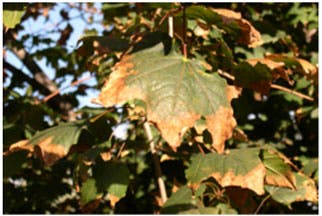


Many lawns and sidewalks in Scotch Plains look as if fall has arrived early. Yellow and brown leaves litter the ground. Limp, wilted leaves hang from birches. Tan, crispy edges on euonymus and willow trees mar the lush summer beauty. Trees planted in the past two years have nearly naked branches and the ground under them needs raking. Even evergreens have needle-ends turning light tan or pinkish. What is going on?
Heat and insufficient rain are to blame. Moisture transpires out of the leaves faster than the roots can absorb water. The weather has remained hot, and the region has not received rain adequate for irrigation. Unless regular deep-watering practices are being applied, the trees are "stressed."
When a tree is unable to take-up adequate water, the leaf tissue that is farthest away from the major veins will dehydrate first. "Leaf scorch" is one of the common defenses of a tree to maintain its very life. It is similar to how human bodies will sacrifice blood supply to our extremities in order to maintain vital organ health during trauma.
Find out what's happening in Scotch Plains-Fanwoodfor free with the latest updates from Patch.
Once the leaf tissue is damaged, it cannot be cured, but gardeners and arborists can promote recovery. First, stop fertilizing. Promoting leaf growth at this time of year will only produce weak, vulnerable growth that is almost sure to suffer winter damage. Begin a deep, infrequent watering regime (see "Yes, Even When It Rains") and stick to it. Allow the soil to dry out between watering. Resist the urge to water too often. Wet soil can prevent the roots from receiving enough oxygen. Keep to a twice-a-week routine of slow, soaking watering. Continue to water once a week during the fall, and reduce the routine to once-a-month during the winter, but only when there is no snow cover. Adequate moisture year-round will prevent the root not only from suffering the dehydration causes summer leaf scorch, but also from dying.
Don't give up on your damaged trees. Chances are good that they will recover completely and be healthy and vigorous next year. Get those hoses out, and keep them trickling. Place gator bags around newly planted trees. Circle the trunks of susceptible trees with soaker and drip hoses. Purchase inexpensive timers and water regularly year round. Scotch Plains and Fanwood's trees can be beautiful again.
Find out what's happening in Scotch Plains-Fanwoodfor free with the latest updates from Patch.
Editor's note: Although the New Jersey Department of Environmental Protection urged residents July 6 to voluntarily conserve water during the heat wave that took place in early July, there remain no drought or water use restrictions at this time.