Crime & Safety
Hospitals That Treated Man With Deadly Infectious Disease From West Africa Identified
Two New Jersey hospitals have been identified as the facilities that treated a man who died this week of a Lassa fever.


Two New Jersey hospitals have been identified as the facilities that treated a man who died this week of an infectious disease from West Africa - and one released the man on May 18 without identifying his illness.
The hospital, St. Barnabas Medical Center in Livingston, said in a statement that the 55-year-old Essex County man came to the emergency room and was treated and released, according to News12.
He returned three days later with a sore throat, fever and tiredness, and was later transferred to University Hospital in Newark where he died Monday after being diagnosed with Lassa fever, according to the report.
Find out what's happening in South Brunswickfor free with the latest updates from Patch.
St. Barnabas said the man did not initially say he had recently traveled abroad, though later said he had been in Liberia, according to the report.
St. Barnabas said the man had not told the hospital of his travels until at least three days after he first visited the emergency room. The disclosure could have allowed health officials to prevent transmission to others, according to The New York Times.
Find out what's happening in South Brunswickfor free with the latest updates from Patch.
Although the man had just returned from Liberia, St. Barnabas said in a statement: “This individual did not disclose recent international travel when asked by staff,” according to the report.
State officials say they are trying to track down health care workers and others who had contact with a New Jersey man who died of an infectious disease from West Africa.
The unidentified man who traveled to New Jersey after contracting an infectious disease in West Africa died Monday, according to the Center for Disease Control and Prevention.
NJ.com said the 55-year-old Essex County man worked in the mining industry and died at University Hospital in Newark.
The University Hospital said Tuesday the man had been treated there Saturday after he was transferred from another facility since the hospital could deal with viral hemorrhagic fevers. The hospital said it is reviewing whether any of its employees were at risk of exposure, according to News12.
The CDC also is working with public health officials to generate a list of people who had contact with the patient. Those identified as close contacts of the patient will be monitored for 21 days to see if symptoms occur, according to a CDC release.
The CDC and the New Jersey Department of Health confirmed the death from Lassa fever after it was diagnosed Monday in the Essex County man after he returned to the United States from Liberia.
The government agency would not disclose any details or identification of the person who contracted the disease when Patch requested information Tuesday morning.
Lassa fever is an acute viral illness that occurs in West Africa. The illness was discovered in 1969 when two missionary nurses died in Nigeria, according to the CDC.
In West Africa, the Lassa virus is carried by rodents and transmitted to humans through contact with urine or droppings of infected rodents. In rare cases it can be transmitted from person to person through direct contact with a sick person’s blood or bodily fluids, through mucous membrane, or through sexual contact, according to the CDC.
The virus is not transmitted through casual contact, and patients are not believed to be infectious before the onset of symptoms. About 100,000 to 300,000 cases of Lassa fever, and 5,000 deaths related to Lassa fever, occur in West Africa each year, according to the CDC.
The New Jersey patient traveled from Liberia to Morocco to JFK International Airport on May 17. The patient did not have a fever on departure from Liberia and did not report symptoms such as diarrhea, vomiting, or bleeding during the flight, according to the CDC.
His temperature was taken on arrival in the U.S. and he did not have a fever at that time, according to the CDC.
The patient was eventually transferred to University Hospital to treat viral hemorrhagic fevers. Samples submitted to CDC tested positive for Lassa fever early Monday morning. Tests for Ebola and other viral hemorrhagic fevers were negative.
The patient was in “appropriate isolation” when he died Monday evening, according to the CDC.
Lassa fever is a viral disease common in West Africa but rarely seen in the United States. There has never been person-to-person transmission of Lassa fever documented in the United States, according to the CDC.
The New Jersey case is the sixth known occurrence of Lassa fever in travelers returning to the United States since 1969, not including convalescent patients. The last case was reported in Minnesota in 2014, according to the CDC.
Although Lassa fever can produce hemorrhagic symptoms in infected people, the disease is different from Ebola, which is responsible for the current outbreak in West Africa, according to the CDC.
In general, Lassa fever is less likely to be fatal than Ebola - approximately 1 percent case fatality rate for Lassa versus approximately 70 percent case fatality rate for Ebola without treatment - and less likely to be spread from person to person, according to the CDC.
However, some Lassa patients develop severe disease, as the patient in New Jersey did.
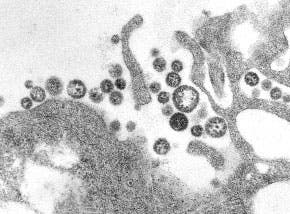
CDC Photo: Lassa virus
Other Patch stories:
Get more local news delivered straight to your inbox. Sign up for free Patch newsletters and alerts.