Business & Tech
A Jewish Deli Defies Odds and Endures in S.O.
Zayda's defies the odds to thrive, while other authentic delis have closed their doors.
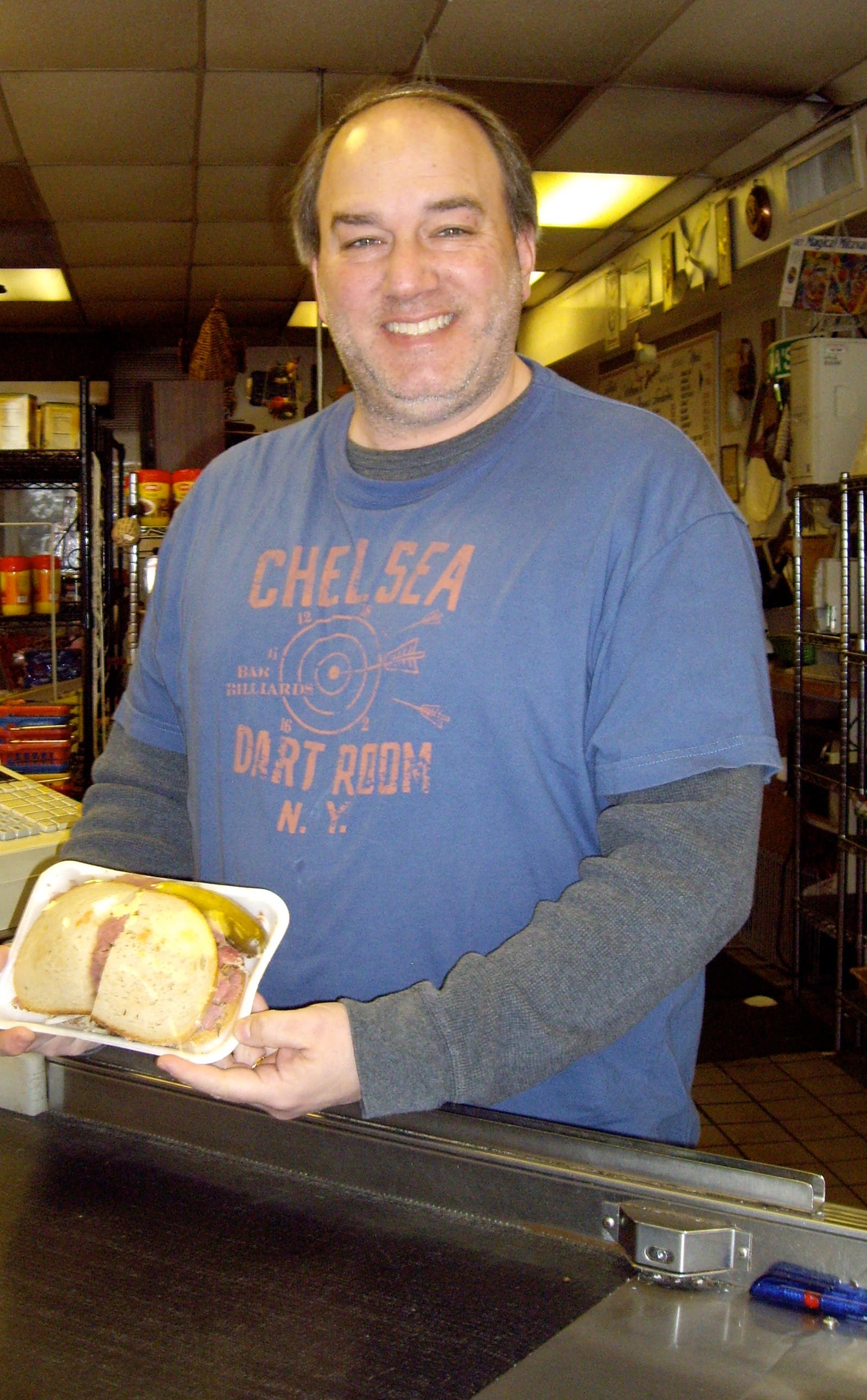


On a gray Tuesday, with snow on the ground and more in the forecast, Zayda's is bustling. A deliveryman backs a truck into the narrow driveway. Inside the Irvington Avenue store, employees slice pastrami, stack it on rye with Russian dressing and coleslaw, and plate the sandwiches three deep. Behind the deli counter, notes reading "turkey for 90" compete for attention with a sandwich menu some six feet long.
Owner Andrew Halper takes a phone call, hands a visiting salesman his business card and sneaks a taste of a steaming pastrami. "When the employees see the ends are missing," he explains, "they say, 'Andrew was here.' "
Just another day at the deli? Maybe, but for "Save the Deli," a book and blog by David Sax. Writer and food lover Sax traveled the United States and Canada in search of authentic Jewish delis. For those who savor schmaltz and tongue, the news isn't good; Sax describes delis as "a dying breed." Sax's crusade to "Save the Deli" is rooted in his research and travels. "Across North America, and in select cities of the Diaspora, Jewish delicatessens are disappearing faster than chicken fingers at a bar mitzvah buffet," he writes.
Find out what's happening in South Orangefor free with the latest updates from Patch.
So how does Zayda's beat the statistics? What does Halper do differently? "We do everything," he explains. "We're going on all cylinders." Halper, a graduate of the University of Massachusetts and a Livingston resident, has dedicated his career to hospitality. He held corporate positions until about seven years ago, when, wanting to own his own business, he bought Zayda's. Since then, he has innovated, or "brought another set of eyes," to the business. Zayda's now sells prepared foods, all made on the premises in South Orange, that can be found throughout New Jersey and New York City.
The most popular prepared foods, according to Halper, are the matzoh balls, the health salad and the kugel—meals that demand time to prepare. He also does a brisk business in sandwiches, serving as a community lunch stop. "We're a deli, a butcher, we do prepared foods, and we cater," says Halper. "When one area loses a little momentum," he says, gesturing downwards with one hand, "we balance out in another."
Find out what's happening in South Orangefor free with the latest updates from Patch.
Sax visited Zayda's in October. "This is what the original deli was like," he told The New York Times. "It was a convenience store, a neighborhood grocer, a place to go for sandwich meats and kosher foods."
Zayda's is, indeed, an original, established in 1953. Its decor is eclectic, with old-fashioned meat cases topped by a collection of smiling plaster chickens and cows, and a book entitled "How to be a Jewish Mother." This writer saw one customer nudge another and point to the volume. "If you have to ask," she said, "you'll never know."
According to Sax, the New York-style Jewish deli is a legacy of Eastern Europe. Kosher dietary guidelines, including prohibitions against shellfish, pork and mixing milk and meat, are only the beginning. Pickled tongue and corned beef are a nod to the medieval German practice of preserving meat by pickling. Hungarians leaned heavily on paprika for seasoning, while the Polish influence saw a sweeter palate, such as the health salad and tzimmes. Immigrants in New York City sought the flavors of home and found them in turn-of-the-20th-century pushcarts. When pushcarts were regulated by 1906 legislation, delicatessens took their place.
One threat to many delis is the customer base moving away from cities to the suburbs. Halper knows this story well. His family has deep roots in Essex County, since his great-grandparents emigrated to Newark in 1910. They owned a business there that grew into Halper Brothers Paper Company. Halper knows his clientele because he and his extended family have spent their lives in the area.
"We do a lot of temple work," he explains, providing food for special events at several local synagogues. "We're also involved with the food pantry at Oheb Shalom." Another regular customer is Seton Hall University. Still, much of the meat and potatoes is individual customers ordering meals for holidays. The prepared foods "brought in a whole new group of customers," says Halper, noting that some now use Zayda's for special events. "Last year," he recalls, "I had about eight new Seders, customers who came to us after they tried something they bought in the supermarket."
Perhaps it's this willingness to change with the times that will keep Zayda's off the endangered deli list. Halper is aware of the recession and does what he can. "We have specials, coupons," he says. "We see customers maybe eat more chicken and less beef, or different cuts of meat."
Another threat to the Jewish deli is also a mark of its success: pastrami, corned beef, brisket and salami are no longer exotic. Such foods are part of our collective culinary landscape, so much so that matzoh ball soup is the "soup of the day" every day at Maplewood's Maple Leaf Diner, and knishes are marketed as an after-school snack. The challenge, then, is to educate the palate, to recognize a good chopped liver or authentic kugel.
For deli aficionados, these are serious and weighty issues. Pesach orders are piling up, however, and it's time for another cup of coffee before Halper tackles the inventory.
"The store," he says, gazing around at the meat cases, "is where we find out what works. It's our roots, and it grounds us."
Passover approaches, the busiest season of the year, when the line of customers at the meat counter will reach the door. Sax ends his book with an epilogue entitled "Deli's 2nd Coming (Just off 3rd Ave.)," in which he reports hopeful signs for the industry. A new deli has opened in Manhattan, and Zayda's is thriving. As for the longterm future of the Jewish deli? Where's there's life, there's challah.
Author's note: Thanks to David Sax, both for allowing me to quote him and for recommending the pastrami at Zayda's. Thanks to the SOPL folks, who ordered "Save the Deli" for me.