Schools
Board of Ed Includes Underhill Lighting in Capital Projects
The Board allocated $70,000 of its $10 million bond request to the lighting project, but expects to reduce that amount to $50,000 in January.



Barring an unforeseen turn of events, lighting will be coming to Underhill Field after the South Orange-Maplewood Board of Education included the project in its list of capital projects to be funded by school bonds.
Last night, the board allocated $70,000 of its upcoming $10 million bond issuance request to the lighting project which would enable night-time sports activities at Underhill. However, it is anticipated that that amount will be reduced to $50,000 in January due to expected additional private gifts totaling $20,000.
The remainder of the estimated $200,000 lighting project would be paid for through $50,000 in unused contingency funds for the original funding for the surface of the athletic field, a $75,000 gift from the Columbia High School Alumni Association and $5,000 from Cougar Soccer.
Find out what's happening in South Orangefor free with the latest updates from Patch.
Maplewood Deputy Mayor Fred R. Profeta, Jr. — a CHS alumnus — presented the $75,000 check to the Board of Education. (The official name of the facility is the Lynn V. Profeta Field at Underhill Sports Complex, after Profeta's mother.) Profeta said the amount was the result of 20 months of collection and represented gifts from alumni as well as community members.
The next step for the lighting project is the approval of the $10 million bond issuance by the Board of School Estimate on January 26, 2011. However, while the Board of School Estimate can adjust the amount of the bond up or down, it cannot add or cancel items covered by the bond. Explained Board of Education member Beth Daugherty, "If they take out $50,000, we just have $50,000 less to work with."
Find out what's happening in South Orangefor free with the latest updates from Patch.
Assuming approval of the bond issuance in January, the field lighting would next come up for action when a contract is awarded for completion of the work.
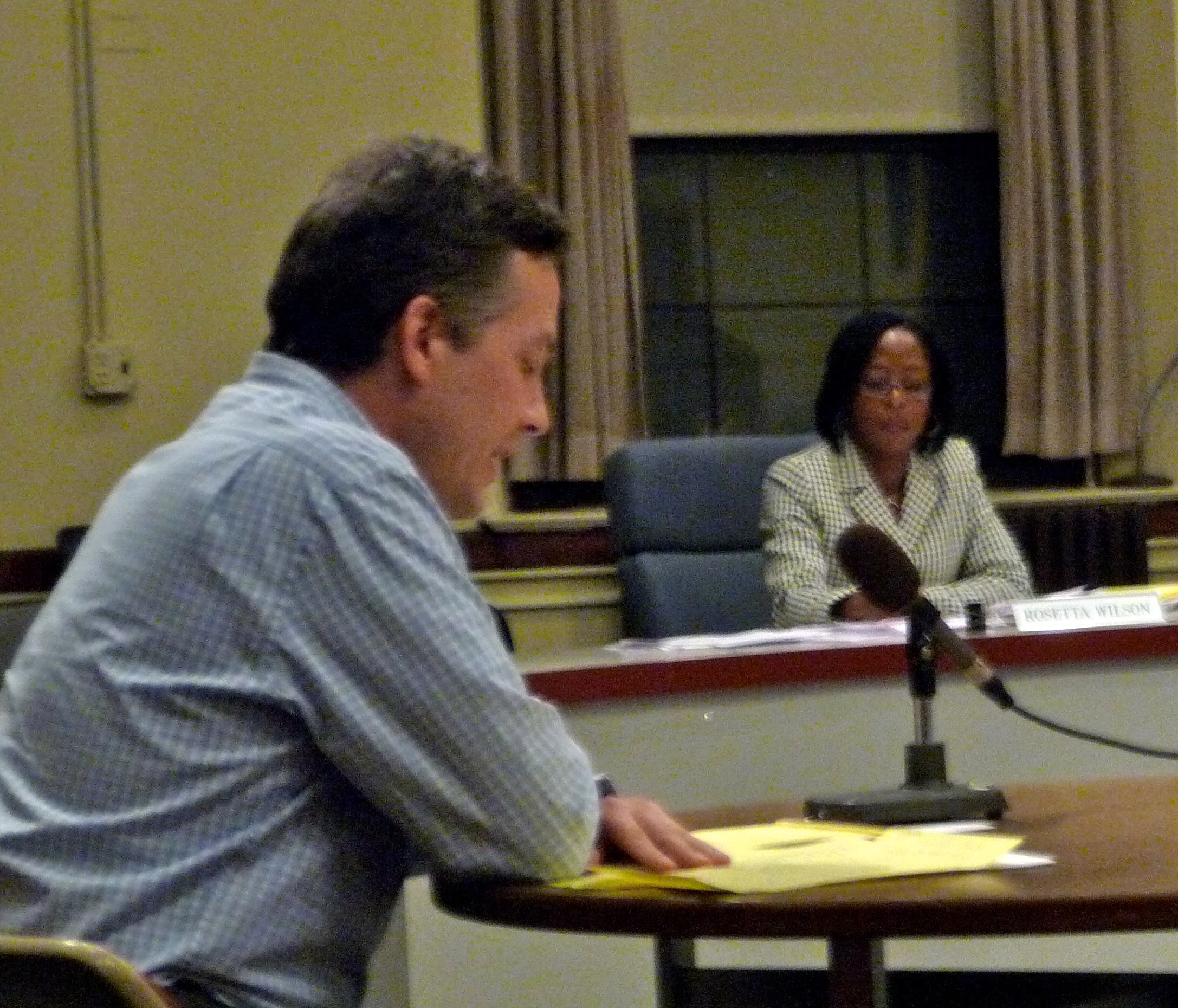
While Profeta and the CHS Alumni Association were supportive of the lighting project, some members of the public spoke against the lighting at the meeting.
Underhill neighbor Frank Deale told the board that there was one factor they were not considering: litigation. "You see it as a benefit, but the reality is the real cost is borne by a small number of homes. I want to impress upon you how serious the homeowners are."
Added Deale, "If the Saturday afternoon situation comes to night, people are not going to sit and watch their properties lose value and shoulder the responsibility." Deale said, "These cases are litigated all the time." Deale added that "the community is up in arms" and that neighbors would be out in force at the January 26 Board of School Estimate meeting. He complained that he didn't know that a decision would be made on the lighting at Monday night's Board of Education meeting.
Another speaker during the public hearing, David Landry, said, "The neighborhood has generally supported the improvements but not the lights." Landry said that the neighborhood was dealing with the same "unsatisfactory conditions" around game days "every year" and that those problems would only get worse with the increased use of the field. "Let's declare victory and move on," said Landry, asking the board to accept the unlighted field as a finished project.
Profeta felt differently. He told the board that the lighting was "a good deal for the taxpayers and a good deal for the students." In a letter, the CHS Alumni Association noted that "much of the wiring for the lights has already been installed at the field. It is the hope of the Alumni Association that this project can now be completed and that the new field may be fully utilized for the benefit of the District's children."
During discussion, Board of Education Facilities Chair Beth Daugherty said that the board had received input on hours of usage from the CHS athletic director, the recreation directors in both Maplewood and South Orange, youth recreation leaders and concerned neighbors. She reported that the hours would be 9 p.m. from Monday through Thursday nights, 10 p.m. on Fridays, 9 p.m. on Saturday, and 6 p.m. on Sunday. The sound system is allowed during weekdays for district competitions only until 6 p.m.—except on Friday nights. Daugherty said that these regulations were stricter than municipal regulations.
Daugherty also said that $400,000 in district funds had already been spent on the field and the track (in addition to $1.1 million in private money). Later she said that lighting had always been a part of the plan for the renovations. In July 2009, the board As Board of Education President Mark Gleason said at the time, he was not against the lights; rather, his vote reflected a reluctance to allocate $100,000 in public funds outside of the normal budgeting cycle during challenging economic times, as opposed to an objection to lighting itself.
At Monday's meeting, Board member Jennifer Payne-Parrish asked Daugherty if she felt that the community was in agreement with the lights. Daugherty answered that the regulations represented a compromise of competing interests. She also acknowledged that there was a need for better communications around events at the field and that the district and community were working with police to improve the situation.
Beyond the field lighting, many other items were included in the long-range facilities plan bond request, including $1.4 million in improvements to the swimming pool at Columbia High School. The improvements would mostly involve ventilation, lighting and a new deck. Noted Daugherty, "We are at the point where we have to overhaul the pool or convert the space."
Daugherty said that the pool was the only local facility for the swim team to use and that swimming was also a part of the 9th grade curriculum. She said that the district had not approached Seton Hall about using their pool exclusively for swim team and/or physical education classes because "there is a historical track record of it being very difficult" to secure practice time for the swim team at SHU.
Other approved facilities projects included roof replacements, mechanical upgrades, bathroom renovations and auditorium ventilation at schools throughout the district; bleacher repairs at Maplewood Middle School; science lab renovations at the middle schools and the Columbia High School; sidewalks and parking lot repairs at Seth Boyden, Montrose and Columbia; and the appointment of an architectural firm for the restoration of the Columbia High School auditorium.
Daugherty explained that, since the long-range facilities plan was created in 2000, the district had issued a $10 million bond every three years, maintaining a stable level of debt service of about $3.5 million per year while catching up on facilities maintenance and performing long-term facilities planning. Explained Business Administrator Karla Milanette, "Some of our prior debt is being paid off. When the debt falls off, we take on additional debt. We keep it level. Some might say how can we think of this at this time?" But, she explained, bond money can't be spent on salary costs and operating costs.
Daugherty said that a district analysis was need next year so that the school district's facilities committee could plan for the next 20 years.
Get more local news delivered straight to your inbox. Sign up for free Patch newsletters and alerts.