Community Corner
Local History: South Orange's Kip Family
Tracing the history of the former owners of 432 Scotland Road.
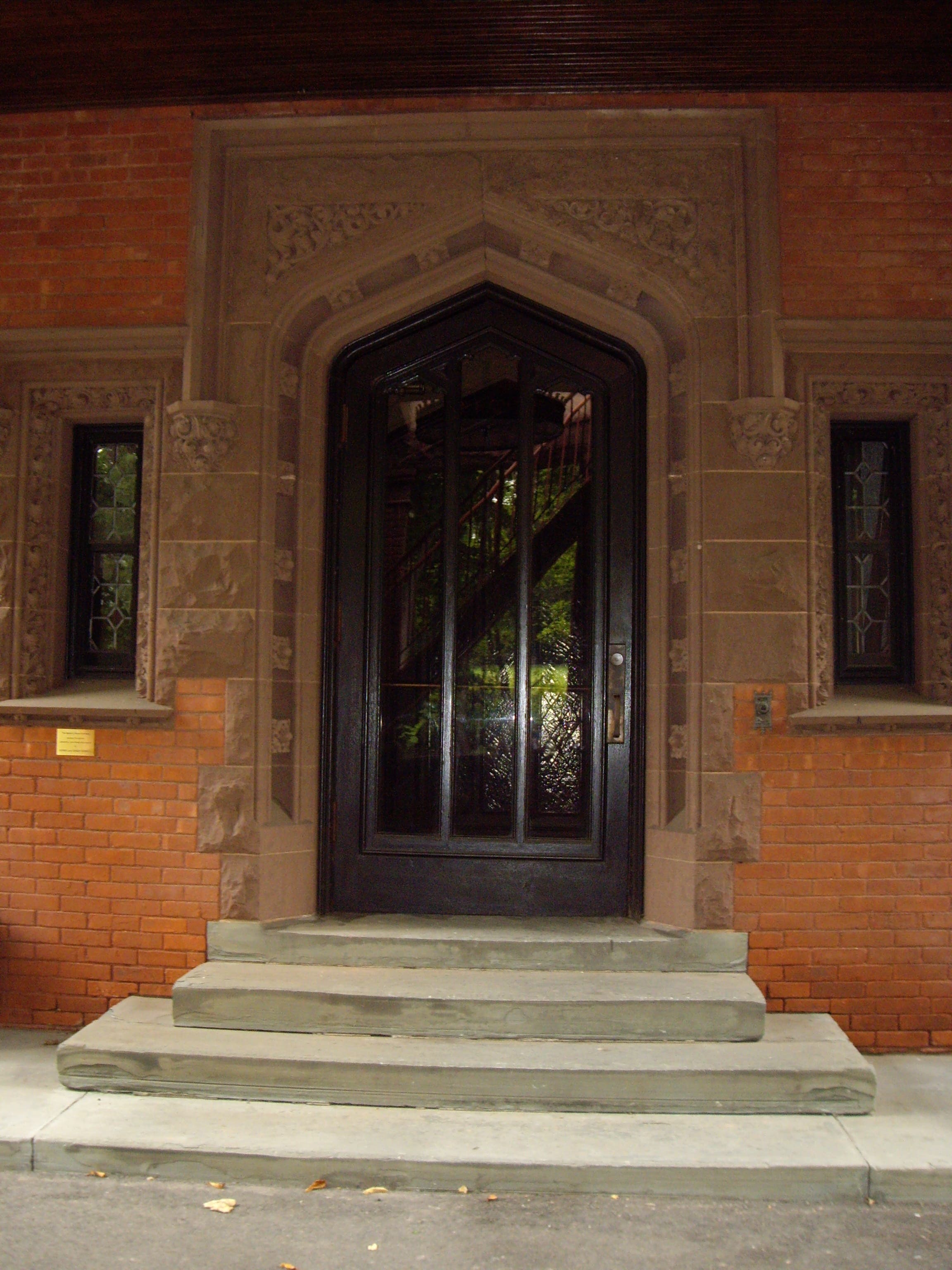


As I carried the social Blue Book of the Oranges, dated 1908, with me this summer, it fell open repeatedly to the listing for Mr. and Mrs. Ira A. Kip Jr., 432 Scotland Road. The name seemed familiar, as did the address, though I couldn’t place it until I walked west on Scotland Road from South Orange Avenue one Sunday morning. The house numbers passed slowly as I eliminated those homes that were obviously built too late for my purposes. When I reached 432, I laughed aloud. Of course I knew the name; the Kip-Riker Mansion is the western end of Temple Sharey-Tefilo Israel.
The Riker family is well known in South Orange, and this summer saw the passing of Carleton Riker. The Kips, though, proved to be a bit more elusive. I pursued them through archives and obituaries, and what follows is the story of Mrs. Kip, in particular. Unless otherwise noted, the information I present is from The New York Times. The conclusions drawn from the information are my own. In the case of alternate spellings of names—and this is true of Mrs. Kip, especially—I have used the name as it appears in the obituary, believing this to be the final word on subject.
Katherine Flower was a Gilded Age darling when she married Ira Andruss Kip, Jr. on Feb. 14, 1893. Katherine and her parents lived on Madison Avenue in New York City. Her father, John D. Flower, was described as a “banker” in the Biographical Directory of the State of New York. That descriptor seems modest; he ran the firm of Flower & Company, sat on the New York Stock Exchange, served as a Vice President of Kingston and Pembroke Realty and a director of U. S. Casualty Company, and was an active member of the fledgling Metropolitan Museum of Art and the New England Society. Katherine’s political pedigree was equally august. When she married, her uncle was the sitting Governor of New York.
Find out what's happening in South Orangefor free with the latest updates from Patch.
Katherine’s wedding appears at least twice in the Social Notes of The New York Times. The social “season” of the era, which began in fall, generally ended around Lent. One society column described Katherine’s wedding as “The most important of those marriages” seen in the 1892-1893 season.
The wedding of Ira A. Kip Jr. to Katherine Flower took place in St. James’s Church on Madison Avenue in New York City. Four hundred guests filled the church; notables included the Governor, the Lieutenant-Governor, Mayor William R. Grace of New York City, and the former Mayor. The reception was attended by 600 guests.
Find out what's happening in South Orangefor free with the latest updates from Patch.
The description of the wedding was followed by a short list of notable gifts that the bride received. These included “a solid-silver tea service” from the Governor, and, from the bride’s parents, a “handsome house” on Hamilton Road in South Orange. The groom’s parents “furnished the house and gave a fine team of horses and several carriages.”
By early April of the year, Mr. and Mrs. Kip had returned from their honeymoon and were prepared to socialize. They hosted a “reception for their friends” at 69 E. 56th St. before moving to “Brightside,” their home on Hamilton Road. (Note: Though I have consulted tax and real estate records, I have only narrowed down the location of their house to the following four addresses, numbers 577, 578, 607 or 608.)
It appears that the focus of their lives soon shifted to work and home. Ira is described variously as a “banker,” a “manufacturer,” and a “merchandise broker.” He had an office at 138 Pearl St. in Manhattan, from which he managed the many real estate transactions that appear in The New York Times. During the 1890s, he became a director of the Brooklyn Elevated Rail Road Company and held a seat on the New York Stock Exchange. By 1900, when her father died, Katherine had three children, John Flower Kip, Catherine Kip, and Ira A. Kip. The details of his will, as reported in the newspaper, name the children and Katherine as heirs.
Perhaps it was then that Katherine and Ira set their sights on Scotland Road. In 1900, Ira was serving his first of two terms as Village President. They bought property in that year for $27,000, according to a letter quoted in Images of America: South Orange Revisited, and spent about $100,000 on its construction and décor. By February of 1903, their new home, 432 Scotland Road, was complete. It was modeled on Haddon Hall, an eleventh-century manor in Derbyshire, England. A light opera entitled “Haddon Hall,” with music by Arthur Sullivan and a libretto by Sydney Grundy, premiered in London in 1892 and was popular in the 1890s. Perhaps that was one inspiration for the design, but it wasn’t the only one. Kip later wrote, “The gargoyles in the Billiard Room, I copied from figures in the front of the church in Dijon, France.”
The new home was on display for the first time on Feb. 14, 1903, when Katherine and Ira hosted a reception marking their 10th wedding anniversary. The affair included dancing in the upstairs ballroom and a performance by Harry T. Burleigh, a very prominent composer and singer. The New York Times reports that, in celebration of their “tin” anniversary, the Kips received “many tin presents.” Further, and perhaps foreshadowing coming events in her life, Katherine Kip stood in the Louis XVI drawing room and “received unassisted.”
Author's note: Next week’s column will bring the Kip family story forward. If readers have any further information, Ira’s obituary in particular, I would be delighted to receive it.