Schools
Osborne Recommends 7th Grade 'Level-UP' Policy in Letter
In an open letter to the school district community, Superintendent Brian Osborne lays out recommendations by the Task Force on Excellence and Equity that will be voted on by the Board of Ed on Monday.

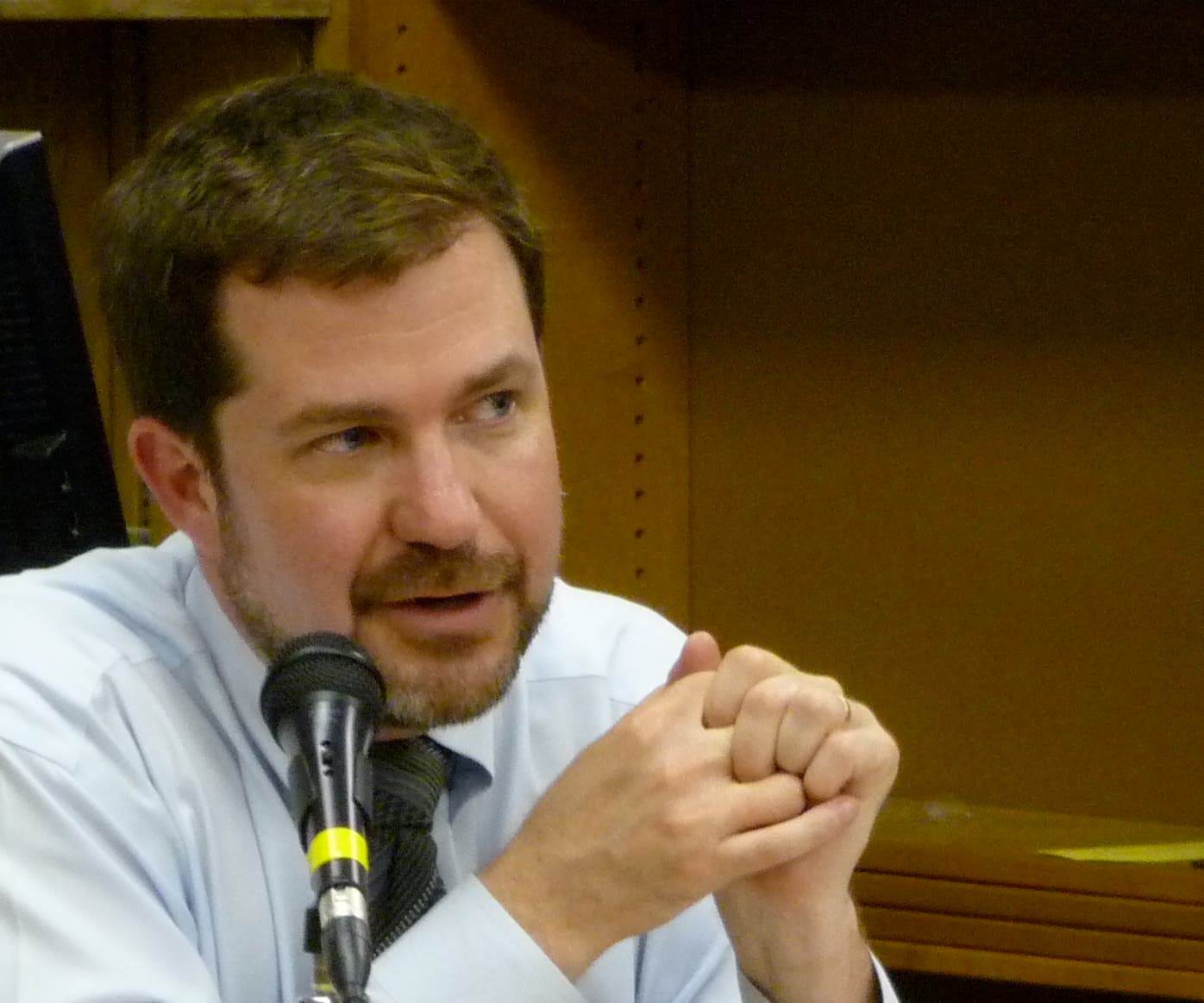
The following letter was e-mailed out on Tuesday afternoon:
Dear Staff, Students, Families and Friends of the South Orange-Maplewood School District,
In support of the school district's mission to prepare every student for success and higher learning in the 21st century, we issued a report on Equity and Excellence to the Board of Education containing recommendations to increase student access to rigorous coursework, uphold superlative levels of achievement, and provide additional academic supports where needed.
Find out what's happening in South Orangefor free with the latest updates from Patch.
At the June 14 meeting Board of Education meeting, I will recommend that the Board approve the following proposals contained in the report for the 2010-2011 school year:
1. Level-UP the seventh grade by eliminating level three in English, Social Studies, and Science. The recommendation seeks no changes in the approach to mathematics, no changes in the eighth grade, and maintains a level two in all subjects in seventh grade. The curriculum, standards, and expectations of the Level-UP courses will be set at the current level four.
Find out what's happening in South Orangefor free with the latest updates from Patch.
2. Increase time by 25% over the course of the year in sixth grade for instruction in the core content classes of English, Mathematics, Science, and Social Studies through the creation of a "rotating-core" period that replaces the Read/Write Seminar and Spanish. Rather than one semester in sixth grade and one semester in seventh grade, Spanish will be a full year course in the seventh grade.
3. Expand an enhanced elementary enrichment pilot to three schools. The enhanced enrichment allows for an enrichment specialist and classroom teacher to team teach one period weekly to the entire class, with in-class flexible grouping to ensure that students are challenged, and with curricular connections to Art, Music, and Physical Education.
4. Change Policy 2314: Academic Placement to better reflect the mission of the school district to prepare every child for success in college.
These recommendations are informed by the work of a multi-stakeholder Task Force on Equity and Excellence, a disaggregated analysis of level placement correlations, research in ability grouping, and the best practices of other districts. It also reflects findings of an analysis of college success of the Columbia High School Class of 2005. The analysis revealed strong correlations of level placement in middle school to level placement in high school, and level placement in high school to success in college, suggesting that middle school participation in higher level courses is a factor in preparation for college.
The proposal is a modest one, designed to include more students in a pathway to success in college. Changes in the classroom makeup of the Level-UP classes would be relatively slight. Currently, approximately 50-60% of middle school students are assigned to level four classes, 20-30% to level three, and the remainder to level two. Roughly half of the students in level three perform as well or better than their peers in level four on standardized exams. In a typical Level-UP classroom of 24 students, approximately six to eight would be students that would otherwise have been assigned to level three, and many of those would be students that score as well or better on tests than their peers.
Teachers, who are already teaching classes with a diversity of learning styles and background knowledge, will receive additional job-embedded support and training. Rather than send teachers to offsite workshops, we will bring expertise in differentiated instruction to our teachers' classrooms on a regular basis throughout the school year, so that they are able to observe together a model lesson in their own classrooms with their own students and analyze together what works.
Any further proposal for modifying how we assign students to classes would be recommended for Board of Education action only after evaluating the effectiveness of these changes on narrowing the achievement gap while raising the bar for all students. The evaluation process is already underway, with common midterms and finals implemented for the first time this year to ensure consistently high expectations and content in each classroom, and we are benchmarking student work products to ensure that the level of challenge and standards for grading do not wane.
Alone, these recommendations will not lead to an increase in student learning or a decrease in the achievement gap. The changes come only after significant progress on many fronts, including overhauling how we evaluate instruction; implementing more rigorous standards-based curriculum; assessing student learning more frequently; providing greater supports in the early grades; improving professional development; using data to gauge progress and make decisions; enhancing the use of technology; and building a culture of accountability for outcomes for all children. All these efforts are beginning to improve student learning, and yet we have miles to go.
Everything that we do, including the way we structure classes and assign students to them, must be to ensure that every one of our students acquires the skills needed for success in the 21st century. Thank you for everything that you do to support out schools and our 6,400 great kids.
Sincerely,
Brian Osborne
Get more local news delivered straight to your inbox. Sign up for free Patch newsletters and alerts.