Community Corner
Rescue Squad Starts Yearly Fundraising Drive
Local EMTs responded to 1,200 calls in 2008



Rutgers-Newark student Lisa Khalsa’s college-aged friends often have trouble understanding her Friday night plans.
“I get texts all the time,” said Khalsa, a 21-year-old South Orange resident who works the Friday night shift as a volunteer EMT for the South Orange Rescue Squad from 6 p.m. to 6 a.m. “I say, 'I told you—I’m out on Fridays.'”
With a membership of about 40, the all-volunteer Rescue Squad requires members to commit to a weekly shift, plus one every three and a half weeks, but the call of duty sometimes drives them to extremes. First lieutenant Kurt Gibson, 25, who also earns a living as a paid EMT, takes his pager into the shower to listen for requests for backup. Crew chief Will Harris, 33, who works for Verizon, once responded to a backup call while waiting for his wife in a doctor’s office.
Find out what's happening in South Orangefor free with the latest updates from Patch.
“That’s what we do this for; we want to be there for the most challenging calls,” said Captain Don Boyle, 66, who’s the only retiree of the group—consisting mainly of people with full-time jobs and a smattering of high school and college students.
The Rescue Squad was founded in 1952 and is still the Village’s main first responder—responding to 1,200 calls with three ambulances in 2008. It relies on donations from South Orange residents to pay its operating expenses, and the average last year was $50. It's just initiated its yearly fundraising drive; last year, it only raised 70 percent of its operating costs, but a private donor wound up giving $25,000 to fill the gap.
Find out what's happening in South Orangefor free with the latest updates from Patch.
“Believe it or not, this is like a small business—everything but payroll,” said Boyle of the time he spends scheduling and fundraising.
Recruitment was easier before the Midtown Direct transformed South Orange into a commuter town, when many EMTs were local business owners who lived minutes from where they worked. It’s harder to find people willing to commit to the hours now, Boyle says, and the Rescue Squad was obliged to cut its daytime shifts back to Friday, Saturday and Saturday. The Village contracts with a private provider, Atlantic Ambulance Corporation, to cover the other four daytime shifts, but the Rescue Squad is still on call seven nights a week. Volunteer EMTs respond to backup calls even on weekdays.
“When you’re in town, you’re always on duty,” said Harris, who keeps a stethoscope and a hooded sweatshirt in the back of his truck to keep his response time low. (The Squad’s average response time to backup calls is 4.5 minutes and 1.5 minutes for active duty.)
EMTs are sometimes drawn to the job by the adrenaline rush of working in life-or-death situations, but there’s also down time at the Third Street headquarters during a 12-hour shift. The building has Wi-Fi, and Khalsa was firing off e-mails from her laptop and preparing to study from a thick textbook for her EMT exam on a recent Friday night. Harris sometimes looks over street maps to perfect his knowledge of driving routes and studies the Rescue Squad’s bylaws.
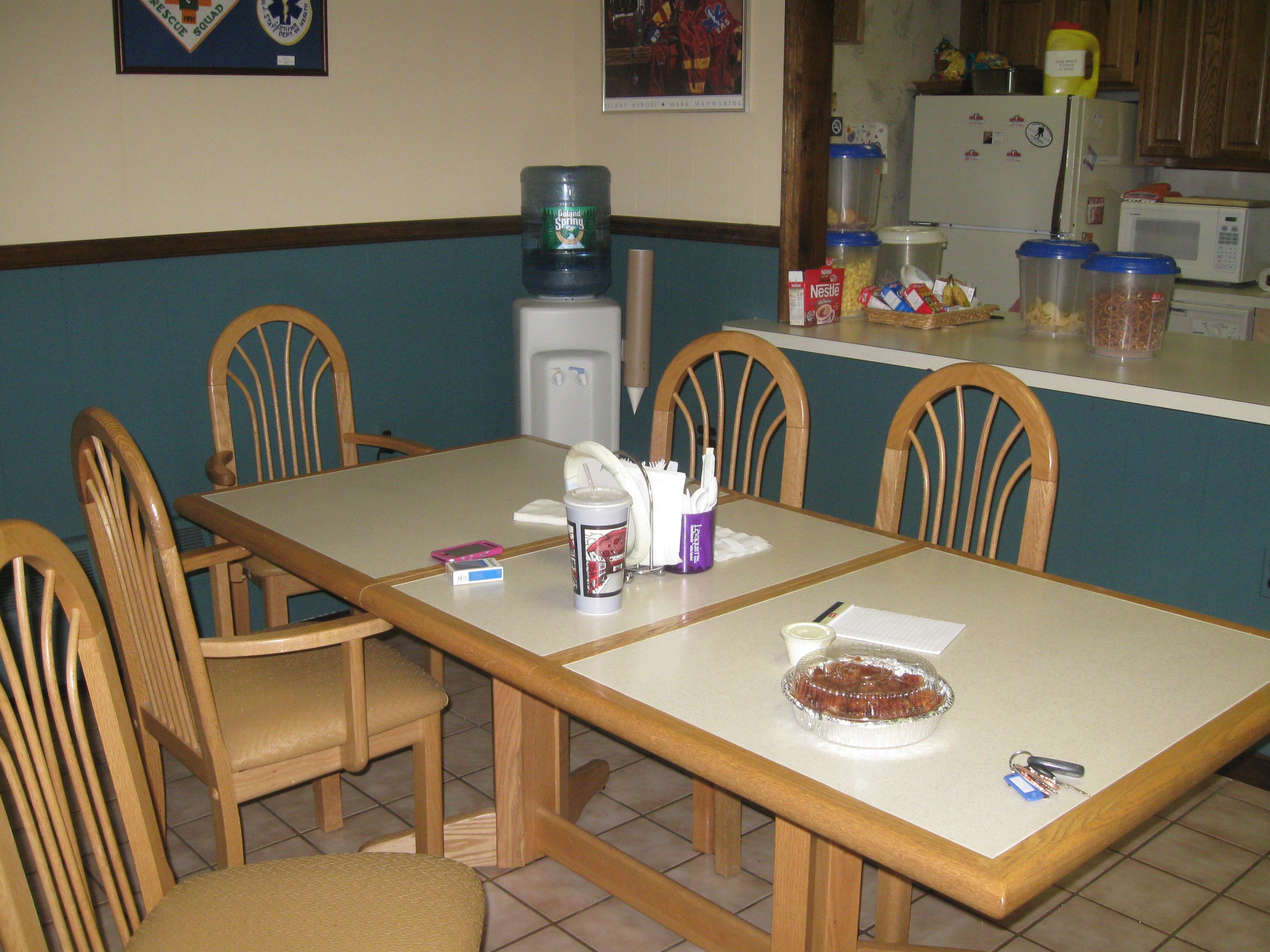
There are video games, a kitchen stocked with snacks, and occasional late-night visits from police officers, who work closely with EMTs; movies are watched nightly on the big-screen TV, but most of the volunteers go to bed between 1 and 2 a.m.—on a sofa or fold-out cot in the main room or in the small bedroom—if it’s a slow night. When there’s a call, a siren goes off that’s impossible to sleep through.
Some EMTs say the death of a child is the only event that can truly rattle them, and, conversely, the rescue of a child is the most exhilarating. One of Boyle’s most memorable moments came after hearing a report of a child choking on a grape on the police scanner two years ago; his team responded immediately and cleared the patient’s airway.
Local EMTs also respond to 10-20 cardiac arrests per year, but, since every second counts, they’re doomed to a low rate of success.
“There’s that level of frustration that you’re trying to bring someone back and you fail,” said Boyle. “On the other hand, when you succeed, it’s a real emotional high.”
Get more local news delivered straight to your inbox. Sign up for free Patch newsletters and alerts.