Health & Fitness
Revisiting Springfield on PATCH (after being away more than half a century)
I graduated from Jonathon Dayton Regional High School in 1961 and left for the Pacific Northwest the same day. Today I decided to visit the place where I grew up from the perspective of retirement.



Eighteen years after my day one at Overlake Hospital, I graduated from Jonathon Dayton Regional High School in 1961 and left for the Pacific Northwest the same day. Today I decided to visit the place where I grew up from the perspective of retirement. Who would have guessed, both a Springfield NJ and an Enumclaw WA PATCH?
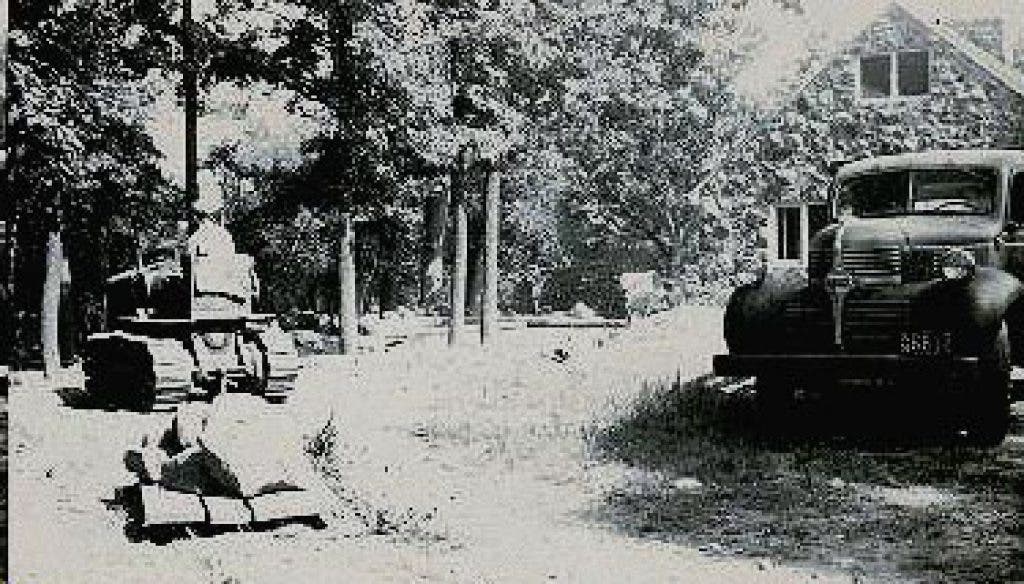
My parents bought an eight-acre woods by Sayer Lake in Springfield during the Depression. Later my father built a rambling stone house out of rocks from the property and started a rhododendron nursery there, while my mother taught school in Summit. We got electricity and replaced our well's hand pump with a motorized one just before I started second grade. Even then it seemed strange to be so remote and yet have one out of ten people in the United States living within our 20-mile circle.
You had to drive a half-mile dirt road (since obliterated by I-78), go through Summit, and then take a roundabout way to get back to downtown Springfield and my schools. First one for me was Caldwell Elementary (Is it still there? It was ancient when I attended), then Florence M. Gaudineer Junior High. (I thought it was remarkable to name a building after my school nurse--she was a wonderful person.) Mrs. Sandmeier was principal there, and I see that a school was later named after her also. I liked her, too, and delivered the newspaper to her house up on top of the mountain through our woods. For high school, I attended the huge, 0-shaped Jonathan Dayton Regional, with a population then half the size of the town I moved to in Washington. Where did so many kids come from? Oh, Mountainside, Berkeley Heights, Clark, Garwood, Kenilworth, and of course, Springfield. Anyway, I knew quite well half of the people Springfield schools were named after (not the half that fought in the Revolutionary War.)
Find out what's happening in Springfieldfor free with the latest updates from Patch.
My family attended the Presbyterian Church. I remember how George Washington's troops ripped up the hymnbooks to use as wadding for their muskets. Well, I remember the story, not the event. I also liked to visit another Springfield landmark, Baltusrol Golf Course. It too was over the mountain and through the woods. I would sneak in to play archery golf there on full-moon winter nights. Sorry golfers, I would never do that now. We also ice skated on Bryant Pond and on our little lake, but the best skating was on the circuitous swamps next to it. You could explore and jump over logs instead of skate in a circle. Through the black ice, you could see the bottom and all sorts of other stuff interesting to a kid.
That big forest, now housing developments I guess, was a great place to grow up. I was obsessed with riding my bike through the miles of trails, many of which I made. If only mountain bikes had been invented by then! I built forts and log cabins, dammed up our brook, and of course, climbed the trees. My favorite activity was shinnying twenty feet up a young sweet birch and then descending as it bent over. And at sixteen, I shot a big buck in those woods with my bow and arrow. (Strange that out here where we have cougar, bear, elk, mountain goat, etc., I have never hunted.)
Find out what's happening in Springfieldfor free with the latest updates from Patch.
The forest, which had been a farm back in the 1700s, still had traces of old wagon roads and long fences made of rock piles. My connection to history developed as I dug up wagon wheel hoops and other iron relics, and even found an antique car with wooden spokes at the bottom of the lake. It never was a good idea to drive across the ice. Nellie Sayer, our elderly neighbor who lived in the original sandstone farmhouse, told me family stories about many of these items I found.
The town itself was fun to play in, too. My friends and I explored the extensive network of storm drains between Springfield and Milburn. Kids often do stupid things (understatement, in light of this storm.) I hope they have gates for them (the drains) now. There was also a big quarry, equally dangerous, that offered many adventures, and a tall steel tower to climb, past the end of Prospect Avenue right on top of the Summit Road mountain. Is it still there?
We took the kids back for a visit in the 70s and I have toured the area on Google Earth, so I know much has changed with growth. But I see there are many green spaces, an expanded Watchung Reservation, and parks I never heard of. Most exciting of all, though, is to see that our old stone house still sits on its eight acres, albeit surrounded by freeway and housing developments rather than lake and forest. (The freeway actually goes right through Sayer Lake.)
My landing in and leaving Springfield both resulted from my father's search for the ideal place to raise rhododendrons. Growing up, I played in and on artifacts from colonial days. In Enumclaw retirement, I discovered hand-carved gravestones of Chinese laborers brought here in the late 1800s to build the logging railroads around our community. As a child, I lived in a house built of the stones deposited at the terminus of the last ice age; here I sit on the surface of the massive Oceola Mudflow from an eruption of Mt Rainier six millennia back. The Springfield Garden was born during the Great Depression, flourished in the postwar expansion, and still survives today. The Enumclaw Garden, quietly created in the turbulent 60s, now lives on in the 21st Century.
(Here are more pictures and info about the Anderson Gardens in Springfield and Enumclaw.)