Restaurants & Bars
Data Center Debate Heats Up In Summit
Council move to ban AI facilities sparks concern over a potential loophole in the rules.

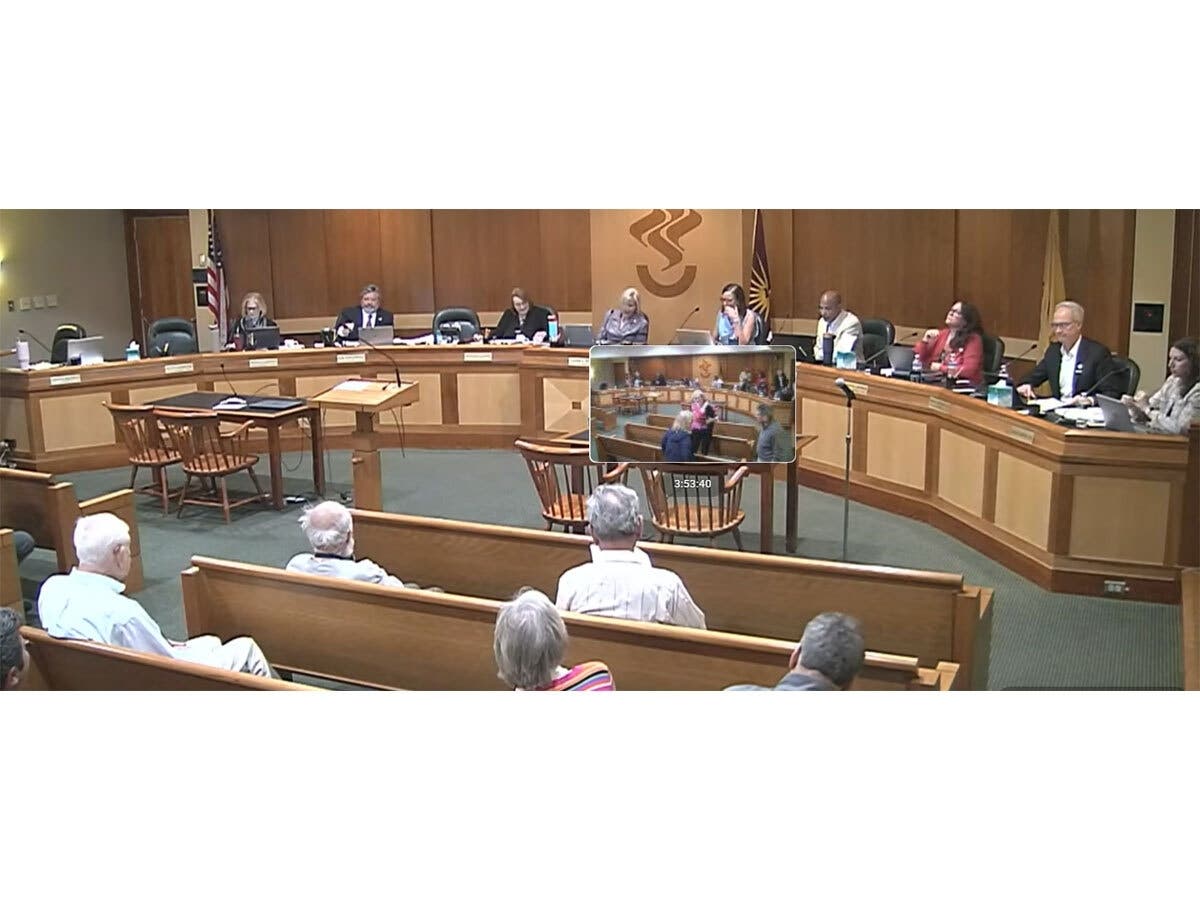
SUMMIT, NJ — A proposed ban on artificial intelligence data centers is moving forward in Summit, but debate over a key power limit in the ordinance is raising questions about whether the measure is strong enough to prevent future development.
At Wednesday night’s meeting, the Summit Common Council introduced an ordinance which would amend the city’s prohibited land uses to explicitly ban AI data center facilities. While council members broadly supported the intent of the measure, much of the discussion centered on a 20-megawatt peak power threshold included in the language.
Municipal Land Use Manager Augusto Thomaso said the threshold was based on comparisons to existing infrastructure and industry standards. He noted that traditional server rooms typically operate around that level, while large-scale AI data centers can require “multiple hundreds of megawatts” of power.
Find out what's happening in Summitfor free with the latest updates from Patch.
Thomaso also pointed out that essential facilities still fall within that range, including hospitals, which generally use about 5 to 15 megawatts for their systems.
Still, the 20-megawatt benchmark became the focus of concern for some council members and residents who questioned whether it leaves room for projects that could technically comply with the limit while still creating impacts similar to larger data centers.
Find out what's happening in Summitfor free with the latest updates from Patch.
Council Member Jamel Boyer voted against introducing the ordinance, saying the language does not go far enough.
“I think this ordinance just needs to be stronger,” Boyer said. “This doesn’t prohibit what the residents don’t want.”
He added that a developer could potentially design a facility just under the threshold. “This opens the door to having a data center in Summit… I think 20, even 19, is just not clear,” Boyer said.
Residents who spoke during public comment also urged the council to take a stricter approach.
“If we don’t want any AI data centers, then let’s say that in the resolution,” said resident James Catherine. “No AI data centers, regardless of the megawatts, regardless of how much water they use or electricity they use.”
Another resident, Mary Jo McCucci Difonzo, pointed to concerns about quality of life impacts. “Those things are loud,” she said. “People can’t sleep having those things in their neighborhoods.”
Other council members defended the ordinance as written, saying the threshold is meant to provide clarity and a practical framework for decision-making.
Council Member Jaclyn Lasaracina said the limit does not automatically permit smaller facilities, but helps define prohibited uses in a more structured way.
“If something were at 20 megawatts peak pull or above, then it’s an easy no,” Lasaracina said. “It simplifies the analysis. It’s a very discrete, easily understood way to define, in part, the prohibited use.”
Council Member Chantal Landman supported moving the ordinance forward, saying the city should not delay action while standards continue to evolve.
“We can’t let perfect be the enemy of the good, so we should move forward,” Landman said.
Council Member Michelle Kalmanson said the proposal reflects work done by city professionals to align the ordinance with the city’s intent and existing infrastructure needs.
“Our city professionals did their job,” Kalmanson said. “They delivered us a great ordinance.”
The ordinance will now return for a final public hearing and vote at the next council meeting, scheduled for June 16.
Get more local news delivered straight to your inbox. Sign up for free Patch newsletters and alerts.