Business & Tech
Market Forces: North Slope Farm
Each week Patch talks with a vendor at the Summit Farmer's Market to bring you more about the people behind the produce (and those pickles and pies).
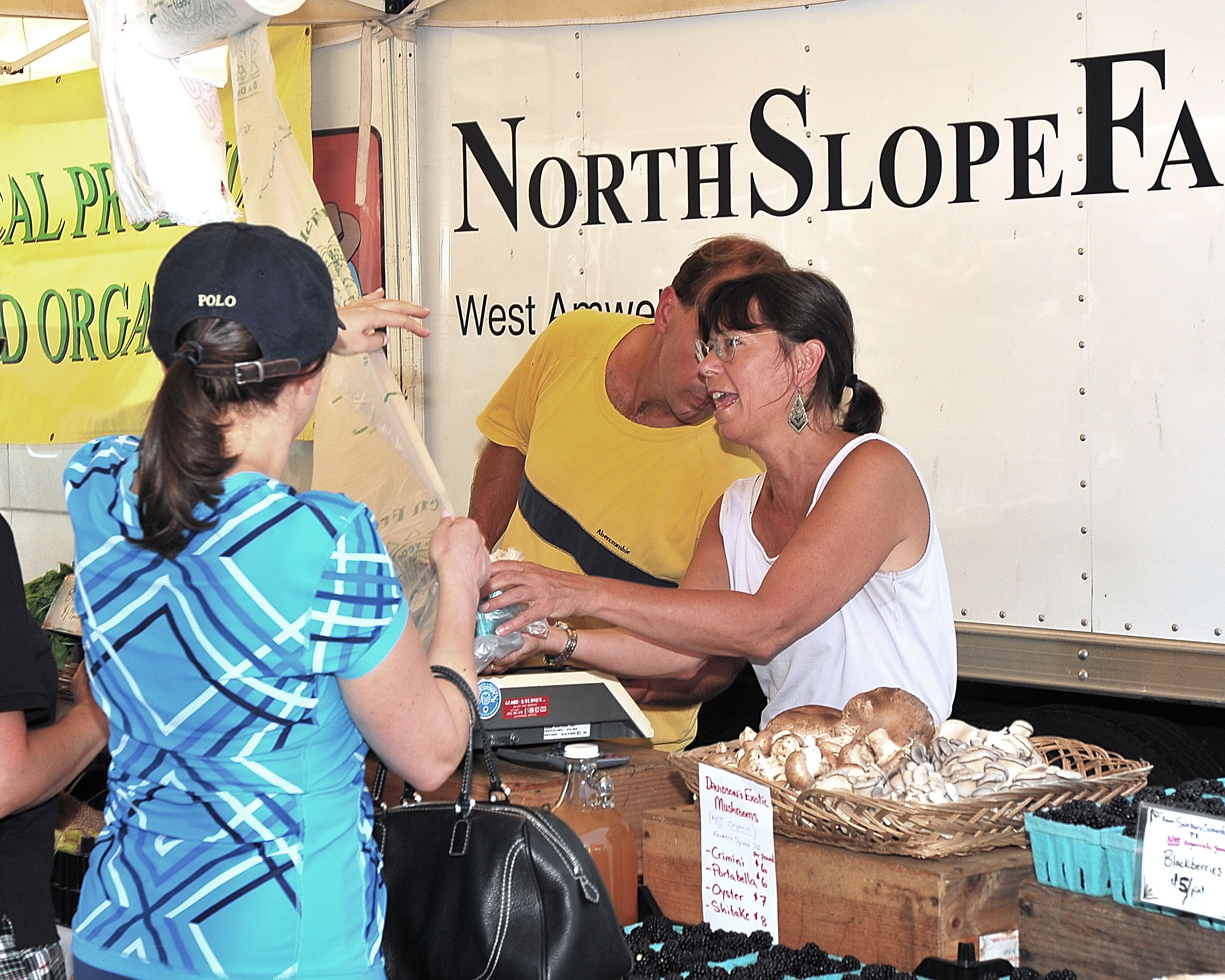

This week Patch spoke with Michael Rassweiler, owner/operator of North Slope Farm, an organic farm in Lambertville. The farm is one of two organic farms at the Summit market, and sells its produce at the Summit Farmer's Market on the side of the parking lot closest to Springfield Avenue. Rassweiller also maintains a Web site and blog that chronicles the farm's mission and activities (www.northslopefarm.com).
How did you get into farming?
The sort of idealistic purpose or entry-point was to want to have more control over what I was eating and to try to get out of the prolific waste stream that was our food system. I grew up in Princeton, sort of a town kid, on a quarter-acre lot. There was just a real focus on helping the environment, and an industrious lifestyle, and on fresh, whole food, and the garden was always a very important piece of that.
Find out what's happening in Summitfor free with the latest updates from Patch.
I couldn’t have done it without my family. Between myself and family support we were able to raise the money to buy the land. I’m still learning every year. I worked as an intern for various different farms over the years and did some research in college, as well as practical training, and then just on-the-job training.
Would you describe your farm?
Find out what's happening in Summitfor free with the latest updates from Patch.
We started the farm in 1994. North Slope is a description of its orientation to the sun. It’s about 50 acres. We have three full-time and one part-time employees. We pay for the cost of operations from a 3-acre market garden, an area designated for crops for fresh-market sales, including Summit. There’s about 15 acres in a wood lot and the balance of the land is in hay or is under stewardship, such as the management of streams. Over the years we’ve had a variety of different marketing strategies but now we’re focused on doing the farmer’s markets as our primary income source. Additionally, to try and address broader goals and our mission, we’ve developed a training program. The goal is to maintain a functioning operation growing food and distributing it locally.
How is North Slope different from other farms?
What we really try to focus on is to provide customers with really high-quality, fresh, clean product, so they’re getting the best potential nutrition from the food. The more skillfully we can handle the produce, the better the product the consumer will get and the higher the value. It is tied to the bigger vision of promoting high-value food as a way to stimulate and support interest in the diet and in eating well: that maybe the most powerful way to direct people’s attention to their eating is providing high-quality, interesting, tasty products to consume. That’s the philosophy of ours at North Slope: that what we’re doing is as much political action as practical production.
What’s your biggest seller at the Summit Farmer’s Market?
The salad mix, as well as the heirloom tomatoes.
Describe a typical day for you.
Over the years, to try to compensate for the small, very questionable potential income, what I’ve done is to try to limit my work hours, and to that end, and also to tie into the trainee program and to keep our trainees fresh and interested, we have a regular workday of 8 a.m. to 5 p.m. The day begins with chores. The way we talk about it, chores are all about taking care of your dependents. First our body depends on us, so we have to feed our bodies and keep them strong, and then whether they be livestock or baby plants, we have to make sure they have food and water and shelter. That takes about an hour. From 9 a.m. to 12 p.m. basically needs to be involved in directing production activities, so that’s the time that we’re able to either harvest them for market or plant them or cultivate them or hoe them or weed them. The morning is sort of the serious production and the afternoon is to invest in special projects and task completion.
[Editor’s note: the farm's Web site includes an account of how monthly work hours were spent—411 hours harvesting, for example—for more see http://northslopefarm.com/?page_id=57 ]
What do you like best about what you do?
Probably the variety of types of work that I’m involved in. With a pretty simple skill set I can be involved in a lot of different elements of food production, handling, and marketing.
Farming is hard work. What keeps you going?
I guess I just feel like it’s one of those core trades that’s really important to society and to the future. I think that education and elder care and food production and distribution are pretty core to a strong society.
Check back tomorrow for a profile on Race Farms in Blairstown.