Business & Tech
Market Forces: Rich Caputo
An interview with the man behind the Summit Farmer's Market.


Each week for the last several months, Patch has been talking with vendors at the Summit Farmer’s Market, bringing you more about the people behind the produce (and those pickles and pies). For this, the final installment in the series, Patch spoke with market manager Rich Caputo. The market continues this year until Dec. 20.
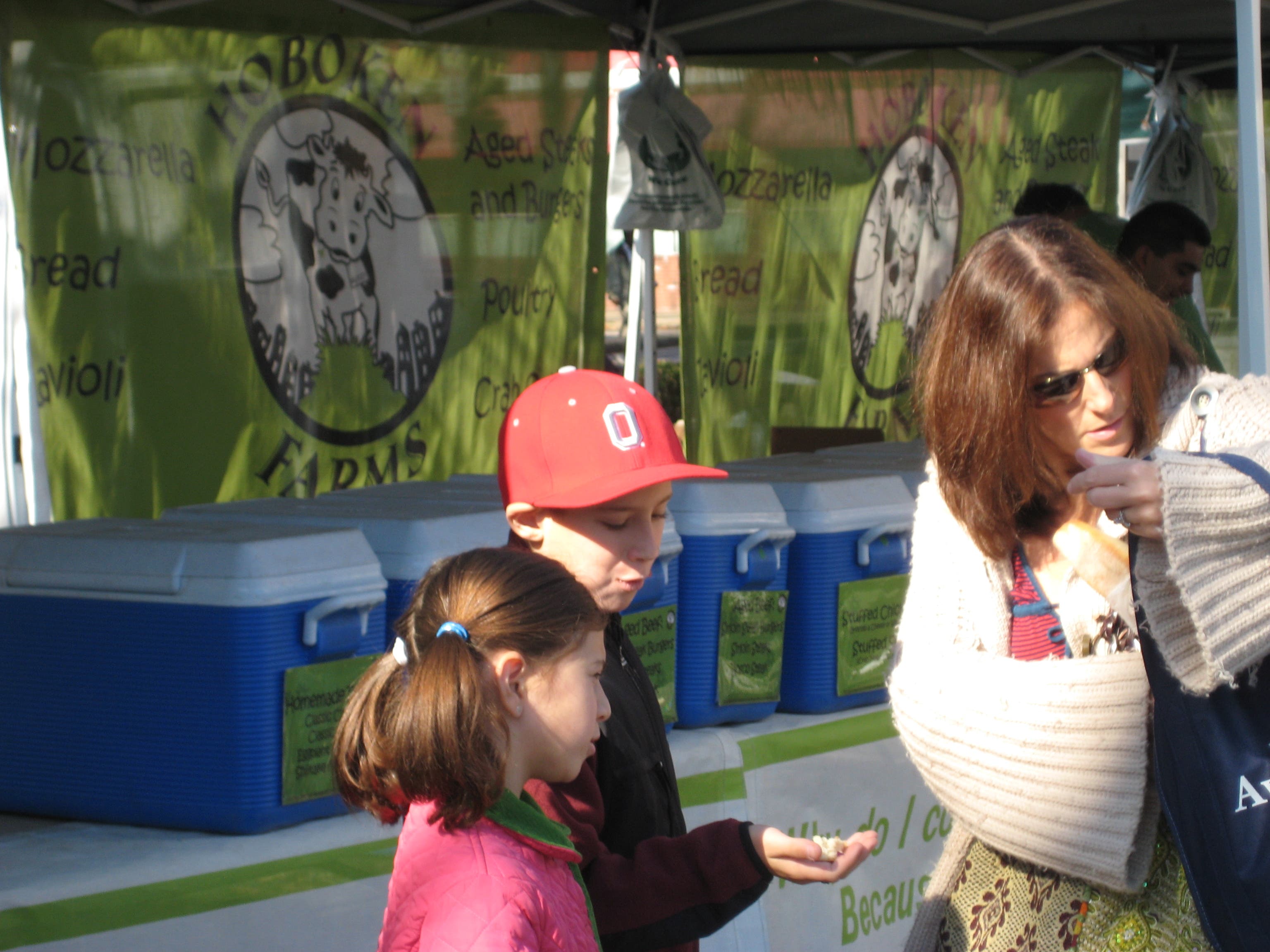
The heart and soul of this market is Richie Caputo. We do thirty markets every single week, and people always ask me why the Summit market is the biggest and arguably the best market in New Jersey. There’s a lot of reasons, but one of the primary reasons is Richie Caputo. Richie is always expanding that market, but he’s doing it smart. He’s there every week. When something’s not working right, when there’s a glitch in it, Richie feels it. He knows every vendor over there. He knows all my guys by name. It’s a thankless job. Who would want to be there every week for twenty-five weeks? But Richie loves this market. People go to this market and love it and take it for granted, and it’s because he cares about this market. – Brad Finkle, owner of market vendor Hoboken Farms
How did you get involved with the Summit Farmer’s Market?
Find out what's happening in Summitfor free with the latest updates from Patch.
The market started in 1992. It was a brand-new concept in New Jersey that the Department of Agriculture started. They asked different municipalities, and at that time it was the Summit Chamber of Commerce that got notified. I work for the town – I’m the recreation, parks and shade tree foreman. The woman that was in charge at the time, Diane Gallo, asked me if I’d be interested in helping her start this brand new concept: a farmer’s market in the bank parking lot. I said sure. I knew nothing about what I had to do, of course. That’s how it started. I’ve been doing it ever since.
What was it like in the beginning?
Find out what's happening in Summitfor free with the latest updates from Patch.
When we first started, I believe there were six vendors. Now we have 18 vendors. We began with the smallest farmer who came and sold corn and tomatoes and that was it, and one of the bigger farmers who has been coming ever since we started, Corner Copia.
Now it’s huge. Farmer’s markets have become so popular that every town wants one, and unfortunately there aren’t enough farmers for every town that wants one.
How do you select vendors?
Word of mouth is how it all starts. Now I get six or seven calls a week from different farmers or vendors wanting to come to our market. They know that our market is one of the most profitable ones, mainly because of the day. It’s a Sunday, and it’s in Summit, and it’s an affluent town. It wasn’t always as sought after as it is now.
We still like people that grow stuff from Jersey. We have a lot of out of state vendors that are nixed off right away. I think we owe it to the Jersey farmers to keep things from Jersey. I do that religiously. If they’re a baker, I insist that everything they bake is from Jersey. We don’t have vendors who don’t sell food, we don’t have anyone selling t-shirts - it’s not a flea market, it’s a farmers market. I try to keep it fair to everyone, so I try not to have too many guys selling the same thing - I limit similar things to two. We have the organics, which complement each other; the two guys I have used to work together. We try to have different things: we have Esther’s Treats; she’s a vegan baker; and we have our Brownie Points guy who’s totally the opposite of the vegan baker. But you have people that want both. So you have variety and you want people to keep coming.
How much do vendors pay for a place at the market?
We have a standard seasonal fee. Our season’s from June to December. If I have a vendor who has one tent – where you keep yourself small – they pay $1,000 for the season. The bigger guys pay $1,600 for the season. We keep it fair. We’re not out to make a killing. We want our marketing expenses covered and that’s it. Basically it’s $50 a day. I know my farmers, there’s vendors that make $6,000 or $7,000 dollars on a Sunday. They’re doing phenomenal. What we’re charging them is nothing. But we can do that because we’re a municipality.
What does a market manager do?
As a manager, you have to take care of your vendors - if they need change; or you buy them coffee, or give them suggestions to flare up their stand.
If you have a customer that’s irate, take care of them. I smooth the customer over, I smooth the vendor over. Vendors sometimes have disputes between each other. You have to keep an eye on who’s selling what at what price. You don’t want anybody selling stuff for much less than what everyone else is, slashing prices. You go talk to him. It’s second nature to me because I’ve been doing it so long. The Department of Agriculture used to sponsor conferences for market managers and I've been a guest and keynote speaker.
What are the rules vendors must follow?
Number one, you have to be in my market by 7:30 a.m. I don’t want anybody pulling in at a quarter to eight. No one’s allowed to leave until everyone’s breaking down. Even if you sell out, you have to stay. And you tell people why you sold out: because our product’s great, and I’m sorry, and we'll be here next week.
You need to have decent tables – it’s got to look good. You have to have a tent, not an umbrella, and decent signage. People need to know what they’re looking at. They put up their own tents. I help them, but they’re responsible for their own set-up, their own clean-up, and they don’t leave anything behind. They’re all very good about that. I run a tight ship.
The market is successful because you have vendor/market manager communication. That’s so important. You don’t have a market manager that says ‘I want this, I want that,’ you have a market manager that says, ‘what do you think?’ If you take the opinion of a slew of people that are in the business, you’re going to come up with a winning formula. The trick is to put it to work. If you keep open-minded and let everybody have input, they have great input. We have great vendors – veteran, heavy-duty, experienced vendors that have a fountain of useful information.
I’m proud of all my farmer and vendors. They’re so great - everyone I’ve had for a long time, and the new people that I get, we just get so involved with everybody. If we don’t have a great relationship, you’re not staying in my market for very long. I’ve had people – if they have a crappy attitude, all those people, they don’t last the season. I’m a nice guy, I don’t try to be a pain in the ass, but I don’t have a problem doing what I need to do.
Some people have personal issues - they can’t do it anymore or they are brand new and it’s too much. But other people, I'm not going to say who, they don’t take the market seriously. They would miss a Sunday; they would miss a market and think it wasn’t a big deal. They would call me a day after and say, ‘sorry, I wasn’t feeling well,' or 'it looked like it was going to rain.’ People will think, 'it’s a Sunday, I can stretch and take the day off.' Ok, I give them a few times. I don’t like to be a nag or like a school teacher. But you have to understand: everyone’s going to be standing out there in the rain. You have to stick to your guns. People need to know that you are going to be there. If you go to Shop-Rite at a certain time, you know the doors will be open. Same thing with the market. People are paying more, and they expect you to be there.
How has the market changed since the early years?
For one thing it’s gotten more popular, which demanded more vendors. We started with six, and people were interested, and all of a sudden you have two or three thousand people coming and the market goes until 1 pm but by 11:30 a.m. everyone is selling out. So you know you have to do something. So you talk to people, you listen to people: ‘wouldn’t it be great if we had this,’ ‘I was someplace and they had that,’ ‘I tried this…’
I never bring on more than one new vendor at a time, just to make sure it works. It’s a trial and error basis. So far, knock on wood, all my trials have been successful. Our market is awesome. Every farmer that I have says that our market is their best market ever, which in my opinion makes us the best market in New Jersey. The vendors go to markets all over the state - they are out there seven days a week at markets, some of them, so for them to say, ‘this is our most profitable, they love the people, you can’t beat it,’ I think we rank in the best of the state.
The market is still sponsored by Jersey Fresh, which is part of the Department of Agriculture, but we don’t pay Jersey Fresh dues anymore because they have too many restrictions and they started picking on farmers. I don’t want inspectors coming and saying to farmers, 'you’re selling too many purchased products' and then fining them. We stick to the rules. You have South Jersey growers and North Jersey growers, and if you’re in South Jersey, because of the weather you might have product a month faster than a farmer in North Jersey. If you’re from North Jersey and you have to buy a few products from other farmers until your crop comes in, I have no problem with it.
Are you at the market every week?
Yes. I might leave to go to breakfast or do an errand. Do I have to stay? No. But they’re my flock, and I just want to be there.
What do you do on Sundays the rest of the year?
I work. I have a contracting business on the side, and I basically work seven days a week. In the winter-time, when it’s not snowing I try to enjoy my Sundays. I have projects in my home that I put off til the winter and I work on that. And occasionally, very rarely, I take a day off – but that’s so rare for me.
What’s the hardest part about what you do?
Honestly, waking up at 5:30 every Sunday morning from June til December. Other than that, everything else is really, really enjoyable. Some of the worst things are to have to deal with a farmer that doesn’t abide and I have to let him go, that’s probably the worst thing, but other than that, it’s really enjoyable. I’ve visited every farm or vendor, developing relationships. Originally the stress was wondering if the market was going to be successful or not, but that part’s long gone.
What’s the best part about what you do?
The best part of the market is seeing how happy everybody is. Watching what they’ve turned the market into. It’s become a meeting place – a place to go after church and talk and bring the kids and dogs. It’s become such a pleasure to see how happy everybody is. And seeing the farmers happy - they’re making money, and they have a smile on their face because it was a great day. That’s the best part for me. And the products, I enjoy most of the products. But the best part is the attitudes. You walk away feeling good and saying, ‘we did good today - it was a good day.’