Business & Tech
Market Forces: Tassot Apiaries
Each week, Patch talks with a vendor at the Summit Farmer's Market to find out more about the people behind the produce (and those pickles and pies).
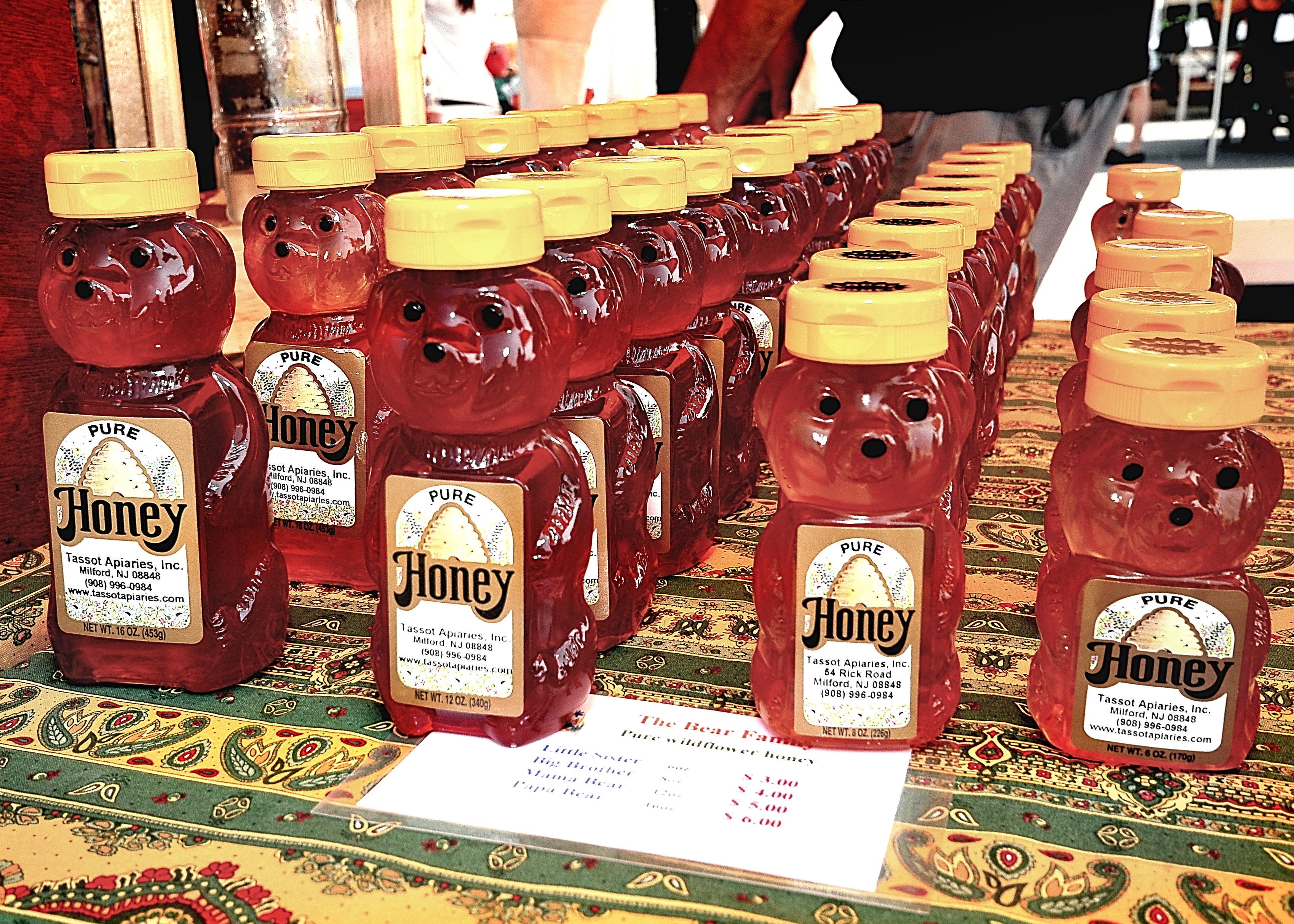


This week, Patch spoke with Jean-Claude Tassot, co-owner (with his wife, Beatrice), of Tassot Apiaries. Tassot stands out among market vendors as each week he dons his white beekeeper’s suit. Children and adults alike come to watch bees in the encased hive he positions at his stand. Jars of amber honey and golden yellow wax candles cover the table, located near the center of the market facing Maple Street.
How many bees do you bring to the market each week?
It’s an observation hive, just to show people what is inside. During market season, it’s between one thousand and three thousand bees. Right now it’s just a few bees – a few meaning one thousand. We have three observation hives to take to the different markets – we are in Morristown, Chatham, Madison, Montclair, Flemington, Summit, and Allentown, PA. It’s good marketing because kids love it, and at the same time I can explain to kids and adults what is inside the beehive. I explain the difference between yellowjackets, wasps, and honeybees.
Find out what's happening in Summitfor free with the latest updates from Patch.
How many bees do you have altogether?
The average for a regular beehive is 60,000. We have 150 of them. So multiply 60,000 by 150 – it’s around 9 million or something like this.
Find out what's happening in Summitfor free with the latest updates from Patch.
How did you become a beekeeper?
I grew up in Burgundy in France. My great-uncle had some beehives, and I was always with him looking at what he was doing. I started helping him and when he died, I took over. I took care of them until I was 20. Then I was living in Paris, so I forgot the bees. When we came to New Jersey twelve years ago, I met a beekeeper who was working with Beatrice. I went to his place, and I thought I should have a beehive just for fun. We put one, just to have some honey for ourselves. But it was a good queen in the beehive, so we got 75 pounds of honey. It was too much for us, so we met the local farmer at the farm stand and we asked him if he wanted to sell it, and we started like this. After one week, everything was sold. He asked for more, so we thought maybe we have a business. Now we have 150 hives.
What other kinds of work have you done besides beekeeping?
When I was in France, I took care of the computer of a trucking company. Everywhere France we have agencies. When we came to the U.S., when I got my green card I start working for Grand Union – now the name is Stop-n-Shop. It was 10 years ago. It was very hard for me because I was barely speaking English. I worked at the deli and when people asked for me for a third of a pound, I was thinking metric. Then I worked at Target. First I was the maintenance guy, and after this I worked on the sales floor and I was responsible for the toys department. Around Christmas it’s tough.
Why did you and your wife move to the US?
Because she worked for Lucent. And she’s still working. We moved here for 2 years. We loved the US and we decide to stay. New Jersey, where we are here, looks like the area of France close to Normandy. It looks the same physically.
How do you collect honey?
To collect the honey you have to put some boxes on the beehives – hopefully the bees fill it up with honey. They are smaller boxes – not as big as where the bees live. You collect these boxes because there are many. You bring them in your extracting room. You take each frame – there are eight tonine inside the box. You shed the capping, the wax the bees put on the cell to put the honey inside. You put your frame inside in the extractor – it looks like a huge salad spinner. That forces the honey from the comb. You save the honey and you bottle it. And you put the comb back to the bees.
When you extract for the candles, you save the wax, and I boil it in water. When the wax cools down – the wax goes up and the impurity goes under the wax. You scrape it, and when the wax is clean, you melt it and do the candles. I have latex molds. I put the wick and pour it in and this makes candles.
Can people come visit you?
If you are not afraid by bees you are welcome. When you extract you have bees all around you. But you wear a special outfit so you don’t get stung. We don’t do tours because most of the time we have nothing to show. You can go to the field but you don’t see much. If people want to see inside we can open one hive, but usually I have just a few outfits – so I can show where we extract the honey, how we do this. There’s not too much to see. But people when they ask to come we say call us and if we are there it’s ok.
What do your bees feed on?
Everything, because we have bees in different places. We have some bees in the orchard, so they collect in the spring apple blossom. But right now it’s bamboo and goldenrod, just before it was astor. Most of the time it’s wild flowers. It’s opportunistic. Last year we had a field with buckwheat – the honey was very dark.
What is the hardest thing about what you do?
It’s when you are carrying the boxes. If it’s full the weight is 60 or 70 pounds. It’s around 500 boxes like this and you have to do everything by hand. This is the work.
How often do you get stung?
From zero to 10, 15 times in a day if it’s a bad day. But it’s OK, it’s just the sting. I don’t like it. It stings. I don’t have a reaction. If it goes to the eye, you have a big eye. But on the eye, nothing happen. I don’t treat them with anything. If you wear gloves or you close your shoes, you don’t get stung. But I don’t like to work with gloves, so it’s part of the job.
What’s the best thing about what you do?
I like to learn about bees. And when you start learning with bees, you never stop. It’s always something new. You have many, many different aspects of beekeeping. You can learn about the bees themselves, different diseases, parasites, what to do to treat them. How to raise a queen – it’s a big thing, what to do to make the beehives better – what wood or plastic, or polyurethane. Afterwards you have the honey, and it’s interesting to see what the bees are gathering. If you are making candles it’s interesting too – some are easy to do, some are a pain in the neck. Selling the honey is another thing, advertising the honey. Having contact with customers at the market, this is fun too. It’s interesting to talk with people so this is fun too. So it’s many, many things.
What is your best-seller at the Summit Farmer’s Market?
I think it’s simply the one-pound. Just one pound of honey. I don’t know why but it’s the best seller.