Neighbor News
Advocates want to end J&J monopoly on tuberculosis drug
Lisa McCormick joined Doctors Without Borders in calling for Johnson & Johnson to stop putting profits ahead of people's lives
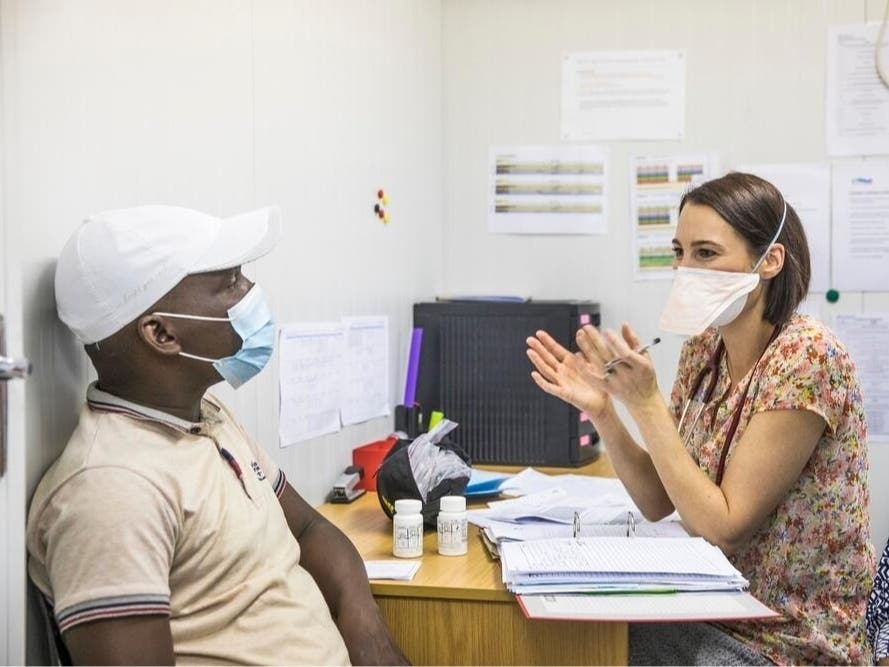
In a bold move aimed at addressing the global tuberculosis (TB) crisis, progressive New Jersey activist Lisa McCormick has joined Doctors Without Borders (Médecins Sans Frontières or MSF) in demanding that the price of a complete drug-resistant TB treatment course be no more than $500 per person.
McCormick, a staunch advocate for universal healthcare, has called on pharmaceutical companies, including Johnson & Johnson, to stop putting profits over the lives of people in desperate need of treatment.
"Doctors Without Borders is calling out pharmaceutical companies like Johnson & Johnson because these corporations continue to put their profits from lifesaving tuberculosis treatments over the lives of people who need it most," said McCormick. "Around the world, millions of people are living with TB, and cases continue to rise, but new and more effective treatments have become available to cure this disease. Johnson & Johnson is trying to extend its monopoly on the tuberculosis drug bedaquiline, which was approved by the FDA in 2012, and is sold under the brand name Sirturo."
Find out what's happening in Teaneckfor free with the latest updates from Patch.
Tuberculosis remains a significant global health challenge, affecting millions of people and causing numerous deaths each year. Drug-resistant TB strains have emerged, further complicating treatment options and driving up costs.
Despite the existence of new and better TB medicines, access to these new drugs is often limited for those who need it most, including in many of the places Doctors Without Borders operates. New drug-resistant treatment regimens recommended by the World Health Organization are still too costly.
Find out what's happening in Teaneckfor free with the latest updates from Patch.
While new and improved treatment regimens offer hope for patients, the exorbitant prices associated with these drugs pose a significant barrier, particularly in countries with high TB burdens and limited financial resources.
McCormick says she hopes her support for Doctors Without Borders will bring attention to the urgent need for accessible and affordable TB treatment worldwide.
"By advocating for a price cap of $500 per person for a complete drug-resistant TB treatment course, Doctors Without Borders hopes to ensure that patients in need can access these life-saving medications without facing insurmountable financial burdens," said McCormick. "The high cost of TB treatment regimens not only hampers the efforts to control the spread of the disease but also exacerbates health inequalities, disproportionately affecting the most vulnerable populations."
McCormick argues that pharmaceutical companies should prioritize global health and humanitarian concerns over maximizing profits, particularly for diseases that predominantly affect developing countries. One-third of the world does not have access to essential medicines while many Americans suffer or die needlessly only because they lack money to .
As drug-resistant TB continues to pose a major threat to public health, international organizations like Doctors Without Borders play a crucial role in providing medical assistance and raising awareness about the pressing need for affordable treatment options.
McCormick's collaboration with MSF highlights the power of grassroots activism and its potential to drive change on a global scale.
The campaign for affordable TB treatment is gaining momentum, with support from various quarters, including healthcare professionals, civil society organizations, and concerned individuals. The hope is that pharmaceutical companies will heed these calls for fair pricing and work towards making life-saving medications more accessible to those in dire need.
“We are deeply concerned that the persistent high price of bedaquiline will continue to block countries from rolling out the newer, shorter, game-changing, all-oral regimens for treating deadly, drug-resistant forms of TB,” said Christophe Perrin, TB pharmacist with MSF’s Access Campaign. “It is high time that J&J act responsibly by pledging not to enforce secondary patents for bedaquiline, withdrawing all related patent applications, and not pursuing any action against generic manufacturers who could export affordable versions of the drug to high-TB-burden countries where secondary patents remain.”
While J&J’s patent on the base compound of bedaquiline expires in 2023 in most countries, it has resorted to “patent evergreening” by filing additional patents for small changes to extend its monopoly on the drug until 2027 in many high-TB-burden countries.
However, in a landmark decision last month, the Indian Patent Office rejected one such evergreening attempt by J&J by denying the corporation a secondary patent in the country, which would have extended its monopoly for four more years.
As a result of the ruling in India, manufacturers in the country will be able to produce and supply affordable, quality-assured generic versions of bedaquiline once the primary patent expires in July 2023.
Bedaquiline currently accounts for 35-40 percent of the price of shorter—and 35-70 percent of longer—TB regimens.
It is the main cost driver in the WHO-recommended, six-month, all-oral BPaLM regimen(comprised of bedaquiline, pretomanid, linezolid and moxifloxacin), with bedaquiline accounting for $272 out of the total $570 price for the treatment combination.
J&J currently prices the drug at $1.50 per day for an adult treatment. However, with scale-up and generic competition, the price of bedaquiline would be expected to drop, bringing it closer to its target price of $0.50 per day as estimated by researchers.
“The introduction of the new six-month BPaLM regimen in Sierra Leone has been a groundbreaking milestone,” said Dr. Manisha Kumar, MSF medical coordinator in Sierra Leone. “Being the first country to routinely offer this shorter and more effective DR-TB treatment outside the setting of a clinical trial is revolutionary, especially considering that many people here struggle to access care due to distance, bad roads, and high transportation costs. Adherence to longer treatment regimens and stigma also continue to pose significant challenges. With the lower pill burden and shorter duration of BPaLM, more people with DR-TB can be cured faster and with less suffering.”
TB was the leading infectious disease killer until the COVID-19 pandemic. The number of people newly diagnosed with TB, including DR-TB, in 2020 fell by 18 percent from the previous year due to disruptions to health systems and services caused by the pandemic, with only a partial recovery in 2021.
In 2021, only one in three people with DR-TB received treatment for the disease.
“Too many lives have been lost to this killer disease,” Perrin said. “J&J must give up its secondary patents to make way for the supply of affordable generics. People with TB deserve urgent access to shorter, safer, and affordable treatments.”