Neighbor News
Foreclosures in New Jersey spurs concerns about corporate greed
Lisa McCormick says middle-class working families are the victims of a decades-long class war, in which too few fighting back.

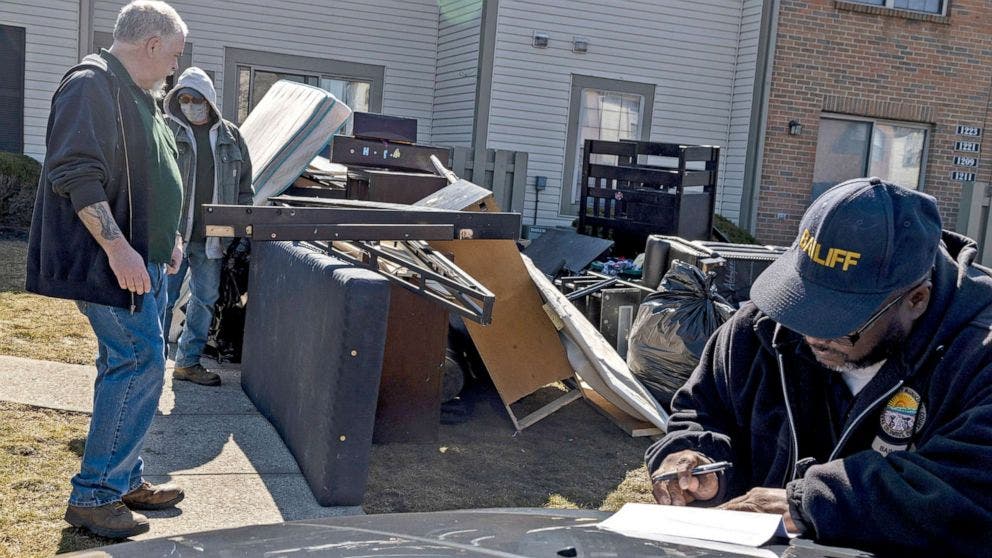
As foreclosure filings continue to rise in New Jersey, the state has taken the lead in the nation's foreclosure crisis in 2023, Lisa McCormick, a prominent voice on economic issues, sees this trend as a wake-up call for the middle class.
McCormick explained that working families are the victims of a decades-long class war with too few fighting back.
The increasing number of homes facing foreclosure is sounding alarm bells for property owners and experts alike, prompting concerns about the impact on working families.
Find out what's happening in Teaneckfor free with the latest updates from Patch.
"Institutional housing investors have been buying more single-family homes than ever, in a trend that should worry Americans because corporate landlords are expected to deliver big profits to their shareholders, which often results in evictions, aggressive rent increases while slacking on maintenance and repairs to the units they own," warns McCormick.
The rise of institutional investors in single-family rental housing poses a danger to both homeownership and rental affordability. McCormick points out that this trend limits options for prospective homebuyers as they are forced to compete with mega-wealthy investment funds.
Find out what's happening in Teaneckfor free with the latest updates from Patch.
The impact is particularly felt in a market where housing affordability was already a critical issue, exacerbated by supply shortages, rising material costs, and stagnant wages.
Three major corporations—BlackRock, Vanguard, and State Street—owning 88% of the S&P 500, have entered the real estate market, further intensifying the challenges faced by ordinary Americans.
The latest salvo in that class war, according to McCormick—who was the only New Jersey Democrat to challenge corrupt US Senator Bob Menendez in 2018—is the entry of multi-millionaire Virginia Republican Tammy Murphy into the contest for his seat in the 2024 Democratic primary election.
McCormick said neither Menendez nor Murphy intends to outlaw bribery or reverse Reaganomics—the policies based on trickle-down economic theories that have indebted the public and impoverished many working Americans while allowing the rich to multiply their wealth.
While the foreclosure crisis in New Jersey reflects broader economic challenges, the influence of corporate investors adds a new layer of complexity to the issue.
McCormick urges voters to elect policymakers who will address the root causes of the foreclosure surge and protect working families from the detrimental effects of corporate greed.
"As the nation grapples with economic uncertainties, the spotlight is on New Jersey, where the foreclosure crisis serves as a stark reminder of the need for comprehensive and equitable solutions to ensure housing stability for all," said McCormick, who is inviting residents to run for Congress and local elected offices to replace political insiders who are enthralled to the greedy rich.
Recent data from ATTOM, a leading curator of land, property, and real estate data, reveals that New Jersey is leading the nation, where one out of every 4,380 homes in the U.S. is facing foreclosure.
In July alone, a total of 31,877 U.S. properties experienced foreclosure filings, encompassing default notices, scheduled auctions, or bank repossessions. This marked a 5% increase from the same period last year, highlighting the growing challenges faced by homeowners.
New Jersey stands out with one in every 2,335 homes facing foreclosure, placing it among the states with the highest foreclosure rates. The economic uncertainty, coupled with a recent rebound in the housing market due to a shortage of housing, has created a complex landscape for property owners.
Institutional investors have committed more than $60 billion to buy single-family homes over the past year, according to a report by YardiMatrix.
A MetLife Investment Management research paper reported that institutions owned about 700,000 single-family rentals in 2022 — about 5% of the 14 million single-family rentals nationally. MetLife forecasts that by 2030, institutions will increase their single-family rental holdings by 7.6 million homes — more than 40% of all single-family rental properties.