Neighbor News
Senate inaction leaves chemical plants open to acts of terrorism
Security of chemical facilities in the United States at risk after Congress let authority for anti-terror program lapse amid distractions.
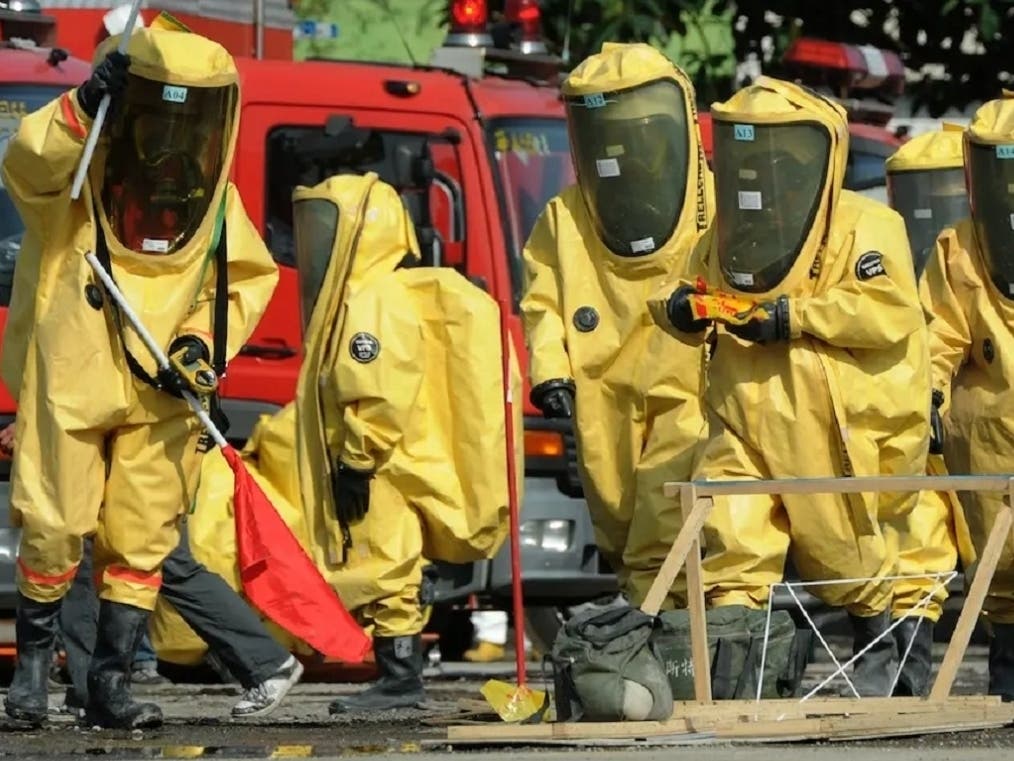
There are significant concerns about the security of chemical facilities across the United States since Congress allowed the statutory authority for the Chemical Facility Anti-Terrorism Standards (CFATS) program to expire on July 28, 2023.
Stephen E. Flynn, Council on Foreign Relations senior fellow for national security studies, called the situation “totally unsatisfactory in light of the threat that some very deadly chemicals can pose.”
In addition to the human cost, Flynn suggests an attack on a chemical plant could send shockwaves through the U.S. economy and pointed out that many chemical plants and refineries are located near ports or major highways, so an attack could disrupt the flow of commerce through those areas.
Find out what's happening in Teaneckfor free with the latest updates from Patch.
The lapse of the CFATS program, which was designed to enhance security at high-risk chemical facilities, has raised alarm bells among security experts and advocates who argue that the nation's safety is now at risk.
The expiration of CFATS comes amid criticisms of distracted politicians and a lack of bipartisan cooperation on critical security measures. One of the vocal critics of this inaction is Lisa McCormick, who voiced her concerns over the program's expiration and its potential consequences for national security in an email to thousands of New Jersey residents.
Find out what's happening in Teaneckfor free with the latest updates from Patch.
"CFATS is the nation's first regulatory program focused specifically on security at high-risk chemical facilities, but Senator Menendez apparently thinks his personal wealth and comfort are more important than your safety," said McCormick.
Managed by the Cybersecurity and Infrastructure Security Agency (CISA), the CFATS program, as defined in 6 CFR Part 27, plays a pivotal role in identifying and regulating high-risk facilities to ensure that robust security measures are in place. Its primary objective is to minimize the risk of dangerous chemicals being weaponized by terrorists.

Chemicals are integral to various industries, from healthcare to transportation, and their security challenges require continuous attention and cooperation between government agencies and private companies. As threats from domestic and foreign actors remain high, the expiration of CFATS is particularly worrying.
"The loss of CFATS has left the chemical industry managing countless threats without valuable tools and support from DHS. For example, the industry lost the ability to vet, on average, 300 names per day, or 9,000 names a month, to determine whether individuals who are trying to access chemical facilities have ties to terrorism. As the only way private businesses are able to vet individuals for these security purposes, the loss of the CFATS program weakens our national security posture and places everyone at risk," said McCormick.
Of the fifteen thousand hazardous chemical facilities in the United States, the Department of Justice has estimated that seven thousand have the potential to affect upwards of one thousand people in the surrounding area.
The EPA estimates 123 of those plants could affect more than one million people. An October 2001 study by the U.S. Army Surgeon General found a terrorist attack resulting in a chemical release had the potential to kill or injure some 2.4 million people, though the report was later rescinded.
While these numbers are alarming, many experts call them misleading, as they represent the number of people within a certain radius, not the number of people who would likely become exposed in the event of a release of toxic chemicals.
Department of Homeland Security Assistant Secretary Robert B. Stephan told a June 2005 congressional hearing that his agency estimates “The highest-risk facility in the United States would produce under ten thousand potential fatalities.”
For almost two decades, CFATS has been regarded as a model program that demonstrates how regulations can effectively improve security without stifling industry growth. According to a recent analysis by DHS, security measures at CFATS-regulated facilities increased by 60 percent, enhancing national security.
"Quite simply, CFATS works, and the country needs it. That’s probably why the program has been reauthorized four times with strong bipartisan support since it was created. This time around should have been no different, but as we see in the recent indictment of Senator Bob Menendez, politicians are taking care of themselves and not us," said McCormick. "Now it’s time for the Senate to do its job and restore CFATS. It should not take an act of terrorism to make it happen."
McCormick said the safety of the nation and its citizens should remain paramount, regardless of political distractions.
McCormick is a Democrat who has had a long record of involvement in New Jersey politics, often battling corrupt political bosses. She was the plaintiff in a federal lawsuit that sought to break the machine's grasp on power using an unconstitutional scheme to rig the ballot. McCormick also spearheaded anti-gun violence, consumer protection, and banking reform efforts for the northern New Jersey chapter of MoveOn.org.
She served on the legislative staff of now-Senate President Nicholas Scutari but she quit because the lawmaker—who was also Linden's municipal prosecutor—encouraged her to treat the post as a no-show job. She also was a candidate for County Clerk, who led the anti-establishment team of Democrats for Change, which captured 47 percent of the vote in Union County's 2010 primary election.
After she almost knocked off Menendez in 2018, political bosses and their allies in the corporate-controlled media concocted a story that her massive grassroots people-powered campaign was a fluke. They refused to credit McCormick with scoring more votes than the entire number of ballots cast in 2015.
McCormick's total in her race against Menendez exceeded the combined total earned by Congressman Frank Pallone, Congressman Rush Holt, and Lt. Governor Shiela Oliver in the 2013 special primary election for US Senate. McCormick even got a greater percentage than Bernie Sanders earned in his 2016 presidential campaign and more votes than Governor Jon Corzine earned when he ran for re-election.