Community Corner
Clinging Jellyfish Found At Tices Shoal In Barnegat Bay
Two people were treated at hospitals for extremely painful stings, but the DEP said it can't confirm the species responsible for them.


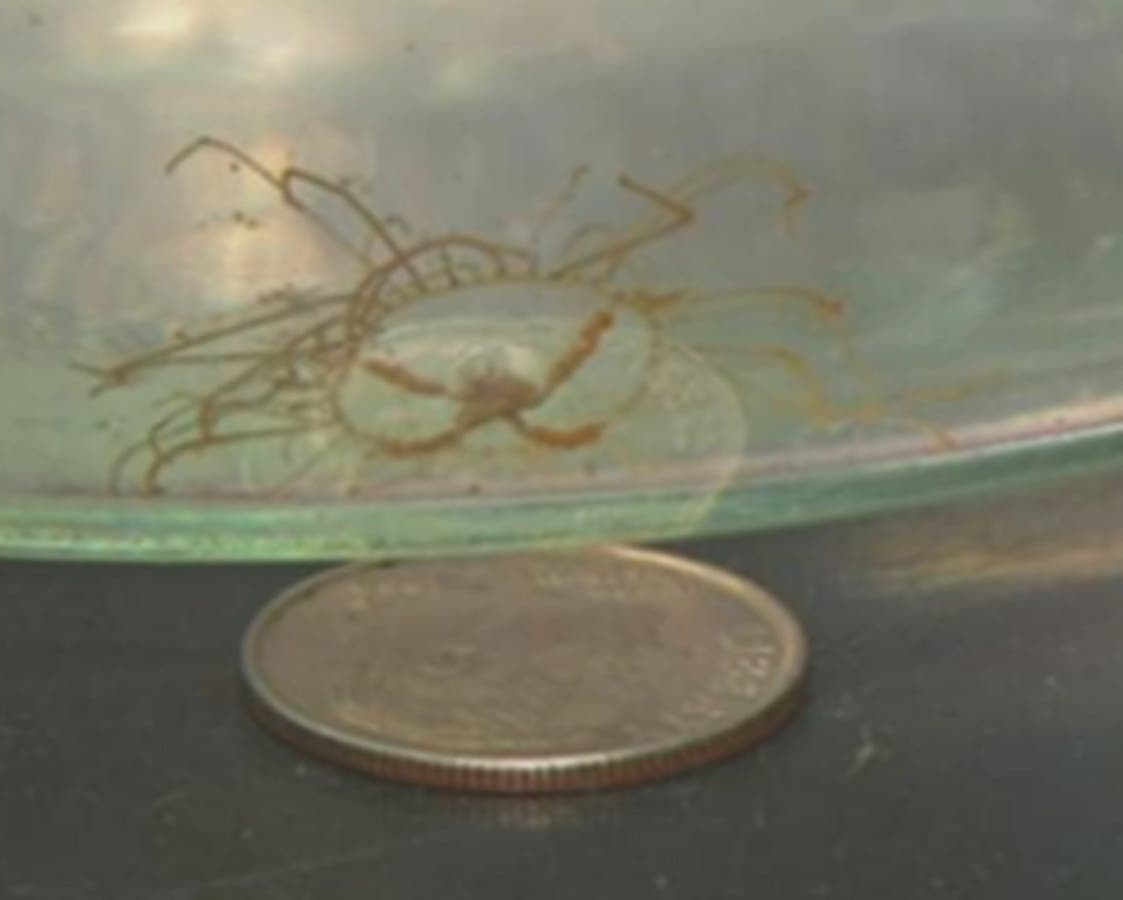
BARNEGAT BAY, NJ — Boaters who love to hang out at Tices Shoal and wade in the water are being warned to pay careful attention as more than 40 clinging jellyfish were found at the popular hangout after two people had to be treated for extremely painful stings last week, according to one of the researchers monitoring the creatures.
More than 40 of the dime-sized invasive jellyfish were found last week at Tices Shoal, Dr. Paul Bologna of Montclair State University said in the Facebook group New Jersey Jellyspotters. Bologna is one of the lead researchers monitoring the spread of clinging jellyfish in the area.
Tices Shoal is an area of shallow water behind Island Beach State Park that is popular with boaters looking to hang out and socialize.
Find out what's happening in Toms Riverfor free with the latest updates from Patch.
The state Department of Environmental Protection was aware of the two people who reported being stung, said Larry Hajna, a spokesman for the DEP.
"It’s hard to say with 100 percent certainty that they were the result of clinging jellyfish," Hajna said.
Find out what's happening in Toms Riverfor free with the latest updates from Patch.
The DEP said the clinging jellyfish, in various stages of maturation, were found at Jonny Allens Cove on the bayside of Island Beach State Park and in eelgrass beds on the north side of Tices Shoal.
One of those stung was Steve Ahrens, 58, of Lacey Township. Ahrens told NJ.com he was stung on his butt and went to the hospital because of the excruciating pain "from head to toe, like I was being stabbed with a thousand ice picks at once."
The second person stung also was taken to the hospital, Bologna said, and told WNBC New York that the treatment included morphine to relieve the pain.
The DEP has been warning people to be alert for the dime-sized jellyfish for a few weeks now, after the invasive species was found in the Metedeconk River in early June.
Clinging jellyfish, which are native to the Pacific Ocean, were found in northern Barnegat Bay two weeks later. Bologna said more than 200 of the jellyfish were found in the Metedeconk River areas, off F Cove in Brick, and along Wardells Neck along the Metedeconk River, also in Brick.
He said 40 of the clinging jellyfish were found at Tices Shoal, in postings on the New Jersey Jellyspotters page.
The DEP and Montclair State University have been tracking the clinging jellyfish, and have said it is not known to inhabit ocean beaches or other sandy areas but tends to attach itself to submerged aquatic vegetation and algae in back bays and estuaries, usually areas not heavily used for swimming.
Clinging jellyfish are small and very difficult to spot in the water. There is no method to effectively control clinging jellyfish populations in the aquatic environment, the DEP said in June. However, sea nettles, which are common in Barnegat Bay prey on clinging jellyfish. The clinging jellyfish ranges from the size of a dime to about the size of a quarter. It has a distinctive red, orange or violet cross across its middle. Sea nettles are larger and while they also sting, their sting is far less powerful.
The DEP encourages the public to use common sense and caution in areas where the jellyfish are suspected. Anyone wading through these areas, especially near aquatic vegetation, should take precautions, such as wearing boots or waders to protect themselves. Swimming at lifeguarded beaches is always encouraged.
The clinging jellyfish was first confirmed in New Jersey in 2016 in the Manasquan River at the Point Pleasant Canal. The DEP has been working with Montclair in studying the possible distribution of clinging jellyfish in New Jersey.
Both the adult, or medusa, and polyp stages of the clinging jellyfish are capable of stinging, a mechanism the species uses to stun prey and to defend against predators. Each jellyfish can trail 60 to 90 tentacles that uncoil like sharp threads and emit painful neurotoxins. Tentacles grow to be about three inches long. Clinging jellyfish primarily feed on zooplankton.
If you are stung by a clinging jellyfish:
- Apply white vinegar to the affected area to immobilize any remaining stinging cells.
- Rinse the area with salt water and remove any remaining tentacle materials using gloves or a thick towel.
- A hot compress or cold pack can then be applied to alleviate pain.
- If symptoms persist or pain increases instead of subsiding, seek prompt medical attention.
Clinging jellyfish do not swim or migrate but can be spread by boats and in ballast. They were first observed in the eastern Atlantic at Woods Hole, Mass. By the 1920s, they had spread to other waterways in Massachusetts and Connecticut, likely through introduction by ship ballast or from Pacific oysters containing polyps.
If you see a clinging jellyfish, do not try to capture it. Take a photograph if possible and send it to Dr. Paul Bologna at bolognap@mail.montclair.edu or Joseph Bilinski at joseph.bilinski@dep.nj.gov along with location information.
For a map of locations where clinging jellyfish have been confirmed and sites that have been investigated but no clinging jellyfish were found, click here.
Click here to get Patch email notifications on this or other local news articles or get Patch breaking news alerts sent right to your phone with our new app. Download here.
Clinging jellyfish photo provided by the NJ Department of Environmental Protection
Get more local news delivered straight to your inbox. Sign up for free Patch newsletters and alerts.