Health & Fitness
N.J. Studying Impact Of 'Clinging' Jellyfish With Dangerous Sting
The state will study the impact of clinging jellyfish, a dime- to quarter-sized and dangerous jellyfish found in New Jersey recently.


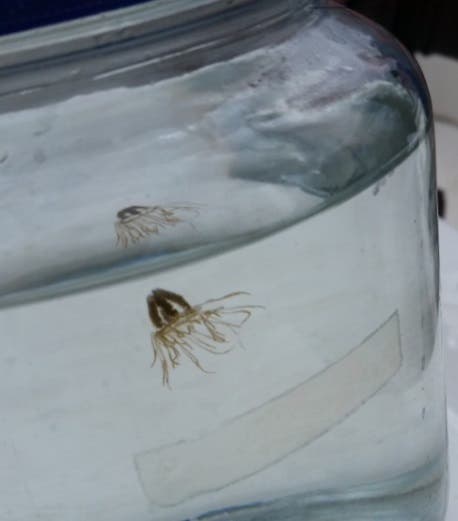
The state will study the impact of clinging jellyfish, a dime-to-quarter sized and invasive jellyfish that packs a powerful sting that has been reported in New Jersey in recent weeks.
The state Department of Environmental Protection has authorized a study in partnership with Montclair State University to determine the distribution and prevalence of the jellyfish, according to a DEP release.
The jellyfish, a native to the Pacific Ocean, is very difficult to spot in the water. A sting can produce severe pain and other localized symptoms and, in some cases can result in the need for hospitalization, according to the release.
Find out what's happening in Toms Riverfor free with the latest updates from Patch.
Multiple specimens have been observed and collected in the Shrewsbury River, while a single clinging jellyfish has been confirmed in the Manasquan River. The studies will be conducted in these waterways, as well as northern portions of Barnegat Bay - where the jellyfish has not, as yet, been observed.
No clinging jellyfish have been found on coastal beaches, since they prefer to cling to vegetation found in sheltered bay and estuarine waters, according to the release.
Find out what's happening in Toms Riverfor free with the latest updates from Patch.
Read more: Clinging Jellyfish With Toxic Sting Now 'Multiplying' In New Jersey [VIDEO]
"The DEP, working in partnership with Montclair State University, will initially focus on areas where clinging jellyfish have been observed and reported, as well as other bay and river locations where they could conceivably thrive," DEP Commissioner Bob Martin said in the release.
While the marine environment changes, the DEP hopes the study will "help us increase our understanding of the presence of clinging jellyfish in these areas and to ultimately better inform the public."
"These jellyfish have been found in waters of Massachusetts and the eastern tip of Long Island, but have never been reported in noticeable numbers in New Jersey until this year," said Gary Buchanan, Director of the DEP's Division of Science, Research and Environmental Health.
"Consequently, we do not know if these recent reports of clinging jellyfish are isolated or if they are becoming established in areas of the state."
The DEP has authorized a 30-day study that will involve systematic trawling of the water to collect any jellyfish that may be present, as well deployment of artificial sea grass mats to see if they attract clinging jellyfish, and genetic analysis.
The DEP will release its findings to the public after the study is concluded. Depending on the results of the initial study, the DEP will evaluate whether to authorize a second phase of work.
The study will be launched within the next week.
"Given that this species has not been recorded in New Jersey, we need to understand the distribution and life history to establish a baseline," said Paul Bologna, an associate professor of biology at Montclair. "This will support the development of public education and management strategies."
According to the Woods Hole Oceanographic Institution, the clinging jellyfish has a red, orange or violet cross across its middle. Each jellyfish can trail 60 to 90 tentacles that uncoil like sharp threads and emit painful neurotoxins. Clinging jellyfish primarily feed on zooplankton.Both the adult (medusa) and polyp stages of the clinging jellyfish are capable of stinging, a mechanism they use to stun prey and to defend against predators.
The DEP encourages the public to exercise common sense and caution in areas where the jellyfish have been discovered for recreation. Anyone wading through these areas, especially near aquatic vegetation should take precautions, such as wearing waders to protect themselves.
If stung by a clinging jellyfish:
- Apply white vinegar to the affected area to immobilize any remaining stinging cells.
- Rinse the area with salt water and remove any remaining tentacle materials using gloves or a thick towel.
- A hot compress can then be applied to alleviate pain.
- If symptoms persist or pain increases instead of subsiding, seek prompt medical attention.
Get more local news delivered straight to your inbox. Sign up for free Patch newsletters and alerts.