Politics & Government
Soil Removal Planned At Toms River Park Site; No Asbestos Found, Engineer Says
Soil is being removed at the request of the EPA even though soil testing showed no asbestos at the site, engineer John Mele said.


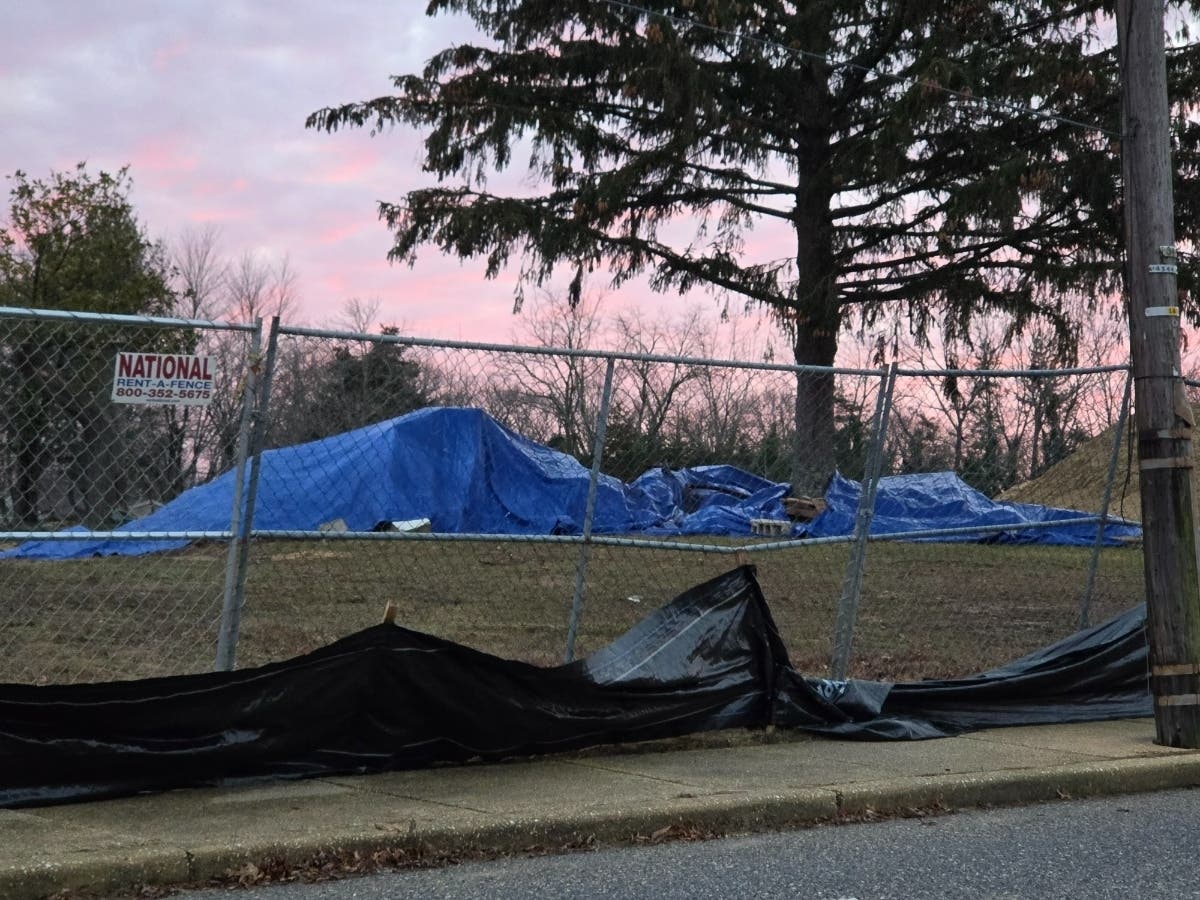
TOMS RIVER, NJ — More than four months after work was halted at a Clifton Avenue property due to concerns about asbestos contamination, an agreement is in place among federal, state and local authorities on remediating the site, a Toms River official said.
The agreement will allow work to resume at the site that Toms River plans to turn into a park with a playground, after contractors remove 6 inches of soil from about a third of the site, said John Mele, Toms River Township engineer.
Mele, responding to a question at the Toms River Township Council meeting on Feb. 25, said the agreement had just been reached after weeks of "a bit of arm wrestling on how to rectify the situation."
Find out what's happening in Toms Riverfor free with the latest updates from Patch.
Work at the site at Clifton Avenue and Batchelor Street was shut down on Oct. 22 after calls to county and state officials reporting possible asbestos contamination from the demolition of two homes on the site.
One of the homes was built in 1910 and had asbestos shingles on it, according to the property's Zillow description, and videos shared with Patch (a second video is here) showed clouds of debris as the home was being demolished.
Find out what's happening in Toms Riverfor free with the latest updates from Patch.
Officials from the state Department of Health, Department of Labor and Department of Environmental Protection responded, along with the federal EPA, and since then it has been a matter of satisfying the demands of all of the agencies, Mele said.
Those demands included the installation of the chain-link fence to keep people out of the property and the hiring of specific contractors for the remediation of the site and for overseeing the remediation of the site, Mele said.
Toms River also was required to obtain demolition permits for the site.
Multiple soil and air samples were taken and sent to a lab and tested by "a qualified consultant, not by us," Mele said. He said Toms River employees "weren't even allowed back to the property or in the property."
"Not only did they (the samples) meet the standards and the parameters that would be required to be deemed clean by the
state and the EPA, there was no trace whatsoever," he said. "Not zero, not even a hint of it in any of the samples taken. So, that's a good thing. We should all be happy about that, that it came back clean."
Even with the clean bill of testing, the EPA wanted Toms River to proceed with caution and wanted 6 inches of soil removed from about an acre and a half of the site, which Mele said amounted to 70,000 yards of soil.
Negotiations and discussions reduced that by about two-thirds, he said, with the EPA requiring the removal of 6 inches of dirt from the site in the immediate area of the two homes, in the front yards and the driveway areas, he said.
"The EPA wants us to be ultra-conservative," Mele said.
The soil will be removed by an EPA-approved contractor and taken to an EPA-approved disposal site, he said.
Mele said he could not provide an estimate of the cost for the removal.
"We hope it will be less than $100,000," he said.
He said it was anticipated to be significantly less than the several hundred-thousand dollars it would have cost to remove soil from the entire site.
"That would have been a project killer," Mele said.
Work to remove the soil will begin as soon as practical after the snow has melted, Mele said.
Councilman Robert Bianchini, who had been the assistant engineer for the city of Asbury Park before retiring in 2025, said he was concerned about the potentional impacts of what was done before state and federal agencies were called.
"When the township did the demolition they didn't even know what they were doing," Bianchini said. "They had a bunch of novice people doing demolition.
"Professionals, before they start they remove all the asbestos from the building," he said. "The flooring, the shingles, the roof, anything that has asbestos. Then they take it piece by piece. They separate the wood, they separate the concrete and they take that to different locations. This place was imploded."
"The poor guys that were on the equipment that work for the town were out there with no PPE, no protection. ... That's ludicrous," Bianchini said. "I'm getting a little bit nervous here because it seems like we're getting told little dribs and drabs."
Council President David Ciccozzi halted the discussion at that point.
Get more local news delivered straight to your inbox. Sign up for free Patch newsletters and alerts.