Politics & Government
Toms River Affordable Housing Plan In Limbo After Chaotic Council Meeting
After more than 4 hours of shouting and insults, the fate of Toms River's affordable housing plan and ordinances were unclear.


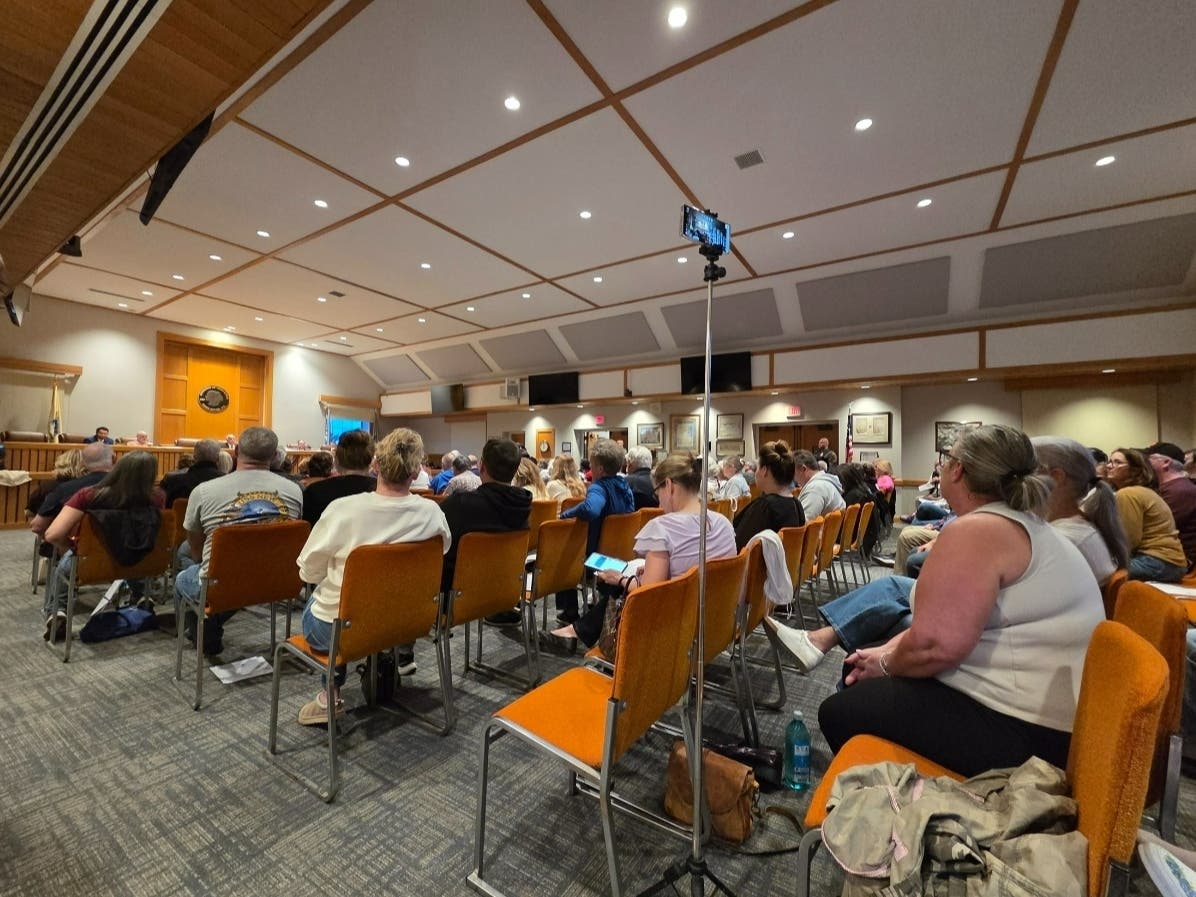
TOMS RIVER, NJ — Toms River's affordable housing plan is in limbo after a chaotic Township Council meeting that was more than four hours of shouting, insults and profanity.
Votes on two of the three ordinances to amend Toms River's land use and zoning regulations — part of a settlement to meet the township's fourth round affordable housing obligations under the Mount Laurel doctrine — left township officials with no clear answer on whether they were approved or not.
Under the affordable housing settlement, presented in December, Toms River has agreed to a present need of 526 low- or moderate-income units and a prospective need of 649 units for the 2025-2035 timeframe, the fourth round of Mount Laurel affordable housing mandates. Each round is a 10-year plan, the result of lengthy litigation stemming from the state Supreme Court's Mount Laurel ruling in 1983 that ruled affordable housing was a constitutional right.
Find out what's happening in Toms Riverfor free with the latest updates from Patch.
"Present need" refers to existing housing units deemed substandard/deficient and in need of repair. "Prospective need" estimates the number of new units that will be needed based on population trends.
Part of Toms River's agreement includes agreements extending deed restrictions on some existing properties, maintaining affordable housing units for another 30 years. Toms River is still required to build about 183 new units, Rodrick has said.
Find out what's happening in Toms Riverfor free with the latest updates from Patch.
The governing body has been in agreement on principle about the state's affordable housing mandates — they are seen as forcibly changing the nature of the community, ruining the small-town feel and making Toms River more like a city.
But the fight over Mayor Daniel Rodrick's affordable housing plan — replete with insults and personal attacks, council members screaming at each other to shut up, using the f word and even calling the meeting a "s--show" — highlighted the division within the local Republican party and the lack of trust those who oppose Rodrick have in him.
The meeting was livestreamed on the township's YouTube channel until public comment, when the recording was halted, according to residents who were watching at home and texted a Patch reporter. The recording was removed from public view on the YouTube channel before everyone left the meeting room at Town Hall.
For those who saw the livestream or witnessed it in person, it was another episode of what has been a constant since the beginning of 2024, when Rodrick took office as mayor: Rodrick speaks over anyone he disagrees with — both council members and residents — and they respond in kind, yelling back, both from the dais and from the audience.
The most contentious part of the meeting was the public hearing on the first ordinance, which included the creation of a multifamily housing zone that would allow 18 units per acre on two parcels in the area of Route 70 and Massachusetts Avenue.
The parcels are near the Lake Ridge age-restricted community, and many of those in attendance on Wednesday were urging the council to reject the ordinance because it was rezoning the parcels.
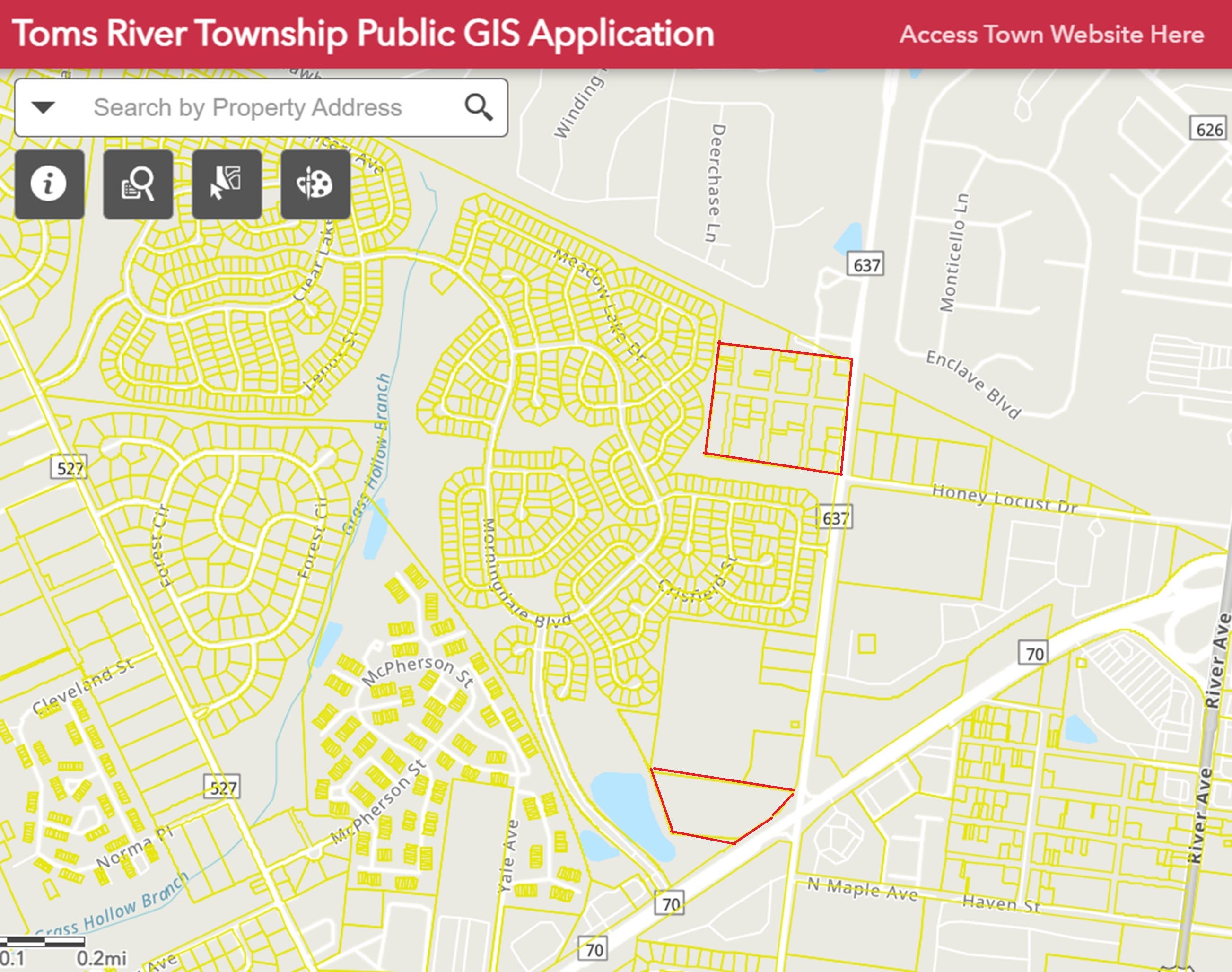
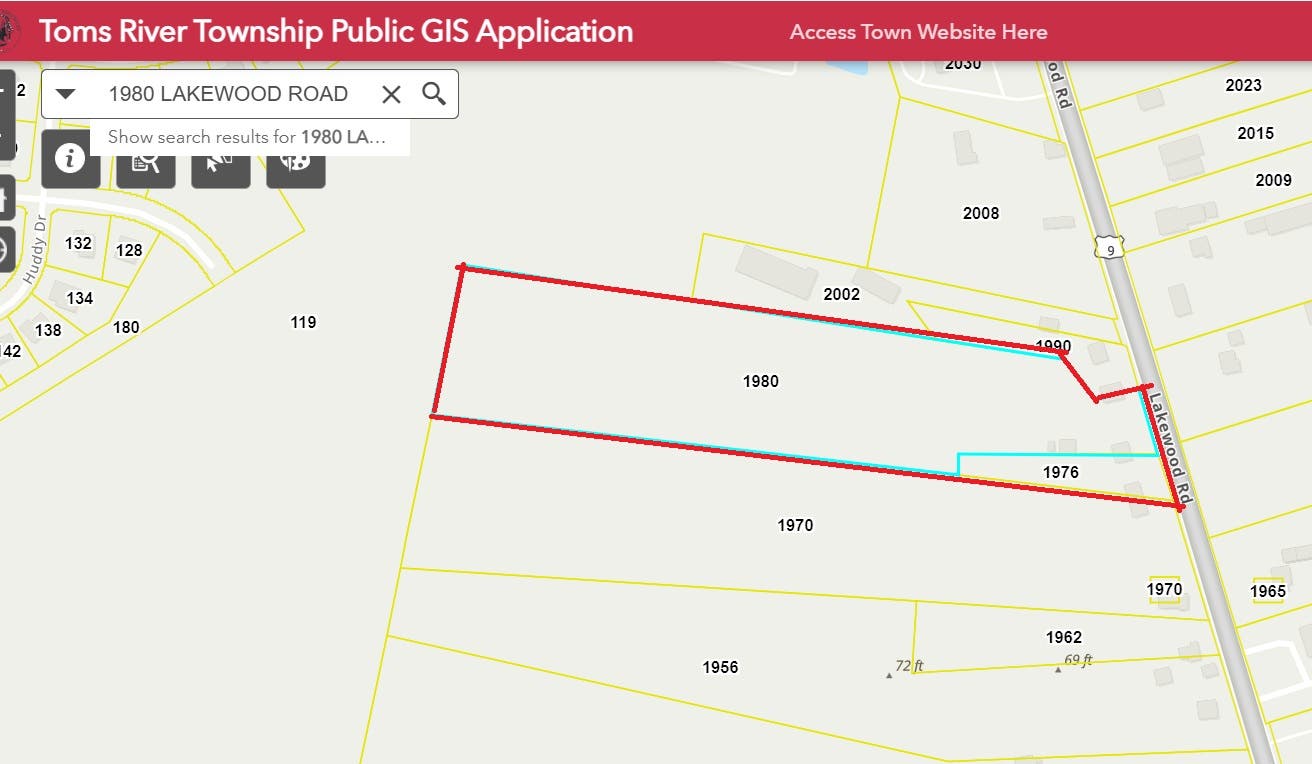
The second ordinance that was contentious would create a multifamily housing overlay on two properties Toms River owns on Route 9. The land was purchased by the township in 2016 with the intent of preventing it from being developed, but it was purchased through bonds, rather than money specifically designated for open space purchases.
Under the second ordinance, which would permit 16 units per acre, it would be able to be developed as 100 percent affordable housing with a potential 134 units.
The third ordinance updated the township's code to comply with affordable housing language the state is requiring all municipalities to include in their zoning.
The ordinance to rezone the properties near Lake Ridge took up the largest portion of the meeting.
Residents of Lake Ridge and council members David Ciccozzi, Tom Nivison, Robert Bianchini and Clinton Bradley questioned whether the ordinance could be voted on because several residents who live within 200 feet of the two properties had not received notices about the rezoning by certified mail.
Generally, property owners neighboring a parcel affected by a zoning change are required to be notified by certified and regular mail, but Christopher Zingaro, the attorney handling Toms River's affordable housing negotiations with the state and other parties, said that notice was not required in connection with the affordable housing plan.
Lake Ridge residents said changing the zoning to allow high-density multifamily housing would make traffic significantly worse where the intersection of Route 70 and Massachusetts Avenue already has been named the third deadliest in the country.
Bianchini, Nivison, Ciccozzi and Bradley said they wanted more time to review the ordinances, saying Rodrick had given them to the council at the last minute before the Feb. 25 council meeting where they were introduced.
"We want to be brought into the conversation from the start," Ciccozzi said.
Rodrick, both at the meeting and in text messages afterward, said he had tried for weeks to meet with the council members to discuss the affordable housing but that they were not answering his calls.
The ordinance to rezone the property on Route 9 was not part of the affordable housing settlement Toms River announced in December. That includes approximately 65 acres of land that would be zoned for 16 units of housing per acre.
Toms River spent more than $8 million to purchase the property to prevent the parcels from being developed, and lengthy legal proceedings — including an eminent domain effort — to secure them. Toms River paid more than $5.8 million in October to the property owner as part of a settlement.
Rodrick, at the Toms River Planning Board meeting on Tuesday night, said those had been added to the affordable housing plan because the developer of the Hopes Crossing apartment complex had reversed course on agreeing to an extension of affordable housing restrictions at the complex.
He insisted the inclusion of the properties as a multifamily zoning option was to put pressure on the Hopes Crossing developer and convince them to return to negotiations.
Rodrick also said that rezoning the properties — both the Route 9 site and the parcels near Lake Ridge — did not change the fact that any proposed developments would need approval from the council and planning or zoning boards to move forward.
"There is zero risk to the council taking a vote tonight," Rodrick said.
The council members and Lake Ridge residents were not convinced.
Ciccozzi and Nivison both said they had repeatedly asked the township attorney, Jonathan Penny, to seek an extension from the state on the ordinances because Hopes Crossing had pulled out.
"I've been asking you to request the extension for six weeks," Nivison said.
Zingaro said the state has repeatedly rejected extension requests, and that the township needed to abide by the March 15 deadline for adoption of the ordinances — a change to the affordable housing process that was made in 2024.
There are towns that have been slow to finalize their affordable housing agreements, including some in Ocean County. Manchester Township and Point Pleasant Borough introduced their ordinances earlier this week, meaning their second reading and final votes won't happen until after the March 15 deadline. It's unclear whether the state has addressed those delays.
Rodrick reiterated remarks from a letter and text message he had sent to Toms River residents on Tuesday night after the planning board meeting, saying the council was in essence approving 8,000 new housing units if it rejected the ordinances.
"I am not in favor of 8,000 units," Nivison said, and criticized Rodrick for including the personal phone numbers of himself, Ciccozzi, Bianchini and Bradley instead of their township-issued cell phones.
He said the proposal for the multifamily housing overlays was counter to Rodrick's campaign promise in 2023 to stop overbuilding in Toms River.
"He has not stopped the building even a little bit," said Nivison, who was a member of Rodrick's council ticket when Rodrick was elected mayor. "Now he's threatening to take the council's benefits if we resist."
"We have a very good plan," Rodrick said, insisting that voting it down will open the township to immediate builder's remedy lawsuits that could result in developers getting to develop sites with no oversight from the township.
The vote on the ordinance with the bulk of the affordable housing settlement zoning, including the properties near Lake Ridge, 3 yes, 2 no and 2 abstentions. Harry Aber, Craig Coleman and Lynn O'Toole voted yes; Ciccozzi and Bradley voted no. Nivison and Bianchini abstained, which prompted Rodrick to scream "Coward!" as Bianchini said he was abstaining because he was concerned about whether the township had met its legal requirements on noticing property owners of the zoning change.
On the ordinance that rezones the property on Route 9 from commercial to multifamily housing with a requirement for a 100 percent affordable development, the vote was 3 in favor (Aber, Coleman and O'Toole), 3 against (Ciccozzi, Bianchini and Bradley) and Nivison abstained.
Under common law, abstentions usually get counted as votes in favor. But it was not at all clear if that applies in the case of an ordinance.
Penny, the township attorney, said he would have to research the matter.
New Jersey state law is not clear, a matter that was highlighted in an April 2011 state report from the Law Revision Commission on "The Effect of Abstentions."
The report noted that abstentions are typically counted in favor, but said "the basic rule that an abstention is counted as an affirmative vote applies in a minority of cases: only where a member is entitled to vote, does not recuse himself and the statute does not provide that a particular number or percentage is necessary for approval of the matter. In addition, it may be particularly hard to determine whether a member fully recused himself or whether he merely abstained. In the first case, his vote would not count; in the second, he would be counted as affirmative."
The report suggested legislation to clarify how abstentions should count, and while a bill to do that was introduced by Assemblyman Ron Dancer in 2018, it went nowhere.
Early Thursday morning, Rodrick issued a comment expressing his belief that the abstentions meant the ordinances were defeated:
"I am outraged by the reckless and irresponsible decision by Council members Bianchini, Nivison, Ciccozzi, and Bradley to vote down the affordable housing settlement my administration negotiated to protect this community," he said. "I believe they did so because they’re in bed with developers who will be able to build whatever they want — wherever they want — up 8,000 units should we be subject to builders remedy."
He did not provide evidence to support his contention of cooperation between those council members and developers.
Note: This article has been updated to clarify which lots were added when the Hopes Crossing developer withdrew from the agreement. Patch regrets the error.
Get more local news delivered straight to your inbox. Sign up for free Patch newsletters and alerts.