Politics & Government
Toms River Schools' Project Is Critically Needed Now: OPINION
No one likes tax increases, but rejecting the $147 million in projects requested in the referendum will cost more in the long run.


TOMS RIVER, NJ — "How did we get here?" It's the one question that's been asked repeatedly over the last several months leading up to Tuesday's referendum seeking voter approval for $147 million in repairs and upgrades.
How could this much work need to be done? Why wasn't it done sooner? The answer: No one was willing to spend the money to help aging buildings keep up with the times. That's a simplified response, of course, but it is the underlying reason things have reached this point.
Want proof? Let's go back 18 years, to 1991. Beachwood Elementary School was the newest of the schools, open for just three years. Toms River South was marking its 40th year of operation, and 10 other schools in the district were 20 years old or older.
Find out what's happening in Toms Riverfor free with the latest updates from Patch.
That year, the district asked voters to approve $14 million in bonds for work at the district's schools. Included in the list of projects: science lab upgrades; an 8-classroom addition and new gymnasium at Toms River North; a weight room at Toms River East; library updates at Toms River South, and computer labs in the elementary schools. It was rejected. The rejection came in spite of the fact that the school budget for the 1991-92 school year had a 20-cent decrease — 35 cents in Toms River — in the tax rate, according to Asbury Park Press archives accessed via Newspapers.com.
For less than $1 million per school, there could have been a number of upgrades. Now the cost for just the science labs is more than $1 million for each high school. It's worth noting the state Department of Education deemed the Toms River South library and the labs educationally inadequate even then.
Find out what's happening in Toms Riverfor free with the latest updates from Patch.
The capital outlay budget that year: $1.15 million, according to the legal notice on the 1991-92 school budget. That's less than $72,000 per school for any kind of improvements.
And people were complaining about the 20-cent decrease in the tax rate, too, according to the reporting.
Want more? Let's look at 1998. The proposed tax levy for the 1998-99 school year was rejected by voters that year, as the district faced both rising enrollment and flat state aid. A separate question asked voters to approve $1.2 million to wire the then-11 elementary schools (Joseph A. Citta School was not yet open) for computers. That was rejected too.
Now, wiring upgrades — necessary because today's technology puts a strain on old systems — are more than $1.4 million just for the three oldest elementary schools in the district, East Dover, North Dover and Pine Beach. And with the rejection of the tax levy that year, it's hard to know how much was cut that might have addressed other issues.
Why isn't there a huge capital reserve to cover thse projects? I asked Business Administrator William Doering to clarify that situation. In short, there are two ways to build a capital reserve balance: Raise the funds through taxes or transfer funds left over at the end of the school year.
"Over the last five years we have probably deposited $7 to $8 million into the capital reserve" in the form of budget tranfers, Doering said, "but we have used nearly $5 million as well."
"But depositing a lot of money to capital reserve and taxing everyone a lot every year would be a much heavier tax impact than spreading that cost over 20 years like we are doing with this bond proposal," he added.
How much might that cost be? Neighboring Brick Township was faced with a 51-cent increase in the school budget one year to address emergency capital needs that arose because of years of shortchanging capital improvements.
"Practically speaking I do not think it would have been viable to deposit anything close to the amount that we have in terms of needs, which are too great at this point," Doering said.
Money bonded through this project can't be spent willy-nilly. It has to be spent on what's defined in the referendum. That's state law. Regardless of what anyopne suggests otherwise.
And though people have questioned how much the district's general budget taxes will go up, the amount of increase in the tax levy is capped at 2 percent. By state law.
Of course, there have been efforts out there to politicize the referendum. School spending has been highly politicized going back to the 1980s and it has only gotten worse over time. But there's a political undercurrent with the current referendum that aims to distract from the here and now.
The current Board of Education hasn't had "10 years" to fix this. That's a lie. None of the current board members have served for more than three years. But political nonsense is driving that lie, just as it's driving the insistence that the buildings wouldn't be in this shape if Michael J. Ritacco was still superintendent.
I'll break it down simply for you:
1. Ritacco is serving an 11-year sentence in federal prison after he admitted to taking bribes that cost taxpayers MILLIONS of dollars. Millions that could have been spent replacing flooring at North Dover Elementary School instead of haphazardly replacing tiles with whatever was handy. Millions that could have been spent upgrading science labs. Money that could have been spent repairing curbing and sidewalks so students and teachers don't face the risk of tripping as they walk into the buildings to attend school for the day.
2. People talk about how Ritacco "was so nice." He charmed people while stealing money out of their pockets for his own personal use while taxpayers were paying him $234,000. Is that really OK with you?
3. Ritacco was superintendent from 1992 to October 2010 — 18 years. More than half the district's schools were at least 25 years old by 1992. Certainly he bears some responsibility for failing to to address needed care.
4. In the wake of Ritacco's arrest and guilty plea, the district spent three years trying to figure out the extent of the financial damage. None of the board members elected in the immediate aftermath of his arrest remain on the board.
5. The district has started to address issues — including replacing the Toms River South boiler that was 50 years old — before there are catastrophic failures. But with so many buildings and systems with such significant age, it's simply beyond just repairs. When your car reaches an age where you can't get the right parts to fix it, because they're no longer made, you have to bite the bullet and replace it. That's where the district is now.
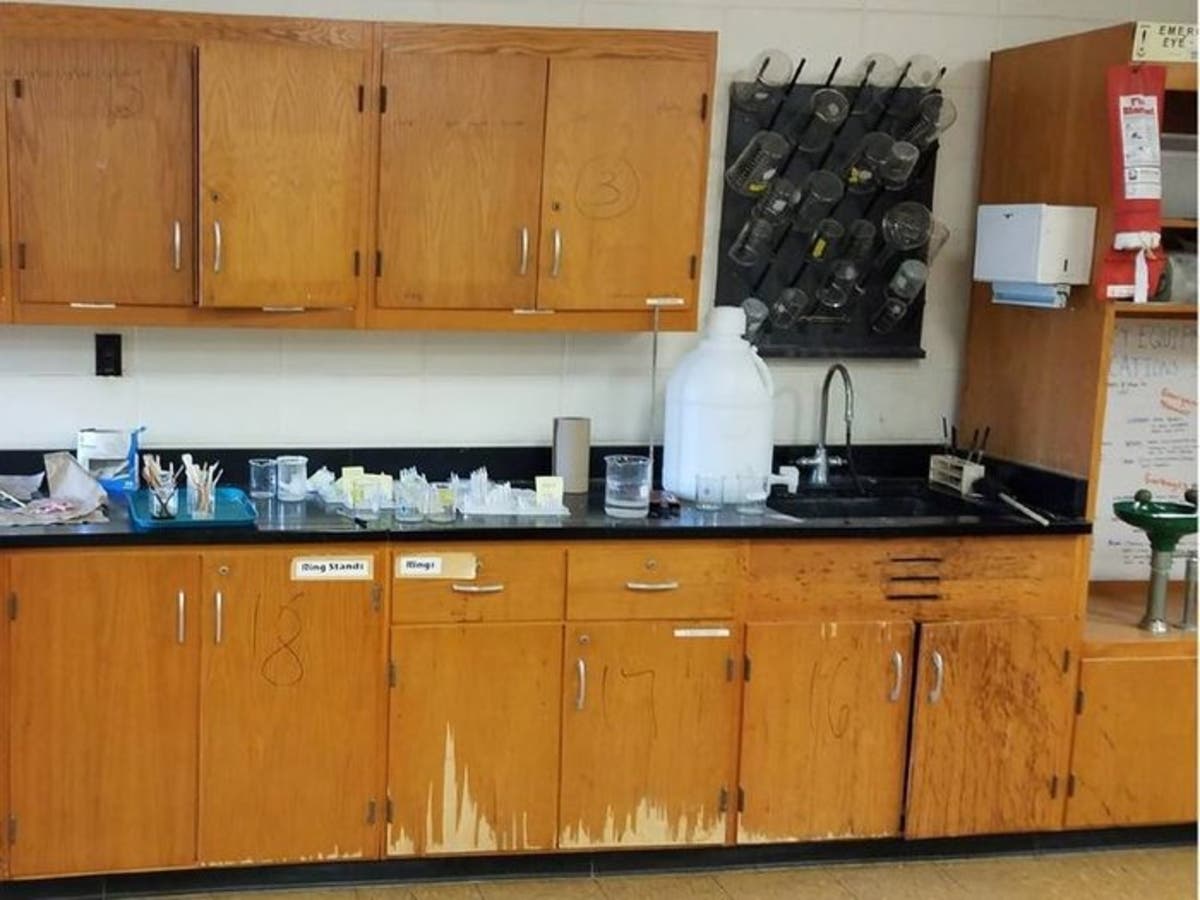
So many issues have been put on the back burner. Leaking roofs. Science labs from the 1970s that aren't even close to the needs of 21st century educational demands. Wiring that's decades old.
The back burner is full and there's no more room. Putting these projects off will cost taxpayers more — increased materials costs, increased labor costs, and who knows how much damage will be done in the meantime.
The state Department of Education is funding $47 million of the $147 million project. If the project is rejected, that money goes away. The projects, however, will not. And taxpayers will pay a price not only in taxes but in a decline in property values.
The time is now, folks. Invest in your schools. Kicking the can any farther will really come back to bite you.
Vote yes on Tuesday.
READ MORE:
- Toms River Schools Referendum: A School-By-School Guide
- Toms River Schools Referendum: A Student Speaks Up
- 'If Not Now, When?' TR Referendum Targets Critical School Repairs
- Todd Frazier, TR Teachers Union Chief Urge Passage Of Referendum
Click here to get Patch email notifications on this or other local news articles or get Patch breaking news alerts sent right to your phone with our app. Download here.
Follow Toms River Patch on Facebook. Have a news tip? Email karen.wall@patch.com
Get more local news delivered straight to your inbox. Sign up for free Patch newsletters and alerts.