Schools
Tri-Boro Schools Move Toward Anti-Bullying Culture
District changes will try to reflect an overhaul in the schools' culture around bullying.
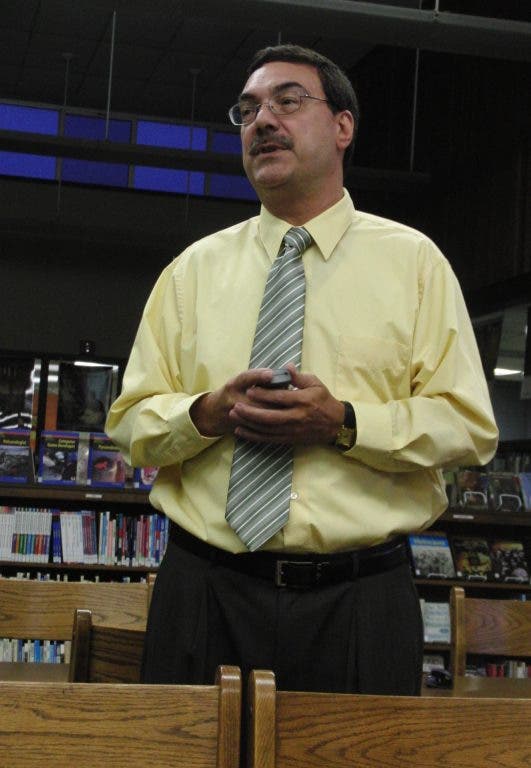

Students returned to school in the tri-boro this week not only to new teachers and new textbooks, but also to the beginning of what administrators hope to be a new culture which more strongly discourages bullying.
A new state anti-bullying law, known in most districts as the , was passed in January, and requires school districts to follow a strategic reporting procedure for isolated and continuous incidents of bullying. While many school districts had policies in place prior to the state law, the isolated incident clause is new for many.
The state bill became a priority for legislators after several national bullying incidents came to light, including the suicide of , a Rutgers student who jumped off the George Washington Bridge to his death. Clementi was bullied by his roommate, who allegedly shared a video of a romantic encounter between Clementi and another man on the Internet.
Find out what's happening in Tri-Borofor free with the latest updates from Patch.
According to Superintendent James Opiekun, new technology has brought bullying into other realms, such as cyber bullying, forcing school districts to continuously update their bullying procedures.
“'Harassment, intimidation, or bullying' means any gesture, written, verbal or physical act, or any electronic communication, that takes place on school property, at any school-sponsored function or on a school bus," Kinnelon's HIB Policy reads. "Electronic communications" is defined as communication that is transmitted through electronic devices, such as, but not limited to, cell phones, computers and pagers.
Find out what's happening in Tri-Borofor free with the latest updates from Patch.
Harassment, intimidation and bullying, according to the policy, includes demeaning another individual or group of individuals with regards to their race, color, gender, sexual orientation, religion, expression or disabilities and with intentions to cause disruptions to school.
"Bullying is defined as the victim's state of mind," Opiekun said.
While all incidents of bullying will need to be reported, school principals will be faced with the task of determining an appropriate consequence for the harassment, intimidation or bullying behavior.
"The anti-bullying specialists do the investigation," Opiekun said. "The principal gets involved as far as the consequence."
Anti-bullying specialists (in the case of Kinnelon, Guidance Counselors Tara McClain-; Joy Ludwig-; and Priscilla Adams-) will investigate the incidents with help from school principals and report to the district anti-bullying coordinators ( Principal Jodi Mulholland and Director of Special Services Richard Maizell) who will also report to the superintendent. Coordinators will also be responsible for reporting to the state, which will issue "report cards" to each school district every year based on their compliance with the reporting procedure and policy.
Another new element is that all reports will be viewed by the board of education, which will ultimately decide if the consequences are appropriate. There will be a five-day reporting deadline in Kinnelon, Opiekun said.
will be following the same format as far as having specialists with counseling backgrounds, according to Superintendent Mario Cardinale.
"We're obviously taking it very seriously, as we have and should," Cardinale said.
Consequences, according to the policy Kinnelon Public Schools adopted, which is comparable to the other two districts' policies, could include detention, loss of privileges, in-school suspension (including on the weekends), out-of-school suspension, expulsion and even legal action. However, consequences are determined based on several factors, including context of incident, age and maturity level of the individuals involved, the relationship between the individuals involved and incidences of past behavior.
In Bloomingdale, Principal Frank Verducci explained that each school will now have a school safety team during a presentation on the district's HIB Policy Tuesday night.
Verducci was named the district’s anti-bullying coordinator in July. Each school principal is also responsible for appointing his or her own anti-bullying specialist to chair the school safety teams and lead the investigation of bullying cases.
Bloomingdale's individual school specialists are Carolyn Morris (Walter T. Bergen School), Anne Martini () and Karleen Lunetta (). In addition to the schools' anti-bullying specialists, each safety team will include the school principal, a teacher, a parent and other members as determined by the principal.
“The school safety team will receive any complaints of [harassment, intimidation and bullying] of students that have been reported to the principal,” Verducci said. “They will also receive any copies of any report prepared after an investigation of an incident of [harassment, intimidation and bullying].”
However, Verducci clarified, the parent member of the teams will only play a limited role and will not be involved in any actions that “might compromise the confidentiality of a student,” including receiving reports. Instead, the parent will act as a liaison to the community.
To implement the new law’s many facets, Verducci said the district is taking various steps, including spending half of an in-service day on Oct. 10 listening to a presentation on suicide prevention from a representative from Saint Barnabas Medical Center.
Additionally, the first full week of October every year in Bloomingdale will be observed as a "Week of Respect" which will require age-appropriate instruction for kids regarding harassment, intimidation and bullying. This year’s "Week of Respect" begins Oct. 3.
In terms of bullying prevention and intervention, Verducci said the district has not yet pinpointed a specific practice on which it will focus. Regardless, he said, the goal is to change the culture around bullying in the schools.
“We’ve put up some posters in the hallway to highlight bullying,” he said. “We’ve put some posters up that say, ‘See something, say something,’ to encourage people to speak up if they see something that’s not right. It must become uncool to bully and cool to help out kids who are bullied.”
Verducci said the district will also try to put more “eyes” in hotspot locations, such as locker rooms, where more bullying tends to occur.
“Any school I’ve ever been in, a lot of bullying situations and harassment have taken place in locker rooms,” Verducci said. “It’s kind of hard when you’ve got a [physical education] teacher who’s got to be out on the gym floor watching the students coming into the gym, and there’s nobody in the locker room watching what’s going on.”
In addition to the consequence element of the districts' policies, specialists and coordinators will work on remediation for not just the bullies, but the victims as well.
"[The specialists] will work with the victim and work with the bully to see what's missing," Opiekun said. "The ultimate goal is to make kids feel safe."
Bloomingdale Board of Education Member Andrew Samuel asked whether the faculty sees the new law more as an opportunity to tackle the bullying problem or simply more requirements that have to be followed.
Although he said the suicide of Clementi probably helped to speed up this legislation, Verducci also reminded the board that districts have been responsible for following bullying policies since the original law was enacted nine years ago.
The big problem he finds, though, is that this is an unfunded mandate that is not intended to cause any financial obligations to the district.
“I would tend to disagree, and I think maybe after seeing what we have to do, you would probably agree with my point,” Verducci said. “All of those additional eyes [to monitor bullying] come with a dollar price.”
Verducci also said that while he thinks the law is a good concept, all of its facets can prove to be a bit cumbersome and overbearing.
“That culture change isn’t just going to happen overnight,” he said. “And just because somebody fills out a piece of paper and writes a report about it, that’s not going to change it either.”
Board Member Maryann Rickelmann said she thinks the changes are good, but hopes there is something that can be done to change the attitudes of the parents.
“[Students with argumentative parents] think it’s nothing to have an argument or hear their parents argue or calling names,” Rickelmann said. “That’s why they come to school and do that.”
A parental education piece will be done in all three districts through programs and handouts.
In Butler, the district not only enacted the HIB Policy, but ammended four other policies, including the Pupil Code of Conduct, to compliment the HIB Policy. All three districts' HIB Policies are in line with the state law.
"We're being guided by what the state has decreed," Cardinale said.
Butler is also working with a Readiness Emergency Management for Schools (REMS) grant they received to train staff and students about social and leadership skills and to provide presentations about discouraging incivility in school and out in the community.