Politics & Government
West Nile Virus Activity Prompts Mosquito Spraying In Wall
There is "continued evidence" of the virus in the township and nearby towns, officials say.


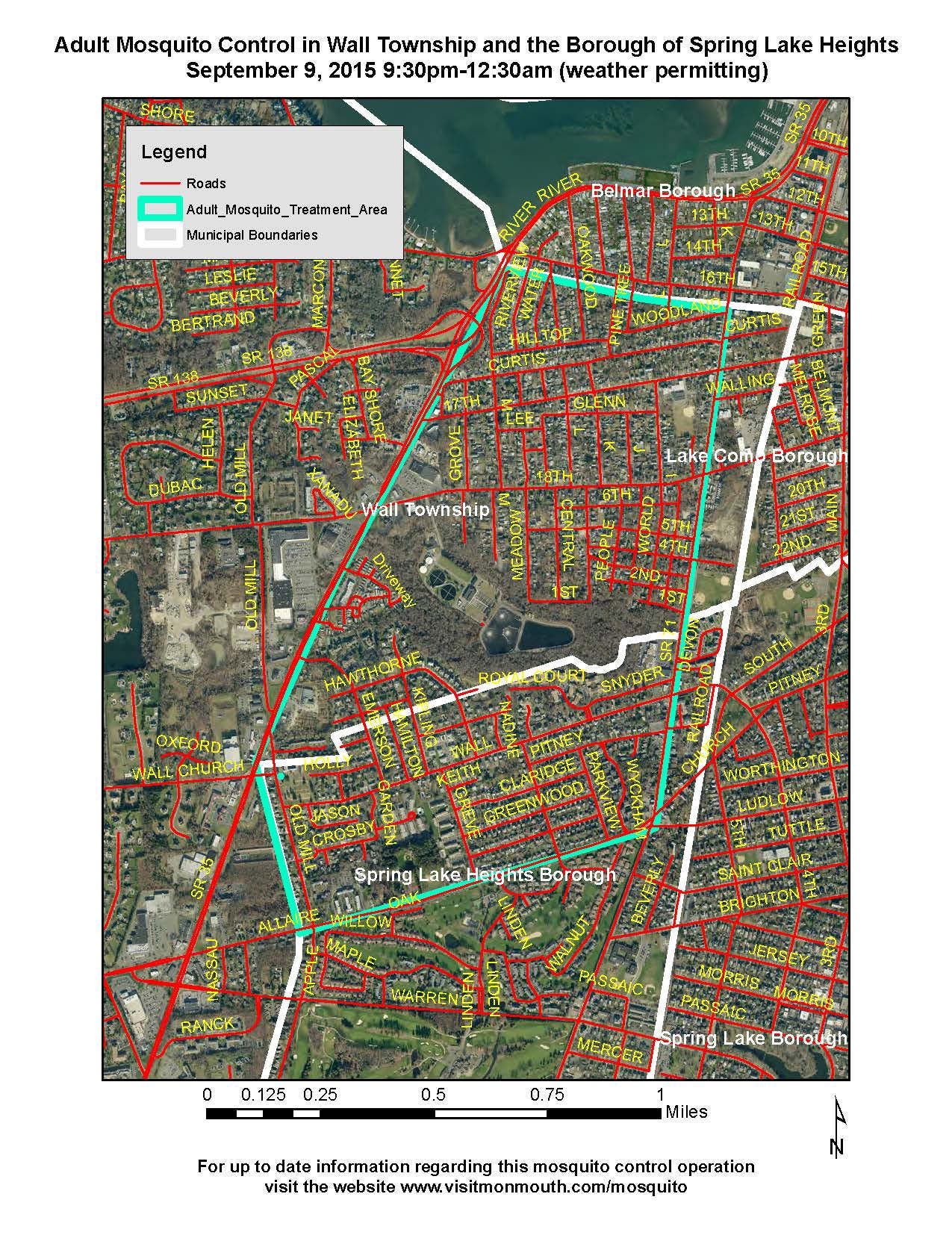
Residents of Wall and Spring Lake Heights should take precautions tonight (Wednesday) as the Monmouth County Mosquito Control Division will be spraying for mosquitos due to the presence of West Nile virus, officials said.
The ground control spraying on residential streets will be conducted between 9:30 p.m. and 12:30 a.m., officials said.
It will be done on residential streets south of Belmar Boulevard between Route 35 and Route 71 in Wall Township and on residential streets north of Allaire Road between Old Mill Road and Route 71 in Spring Lake Heights, officials said.
Find out what's happening in Wallfor free with the latest updates from Patch.
“The goal of the ground spray program is to reduce the public health risk from West Nile virus in the area,” said Freeholder Deputy Director Serena DiMaso, liaison to the Mosquito Control division. “It is also important to remember to always wear insect repellant when outdoors, even if it is only for a few minutes.”
As a precautionary measure, residents in the area scheduled for the control operation should remain inside and protect pets during the time sprayers are in the area. Spraying will not be conducted in the event of wind speeds in excess of 10 mph or inclement weather, officials said.
Find out what's happening in Wallfor free with the latest updates from Patch.
The application will be made using truck-mounted ultra-low volume equipment dispensing a very fine mist of the pesticide Duet. Duet is a d-phenothrin/prallethrin and piperonyl butoxide based pesticide product that is used to control mosquitoes in outdoor residential and recreational areas.
More information about Duet can also be found on the Mosquito Control webpage at www.VisitMonmouth.com.
People who become infected with West Nile virus are most often bitten by an infected mosquito. Mosquitoes become infected with West Nile virus when they feed on infected birds. Infected mosquitoes can then spread the virus to humans and other animals.
The Centers for Disease Control says people can reduce the risk of being bitten by mosquitoes and, as a result, lower their exposure to insect-borne diseases by following some simple steps:
- When outdoors, apply insect repellent, following the label instructions – especially for use on children;
- Wear long-sleeved shirts and long pants whenever possible, and
- Avoid outdoor activity at peak mosquito times – dusk and dawn.
When enjoying the outdoors, whether at home or while traveling, make sure to always wear insect repellent. Repellents that contain DEET, picaridin or oil of lemon eucalyptus will help protect you and your family from both ticks and mosquitoes.
Removing all areas of standing water in and around homes and businesses will stop mosquitoes from breeding. Prior to removal, standing water can be treated with pesticides to kill mosquito larvae.
“Seven days plus standing water equals mosquitos,” DiMaso said. “Mosquitos breed where there is standing water. So, turnover any unused flower pots and outdoor toys. If you have old tires on your property, they need to be emptied of any standing water, too.”
West Nile virus an arthropod-borne virus (arbovirus) most commonly spread by infected mosquitoes. West Nile virus can cause febrile (fever) illness, encephalitis (inflammation of the brain) or meningitis (inflammation of the lining of the brain and spinal cord). It was first detected in North America in 1999.
Get more local news delivered straight to your inbox. Sign up for free Patch newsletters and alerts.