Politics & Government
Planning Board Seeks Expert Opinions on Condition of 225-Year-Old House Slated for Demolition
Case regarding demolition of Bagger House postponed until Dec. 6.

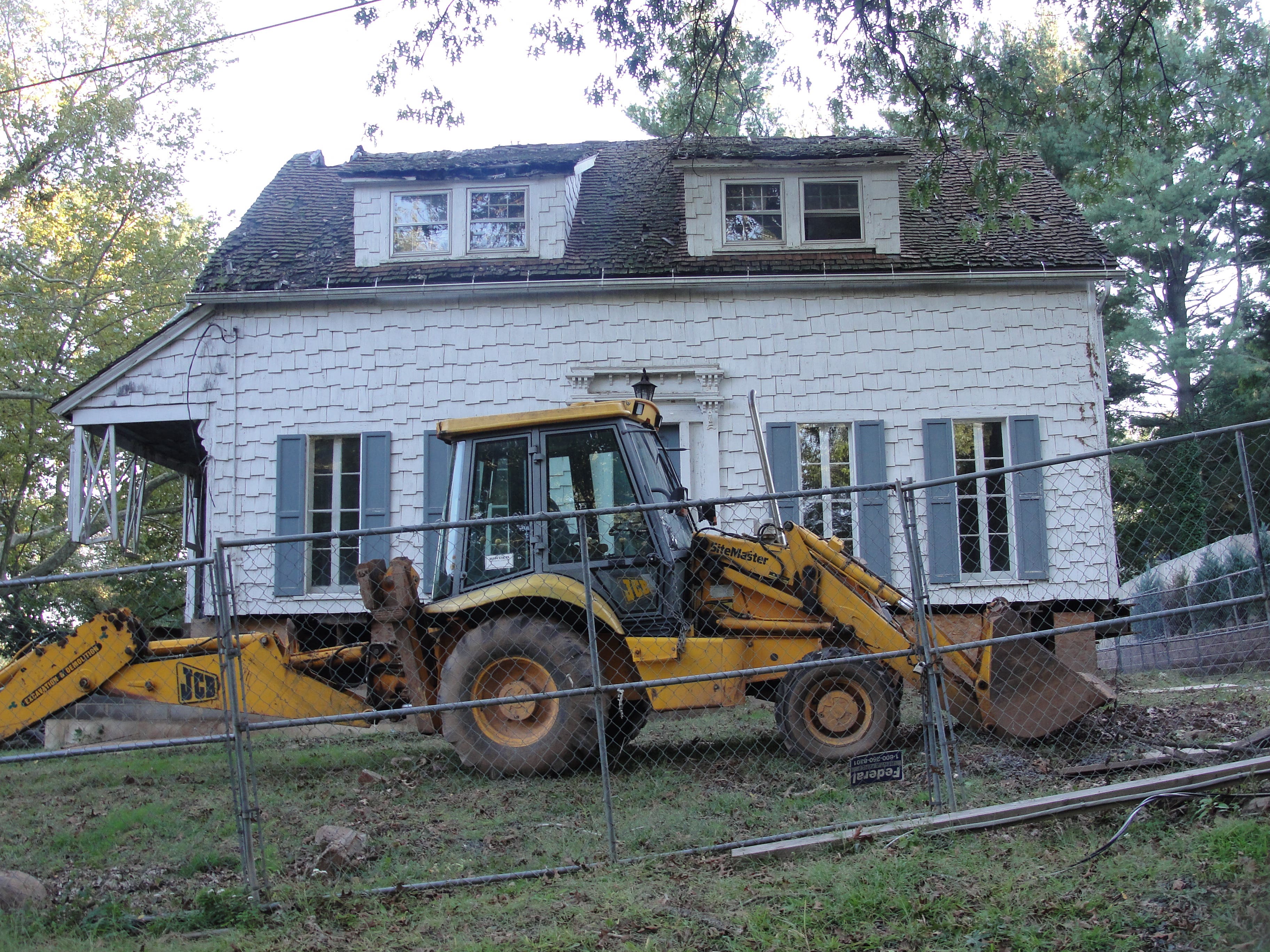
The Planning Board has postponed discussion over the proposed demolition of a 225-year-old house on East Broad Street and Karen Terrace until December pending review of the structure by a preservation architect and a structural engineer for the board.
The decision came after the board heard almost two hours of testimony Monday evening from developer Michael Mahoney, who said he wants to demolish the house due to the poor condition of the structure. Several dozen residents jammed the meeting, booing Mahoney at several points and questioning Mahoney over his intentions with the property.
Mahoney is seeking permission to demolish the farmhouse – named the Bagger House after the long occupancy of the Bagger family, including gubernatorial chief of staff Rich Bagger, a former mayor – to erect a new single-family house on the corner lot. Mahoney purchased the house in 1999 and received permission to subdivide the lot into three from the Planning Board in 2000 after making a deal with the board to move the house to the lot closest to East Broad Street and restore the older house. Mahoney constructed one house on the lot furthest from East Broad Street in 2002 and did not move the farmhouse until 2008, when he said he first discovered the structural issues with the house. A house was built on the middle lot after the farmhouse was moved.
"It is not in good shape," Mahoney said in his testimony to the board.
Mahoney said that his structural engineer, in concurrence with the town construction official, had determined that the house was over 75-percent in disrepair and would need to be demolished under the town standard. In addition, Mahoney said that the house would need to brought up to current building code standards including widening the staircases, hallways and bathrooms to meet handicap standards non-existent in 1785.
Board members, led by Councilman Jim Foerst, said they wanted to hear from an independent structural engineer and a preservation architect in deciding the structural condition of the house. In addition, board members said they want clarification on the exact building codes that Mahoney will need to follow in any reconstruction of the house and if he would be exempt from any current building codes due to the age of the house. The house is not a designated historic structure, which Mahoney and his attorney stressed on multiple occasions during the hearing.
Board members expect the process of preparing the reports and giving Mahoney and his team time to prepare to cross-examine the experts retained do not allow enough time for the board to take up the issue at the Nov. 1 meeting. The board voted to delay the matter to the Dec. 6 meeting for further consideration.
During his testimony to the board and questions from members of the public, Mahoney painted a picture of a property, which he intended to restore, following his deal with the Planning Board in 2000. He said the real estate boom led to his not working on the property following the 2002 house.
"I got busy with other things and enjoyed a wonderful run in real estate," Mahoney said. "There was always another property to do. When it slowed down I turned my attention back to it."
Mahoney said that he did not know the complete condition of the property when he purchased the house and land a decade ago. He said he did not find out until the house was raised to be moved and he was able to get underneath the entire house. He said he expects that the house would been in the same condition if he had moved it in 2002 and that his 10 years of non-use of the property did not contribute to the condition of the house.
"We build better today than ever before," Mahoney said. "I can't sell that. My name is on that. I've been in town 30 years."
Mahoney said he does not think there is a market for the house even if he did want to sell.
"I don't think it is a marketable house," he said. "Who would be interested in buying it? It is a smaller buyer pool."
Board member Robert Newell said he believes that the house would be able to be restored.
"It would take a lot of restoration but it can be done," he said. "I have seen restorations on a lot worse properties than this."
Mahoney's stewardship of the house was called into question during the resident question period. Mahoney quickly defused two rumors in the community about his taking off the roof and leaving the windows open. Residents at the meeting did not question the roof issue – but did note holes in the roof and said they have routinely seen birds fly in and out of the house through open windows in the last ten years.
Mahoney was questioned regarding holes in the roof and if he intended to place a tarp over the roof now due to the rain. He said did not plan to.
Mahoney stressed to the board that he spent $40,000 to move the house to the corner lot before he constructed a house on the middle lot in 2008. He said this should be taken as proof that he intended to fulfill his deal with the board in 2008 to restore the home.
Residents in the audience reacted to several of Mahoney's statements with boos and negative comments. Under the board's rules, residents were only able to question Mahoney on his testimony to the board from the Monday night meeting.
"As a citizen and a taxpayer, I don't buy it," Morgan O'Brien said.
Under questioning from the board, including Foerst, Mahoney said he would like to reconsider the deal he made. The current question before the board is overturning the restoration deal that Mahoney made with the board in 2000.
"It was a bad deal. Unfortunately I had advice that I could be a good guy with the town," Mahoney said. "Hindsight is 20/20. I wish I never made the deal. I did not have to."
Foerst brought up comments made by resident John Mancini at last week's Town Council meeting about the historic significance of the details of the house. Foerst said he wanted to know the historic nature of the items in the house, saying that the preservation architect would be able to address the specific aspects of the house and advise the board.
Foerst asked Mahoney if he would be interested in preserving these details and being able to use them in a new house if the board were to approve demolition. Mahoney said he did not know of any historic details in the house and would need to be advised of them. Mahoney's attorney said that even if the items were historic they would need to be judged if they met twenty first century building codes.
Paula Bagger, who grew up in the house and now lives in Massachusetts, wrote to board chairman Vincent Wilt, explaining the historic nature of the items used to build the house. In her letter she noted that the roof was built with "a series of hand-adzed wooden rafters, each pegged at the roofline with a large, wooden spike. (Each rafter is sequentially numbered with carved Roman numerals, providing an insight into home-style architectural planning from a different century.)"
Ms. Bagger also said that the interior fluw is fieldstone and unique in design. She also said that Victorian design is in the house with an "ornate tin ceiling on the second floor and gracious French windows."
Ms. Bagger's letter also details the history of the house, including that the house was owned by the Ross family around the time of the Revolution and then by the Mulford family before William Mulford sold the house to John Miller in 1814. The Miller family donated the land used to build Fairview Cemetery for Civil War dead in 1867 according to Ms. Bagger. Ms. Bagger also wrote that the owners following the Millers proceeded to sell additional lots of the farm which help make up the surrounding neighborhood.
Ms. Bagger's other brother, Jonathan, also wrote a letter to Wilt and the board, where he said he believes that Mahoney schemed to get the house to this point and was hoping the board would reject his application. Jonathan Bagger currently resides in Maryland.
"Today, Mr. Mahoney is seeking to go back on his word and demolish the historic house. He claims that the house is so damaged that it cannot be repaired and rebuilt safely," Mr. Bagger wrote. The problem with his argument is that the house was in fine condition when he bought it. Any disrepair is due to the fact that he did not live up to his responsibilities under the original resolution. It is clear to me that Mr. Mahoney never intended to carry out the terms of the agreement, and he fraudulently represented his intentions to the Planning Board back in 2000."
The letters from both Baggers have been circulated to Mayor Andy Skibitsky and members of the Town Council. Mancini tried to enter Ms. Bagger's letter into the record Monday evening and Wilt denied it saying it was not the proper time. Skibitsky and the Council are forbidden from commenting on matters before the Planning Board. It is not known if Rich Bagger has taken a position on the house.
Mahoney stressed that the house is not historic since it has not been designated a historic structure by the town's historic preservation commission and does not sit in a historic district. He said comments from others, including Paula Bagger, who lived in the house from 1963 to 1976, do not classify the house as historic.
"Everybody calls it historic and it is not," he said.
Board members said they are hoping the sought after report – which will be funded by Mahoney – will be able to help guide the final decision on the house and whether or not the building is in the structural state that Mahoney painted.
"If the house is about to fall down, we don't want that, it might hurt someone," Foerst said.
Get more local news delivered straight to your inbox. Sign up for free Patch newsletters and alerts.