Politics & Government
3 Ways To Reduce A Looming Tax Hike In West Orange: VIDEO
West Orange homeowners are facing a 16% hike to their municipal taxes. Here are some ways to chop that down, an administrator says.


WEST ORANGE, NJ — Creating new fees. Using reserve funds. Making staff or service cuts. Those are the three ways that West Orange can reduce a potential 16.2 percent tax hike to the municipal portion of their taxes, an administrator said during a recent public budget workshop.
If the current 2023 town budget clears a vote from the council, a West Orange homeowner with a property assessed at $300,000 will see a $560 tax hike, administrators said at last week's workshop (watch the video below).
- See Related: Frustrations Over West Orange Budget Broil At Council Meeting
- See Related: Some West Orange Residents Are Fuming Over 16% Proposed Tax Hike
The proposed spending plan would increase the municipal tax levy by $10.21 million, according to a presentation from business administrator/CFO John Gross. See the full slideshow online here.
Find out what's happening in West Orangefor free with the latest updates from Patch.
Another public budget workshop is scheduled for May 24 in the council chambers at Town Hall, 66 Main Street.
Property taxes in New Jersey are generally made up of three parts: school, municipal and county. Read More: Average Property Tax Bill In West Orange Is Growing, Latest Data Shows
Find out what's happening in West Orangefor free with the latest updates from Patch.
At last week’s workshop, Gross shared a slide of the costs that are driving up this year’s municipal budget (see chart below). There are no other major changes in the budget from last year, he said.
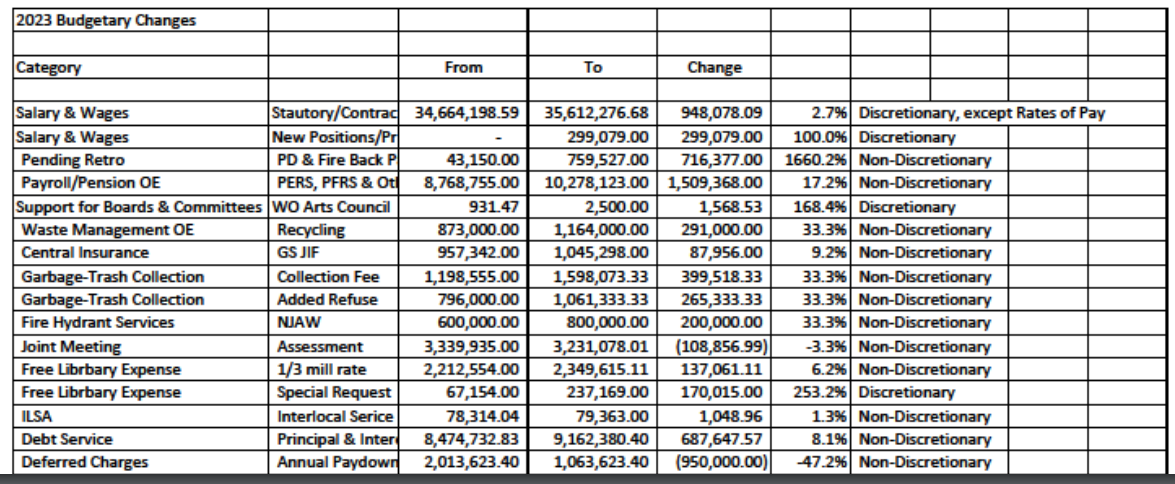
There are three ways to attack the problem and soften the tax hike, Gross said. Two are relatively straightforward: increase revenues for the township, or cut spending.
The other method – dipping into the town’s “reserve” funds – is a little more complicated.
There are several advantages to doing so: reducing taxes for the current year, using them for non-recurring expenses, and helping to smooth out budget spikes.
But there are also negatives, Gross added. When used to reduce taxes, it artificially reduces the tax rate, simply “kicking the can down the road. And if reserves are sapped too low, it will harm the town’s bond rating.
The proposed budget would use $3.93 million of reserves to offset tax increases, leaving the town with an anticipated $7.33 million.
INCREASING REVENUES
According to the presentation, township fee structures haven’t been “significantly addressed” in more than 15 years. As such, Gross has three recommendations to help West Orange find more cash for its coffers:
- Miscellaneous revenues rate increases
- New real estate license fees
- Sewer rate increase – new formula
Currently, the projected amortized cost for the sewer system and treatment is close to $10 million annually. But sewer fee collections in 2023 are projected to only reach $7.3 million.
In order to bridge this gap, Gross said the town can collect an additional $2.4 million if it changes the way it calculates sewer payments for local properties, businesses and homes.
Township sewer users pay a fee for the cost of maintaining the sewer system and for the cost of sewer treatment. Users are charged a fee based on the number of units. The current sewer rate is $350 per unit annually.
Here are the proposed changes:
“$525 per commercial unit and for residential; units with four bedrooms. Units with less bedrooms will receive an $85 credit per bedroom. Units with more than four bedrooms will pay an additional $85 per bedroom annually.”
Under this formula, the average residential property owner would pay $90 more for sewer costs in 2023.
The town could also raise an extra $443,943 in revenue for 2023 if it raises dozens of “miscellaneous” fees for licenses and permits, Gross said.
For example, if the town raises its building permit fees by 103 percent, it would see an additional $178,116 in revenue this year. Other suggested fee hikes include increases for certificates of occupancy, electrical permits, fire sub code fees, plumbing permits, “violations”, “extra duty admin fees,” cannabis license fees, walk/curb/road opening permits, e-cig licenses, alcohol licenses, parking permits and tree permits (see the full list here).
Meanwhile, West Orange could raise an extra $576,630 if it creates new mercantile license fees for commercial entities, and starts requiring foreclosed property registrations.
What would the tax impact be if the town were to roll out all of these new fees and charges? According to Gross, the municipal tax levy increase would drop to $6.79 million – meaning a hike of $373 for a home assessed at $300,000.
MAKING CUTS
The town can also shave dollars off any tax increase if it cuts staff members. But Gross added that making significant cuts to the municipal workforce will almost certainly impact service levels in West Orange.
It’s a proposal that some council members have balked at during previous budget discussions.
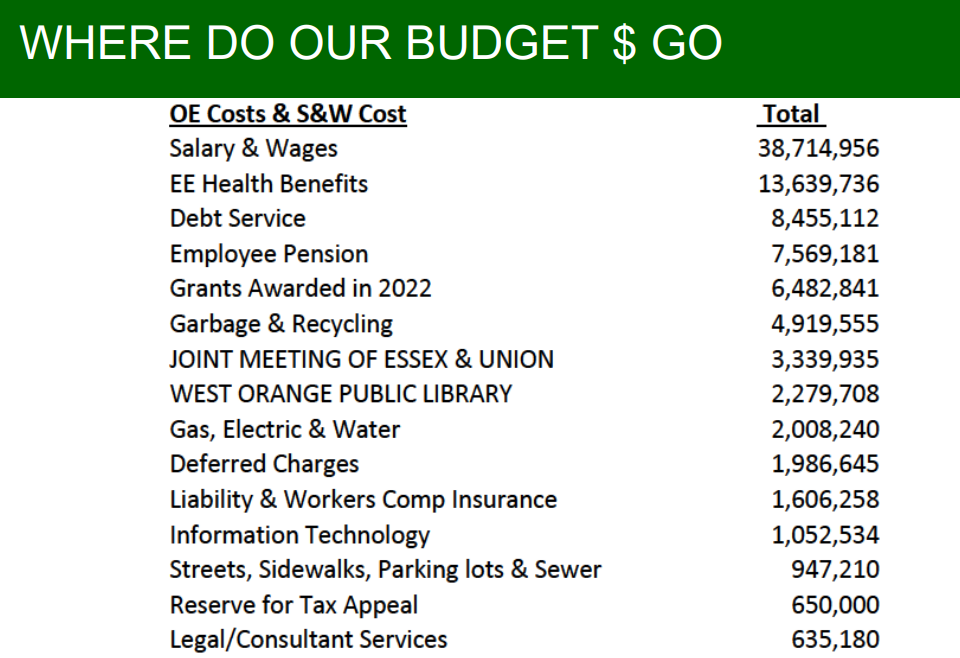
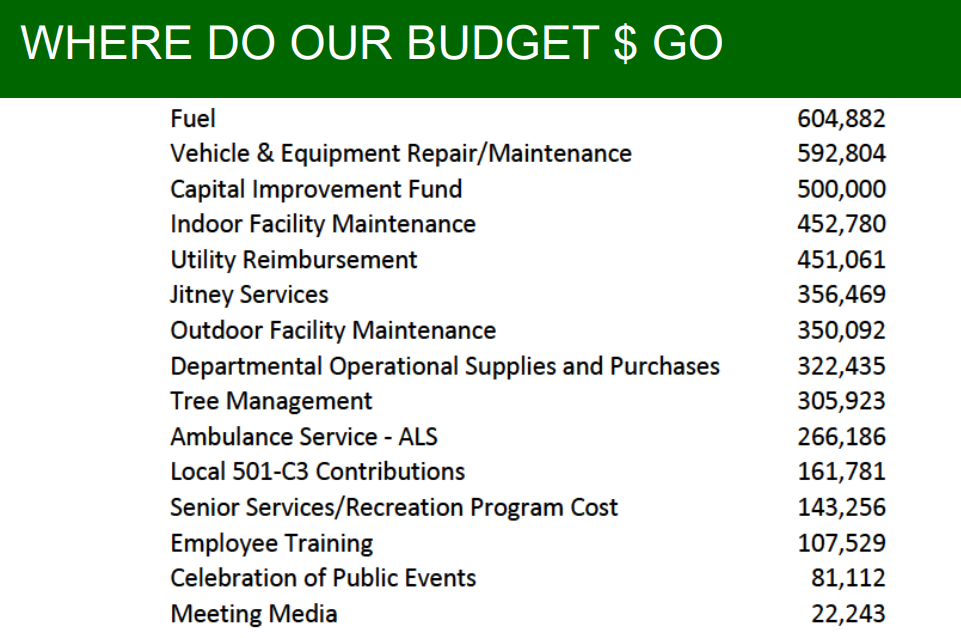
Gross provided some slides about “where the West Orange budget goes,” which can be seen below. However, making staff-related cuts would come too late to impact this year’s budget, he added.
“The reality is, you’re doing nothing about it this year,” he said. “You have contracts, and those contracts all have to be fulfilled.”
Send local news tips and correction requests to eric.kiefer@patch.com. Learn more about advertising on Patch here. Find out how to post announcements or events to your local Patch site. Don’t forget to visit the Patch West Orange Facebook page.
Get more local news delivered straight to your inbox. Sign up for free Patch newsletters and alerts.