Neighbor News
Equality with Titles- Respect Not Arrogance
Recognizing Women's Achievement and Knowledge

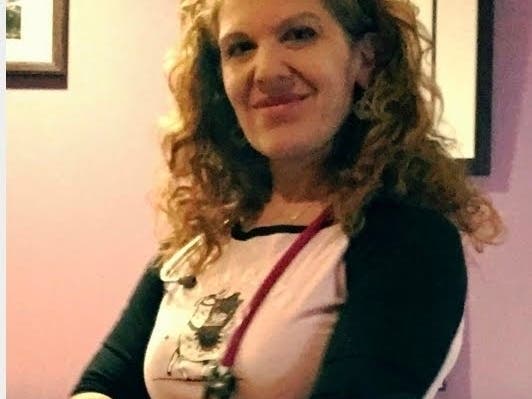
In many fields with professionals that hold doctorates such as MDs, PhDs, DrPHs, DVMs and DOs, men are regularly introduced as “Dr. X, Y or Z,” while women are called “Amy” or “Kaya,” or “Jennifer.” It happens in universities, public agencies, and private institutions. Even on the news you can see an interview with the leading expert Dr. Blah Blah who may not even be an expert in the outbreak he’s discussing, but holds a PhD in basket weaving. Whereas a well respected expert in disease mapping, for example, who has a PhD in molecular biology is called Angela. “Thanks, Angela-” the news reporter says, “ we’re glad you can join us today!” In stark contrast, “Dr. Blah Blah, we greatly appreciate you taking time out of your busy schedule to share your expertise.” Yeah. Maybe Angela could get him some coffee.
Why is it still so unequal? It’s 2020. Women have been leading the medical and science fields for decades, but many women are casually stripped of their titles in both professional and public settings. Women are somehow seen as inferior especially when in the company of men who may have similar degrees or backgrounds.
“But this isn’t just a feminist issue.” Dr. Beth S. Linas, an infectious disease and digital health epidemiologist in DC stated in an article published in Scientific American. “It’s an issue of recognizing achievement and knowledge.” Is this about being arrogant or cocky? Not in the least bit. We will keep that in the playing field of the ostentatious “old white man” persona who makes his wife call him Doctor. Women in professional careers want their titles to be utilized for respect. Dignity. Acceptance. Equality. It is not a ploy to seek power or egotistic drive. It is not conceited to want respect. When a woman professor with a PhD is introduced as “Margaret” 10 minutes after her male colleague was introduced as Dr. Michaelson, it holds a certain unspoken insult.
Find out what's happening in West Orangefor free with the latest updates from Patch.
Last week I read a tweet on a colleague’s page where she was relegated to sorting masks at a COVID-19 volunteer event. Not that it wasn’t an important task, but someone without her experience would be much better suited for that task. She held an MD. She explained on her third day that she’d prefer to do the triages with the other MDs and apparently blew away the staffing coordinator. “Oh, they all called you Kim- we didn’t realize you were a doctor too.” Sometimes titles do make a difference, especially in others perceptions.
The Association of American Medical Colleges says that “Words — and names — matter. They set a tone, convey specific types of connections, and establish duties and boundaries.” In a time where kids call their friends' parents by their first names and many schools have gone to the Mr.or Miss “First Name,” names make be losing the respect and honor they once had, but they are still of vital importance.
Find out what's happening in West Orangefor free with the latest updates from Patch.
In the military, whether you're a man or a woman, you are called by your rank. It is deference and dignity, but also in professional situations it can put others at ease. What do we do now!? Ask CAPT James, she is in charge. Where do we go next? SGT Wright said we head to the pavilion. With a medical doctor or public health official, this is also vital. Why are we wearing masks in the park? Jane said it was a good idea on the news. It sounds a lot more comforting when Dr. Jane Williams stated the safety of outdoor recreation with face coverings on the news last night.
That leads me to another point of contention. A physician is a doctor of medicine. It is a specifically licensed profession that uses the title doctor. Other professions also use this term, such as a psychologist with a PhD (Dr. Beth Okana’s practice), a microbiologist (Dr. Anne Michaelson, chief of the bacteriology lab)- there are ScD, DrPH, DTh, and a multitude of others. Even the Superintendent in our town with an EdD is always called "Dr." Sometimes it is field and environment specific. For example, A PhD in literature may be called Dr. when teaching a class in literature, but not at PTA meetings. I have rarely heard a DBA called Dr., even in business, but a with a scientist, epidemiologist, psychologist and Doctor of Theology, the title is used more often. Some of that is to be expected, but when your coworkers have the same degree in the same job, males are still more likely to be called “Dr.”
When you graduate with a doctorate, the school calls you doctor. “Congratulations, Dr. Mosby!” From that point forward, you have the right and privilege to use the title. But a PhD is not an MD, an EdD is not a DrPH, etc. Not only does job makes a difference in usage, you have a personal responsibility to use the title correctly.
A lot of people assume that the title of “Dr.” means that they practice medicine. Does this mean the virologist working on a cure for malaria or the Dean of Biological Sciences should not be called Dr. because of confusion? Of course not. My daughter’s psychologist earned her PhD a decade ago, published in developmental psychology journals and spoke in conferences around the world. I’m not calling her by her first name. I know she’s not operating on me. She has told me, though, even with her extensive experience and practice, her male colleagues will get proper titling quite a bit more often than she does.
I earned my PhD in 2006. Being in psychology and health administration, the use of the title didn’t matter much at the time, especially in the public sector jobs I was in. Interestingly enough, though, my colleagues, students, customers and staff did tend to use “Dr.” as there were not many other employees with doctoral degrees.
In 2015 I earned my DrPH. Not only was this public health degree focused on clinical epidemiology and more hands on, field and applied practice, it was a degree that was attained by that practical experience, with more intense application of public health and infectious disease practice as opposed to writing, and writing, and more writing.
That got me into a lot of new circles, professional groups, networking groups, etc- where I was in the company of other professionals with doctoral degrees. Ironically, this is where I began to see the inequality. I remember my first dinner where Dr. “Man” and Dr. “Male” were introduced, as well as “Gina” who all sat at my table. By the end of the night, I learned that “Gina” held a Masters degree and had her PhD for almost a decade. Dr. “Male” had just finished his PhD last fall and Dr. “Man” had a DrPH for about 2 years but went straight from college and had no experience whatsoever. I left that dinner feeling bad for “Gina” but not yet realizing it was a pattern.
Today, 5 years later, on my Women's Rights News Group facebook page, they were discussing titles. Specifically, the use of Miss, Ms. and Mrs. for women, while a male only has the title Mr. Several women brought up the fact that their title in fact was Dr. but they were rarely referred to that way. One woman even pointed out that in 13 years of marriage, she received only one piece of mail that was addressed “Dr. and Mr.” but the wives of those men who have MDs or PhDs almost always see “Dr. and Mrs.” as a proper address.
On one hand it made me feel like I was not alone and enjoyed a bit of the camaraderie, but on the other hand, it reminded me of how archaic some parts of society still are and how far we still have to go as professional women.
What Dr. Beth S. Linas said in Scientific American speaks volumes to all the current and up and coming women in science and medicine. “Their accomplishments were earned through both academic rigor and the courage to assert themselves in environments that have few female role models and are often rife with gender discrimination that hamper upward mobility. The term “Doctor” is a reminder to the world of how accomplished they are.”
Special Thanks to:
- Dr. Beth S. Linas, https://blogs.scientificamerican.com/observations/please-call-me-doctor/
- Dr. Alexandria Carolan https://cancerletter.com/articles/20191213_1/
- Dr. Nichole Margarita Garcia: https://diverseeducation.com/article/134293/#
- https://www.womeninanesthesiology.org/blog-posts/bruh-call-me-doctor/
- https://www.washingtonpost.com/national/health-science/im-your-doctor-so-why-are-you-calling-me-miss/2018/11/02/179d319e-d638-11e8-aeb7-ddcad4a0a54e_story.html
- https://www.sciencemag.org/careers/2017/01/i-m-not-doctor-i-play-one-my-cv#
Dr. Chasse, DrPH, PhD, MPA, MS has been in the field of public health for over 20 years. She is a clinical epidemiologist who has worked most of her career in the Federal Public Health Sector as well as in the field, research, management offices and universities with health literacy and outreach education in infectious diseases, perinatal and reproductive health, and preventive medicine. She is currently a CDC contractor working as a Public Health Advisor for COVID-19 and an Adjunct Professor at William Paterson University.