Politics & Government
Thousands Of NJ Veterans Struggle With ‘Bad Paper Discharges’
Some have PTSD. Others are victims of "don't ask, don't tell," or got busted for smoking a joint — and it cost them their VA benefits.


NEW JERSEY — It’s known as an “other than honorable” (OTH) discharge — and for an estimated 8,000 U.S. military veterans in New Jersey who have been saddled with the acronym, it can happen for a variety of reasons.
Some veterans struggle with trauma they’ve endured during their service, and are discharged with post-traumatic stress disorder, traumatic brain injury or military sexual trauma. Others who identify as LGBTQ+ have gotten a so-called “bad paper discharge” as a result of "don’t ask, don’t tell"-era policies. And yet others — including Tim Shea — have gotten slapped with the OTH label for something as simple as smoking a joint of marijuana.
Shea, who is now ineligible for veteran’s benefits, is a former active-duty U.S. Marine who was deployed to Iraq in 2008. He returned in 2009 after being promoted to corporal. And that’s when he made a stupid mistake, he says.
Find out what's happening in West Orangefor free with the latest updates from Patch.
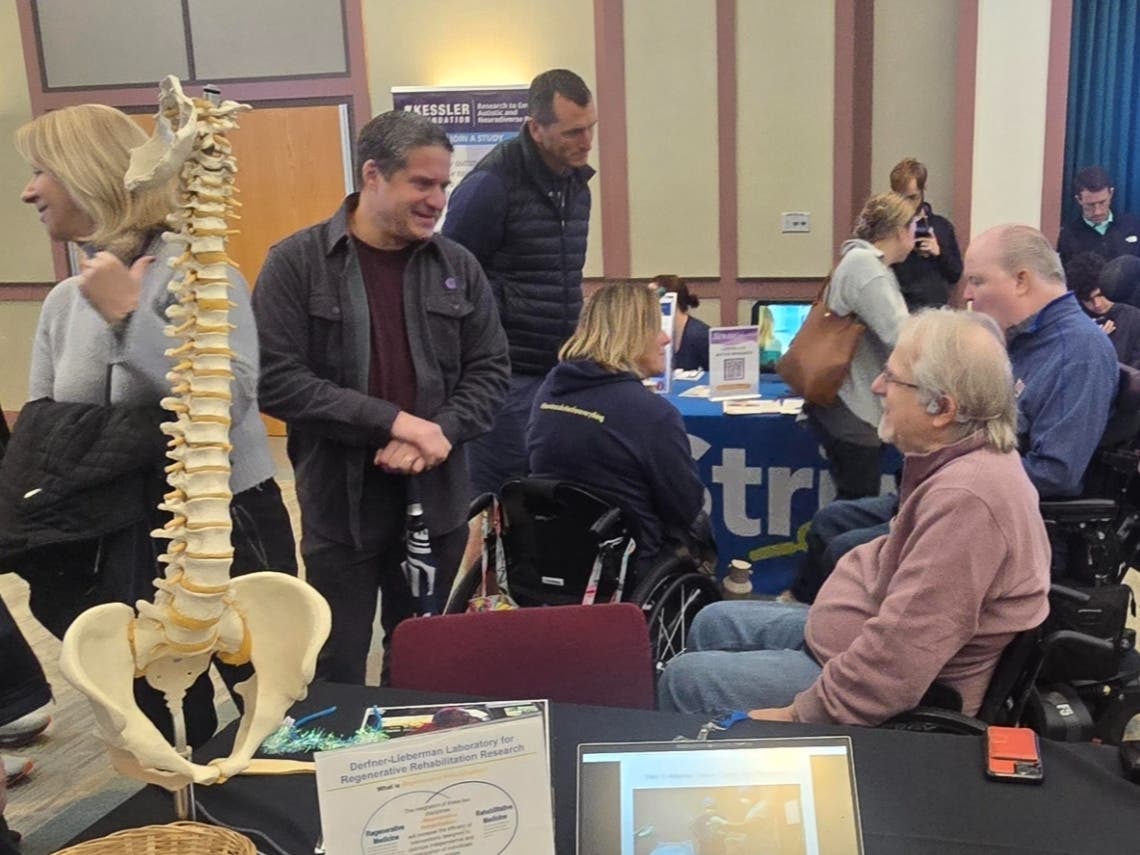
“When I came home, I visited some friends in North Carolina,” Shea said at a roundtable hosted earlier this year. “When I was with them, I smoked a joint, and then I failed my pre-leave urinalysis test.”
“So, one joint, and it was all over,” he added.
Find out what's happening in West Orangefor free with the latest updates from Patch.
Unfortunately, Shea’s case isn’t unique, advocates say.
When a member of the armed forces leaves their branch of service, voluntarily or involuntarily, the Department of Defense issues a discharge status. There are five types of discharges:
- Honorable
- General (Under Honorable Conditions)
- Other than Honorable
- Bad-Conduct
- Dishonorable
While there is an appeal process, it’s often confusing and onerous, and veterans are often left waiting for unacceptably long periods, according to the New Jersey Reentry Corporation (NJRC), a nonprofit that works with former prison inmates and people who have had brushes with the criminal justice system.
An “OTH” classification is usually caused by relatively minor offenses but can have a major impact on veterans benefits. And, ironically, those who acquire the label often need these services more than those who earn honorable discharges, the group says.
Former governor Jim McGreevey, who heads the NJRC, spoke more about the problem in a recent study, “A National Veterans Crisis: A New Jersey Solution.” Read the full report here.
McGreevey wrote:
“Listening to combat veterans, mothers, and fathers, who have lost sons and daughters, we know that veterans, particularly combat veterans, may have been impacted by combat trauma and brain injury, have sought relief, and have suffered disproportionately from mental illness, homelessness, and most tragically, suicide. Indeed, veterans comprise upwards of 8 percent of the state’s prison population. Many of these veterans whether by virtue of discharge classification or Veterans Affairs allocation of benefits have struggled to secure needed treatment.”
Veterans in New Jersey with OTH status — many of whom served in Iraq and Afghanistan — continue to get “limited if not nonexistent” access to critically needed services, he said.
“Whether necessary medical services, comprehensive psychiatric care or addiction treatment, our state’s veterans must be provided the needed medical and behavioral services to assist healing and the voyage home,” McGreevey urged.
WORKING FOR CHANGE IN NEW JERSEY
Until things change on a federal level, advocates and community groups continue to try to make up the gap with statewide and local outreach programs.
Last week, a group of veterans’ rights activists and elected officials gathered at the Statehouse in Trenton to announce a new partnership aimed at helping veterans with OTH status (watch a video here).
The new partnership will provide crucial psychiatric and addiction treatment needs for veterans with OTH discharges at three health facilities in New Jersey:
- Hackensack Meridian Health (Jersey Shore University Medical Center) will provide acute short-term psychiatric in-patient care.
- University of Pennsylvania Medicine at Princeton will provide a clinically determined, 30-day stay for co-occurring mental health and substance use disorders.
- Discovery Institute in Marlboro will provide a clinically driven, 30-day residential stay for addiction treatment and co-occurring disorders.
“As the proud son of a navy war veteran, I have a deep and abiding respect for our nation's veterans and those who have personally sacrificed to preserve our country's freedoms,” New Jersey Senate President Nick Scutari said.
“The denial of basic mental health and addiction treatment services for veterans with other than honorable discharges has tragic consequences,” Scutari added.
Ramon Solhkhah, chair of the Department of Psychiatry at Jersey Shore University Medical Center, said that a third of veterans returning from wars in Afghanistan and Iraq have mental health challenges, and veterans have the highest rates of suicide and homelessness.
“The statistic of 22 veterans who lose their life to suicide a day would be equivalent to an airplane crash a week,” Solhkhah said. “Imagine the public outcry for support and services if that were happening?”
Assemblyman Raj Mukherji said that as a former Marine Corps sergeant, he is distressed by the inadequate care many service members get when they transition to civilian life.
“Psychiatric and addiction treatment and recovery options for our veterans are basic and critical needs that our state must rise to the occasion to meet, in the absence of comprehensive federal legislation,” Mukherji insisted.
Article continues below
While New Jersey has recognized the importance for critically needed veterans benefits — and has rolled out a range of benefits designed to supplement federal benefits — many of those state programs require them to prove they were released “honorably,” the NJRC said in their report.
For example, a recently enacted New Jersey statute that expanded education benefits to veterans defines a veteran as “an individual who served as a member of a reserve component of the Armed Forces of the United States, or as a member of the National Guard, or on active duty in the Armed Forces of the United States, and who was honorably discharged or released under honorable circumstances from active service.”
Another example is New Jersey’s Veteran’s Haven Transitional Housing Program, which lends aid to homeless former service members. To be eligible, a veteran must be eligible for VA health care and benefits — which excludes those with OTH status.
So what can be done on a state level to aid these veterans? The NJRC offered some thoughts on the issue in their report.
According to the nonprofit:
“New Jersey should ensure that veterans with OTH discharges and PTSD, TBI, or MST have access to state benefits, particularly because the federal government’s procedural and regulatory inadequacies fall flat in providing redress to these veteran populations … Recognizing the need to support OTH veterans, New Jersey should enact legislation that would make veterans eligible for state benefits based on a medical diagnosis of PTSI, TBI, MST, or other service-related traumas. New Jersey can open benefits to OTH veterans with trauma is to amend the generally applicable definition of a veteran. Under this approach, the OTH veteran could be considered honorable for state benefit purposes after the veteran receives a written confirmation that the veteran has a qualifying condition from a mental healthcare professional. A qualifying condition would be defined as PTSD, TBI, MST or any service-related trauma.”
In their report, the NJRC shared some stories from New Jersey veterans who are pushing for change when it comes to OTH discharges. They included:
JEN BURCH: ‘I TRIED TO TAKE MY LIFE’
“I was in the Air Force for six and a half years. I deployed to Afghanistan with less than 24-hour notice. I was studying to become a physician assistant, so I was able to volunteer as a combat medic between 2010 to 2011. I worked in the mortuary and I saw the very worst of war. When I got home, I got off a plane and went straight to the ER because I was so sick. I spent the following two weeks on bed rest and that was my transition back into civilization. I went back to my former Civil Engineering Unit to people who had no idea the extent to what I had just seen [in combat].
“I received a permanent change in station and went to Japan. So, now I am with brand-new leadership that really has no idea who I was before my deployment where I was winning awards and I was Airman of the Month. I started to quickly fall apart. PTSD quickly took over my life and I was too scared to say anything. The combination of that and toxic leadership, I quickly fell apart.
“In 2012, I tried to take my life. I was in the hospital for a few weeks and when I came back, my commander gave me an Article 15 for trying to take my life and I lost my rank. It destroyed me. My future was gone. Then, I just kept falling apart. When it came time to decide whether to stay or leave, the medical board put me up for discharge because I had PTSD, TBI, and other medical problems. My Commander came in and tried to give me an Other Than Honorable discharge, but thankfully I knew some Generals and Colonels from before my incident. They fought so hard for me and fought to get me an Honorable discharge. If I didn’t have them fighting for me, I would have gotten an OTH discharge, I would have not my benefits, and I guarantee I would not have been sitting here today. I would have been six feet under the ground.”
STEPHANIE KEEGAN: ‘HE CAME BACK CLEARLY BROKEN’
“My son, Sgt. Daniel Robert Keegan, served 26 months in Afghanistan. When he came back, he came back clearly broken. After he left the Army, he had to wait 16 months for help and died two weeks before he was scheduled to go in on January 8th, 2016. It took 13 months for him to get his disability rating and another 3 months to get him a date for dual diagnosis treatment facility. In an effort to treat himself and keep his demons at bay, he became an addict. His drug of choice was heroin.
“When he was discharged from the military, the Army knew he had been to a treatment program, they knew he was diagnosed with PTSD, they knew that he was diagnosed with an addiction problem. Yet, he still had to wait 13 months for a disability rating. From the day he left the Army, through the 16 months that followed, nothing came easily. He couldn’t get the help he needed because he couldn’t find a way to navigate the system on his own.”
TOM AND DINA DUFFY: ‘HE WAS SUFFERING’
“My son, Tom, was a Marine. He entered the Corps 2011 and was discharged in 2015 because of drug use. He did not know this was the reason at the time of his discharge, he believed he had completed his assignment. When he came back home from Afghanistan, he was self-medicating. He was suffering.
“He suffered from PTSD, but he did not want to admit it and no one wanted to acknowledge it. He suffered from nightmares. I kept telling him to go to the VA, but he was not eligible for benefits. About a year and a half later, he wound up in a drug rehab center.”
STEVE KENNEDY: ‘IT COULD HAVE GONE THE OTHER WAY’
“I’m a former Airborne Infantryman and an Iraq War Veteran. I did 14 months in Iraq. I went AWOL for about 10 days and was discharged on a medical discharge. I had been a good solider up until that point and I was just promoted to Sergeant. Because of me going AWOL, I was discharged with a General (Under Honorable Conditions). The difference between a General and an Other Than Honorable discharge is the level of benefits. With a General, you get benefits. With an Other Than Honorable, you get nothing.
“You cannot overstate the difference of benefits afforded to you. When I got back, I was not diagnosed at the time, but I had PTSD and major depressive disorder. I was drinking heavily and I was suicidal. I am alive today because I got a General discharge and not an Other Than Honorable discharge. But it could have just as easily gone the other way.”
JAMES FITZGERALD: ‘TREATED POORLY, DISCHARGED UNJUSTLY’
“I served in the Army for nine years as an infantryman. I was deployed to Iraq and Afghanistan, where I was injured in 2010. I suffered some injuries to my lower extremities that ultimately led to my discharge. I loved every day of being in the service, but one thing I must highlight is that I was a closeted gay at the time. When I signed the dotted line to serve in the military, I was signing in to Don’t Ask Don’t Tell. Many of those who fell under the LGBTQ umbrella were treated poorly and discharged unjustly.
“Many LGBTQ veterans were discharged Other than Honorably, which bars them from services and increases troubling statistics about veteran homelessness, unemployment, and underemployment. This just exacerbates potential mental health issues and lack of access [to benefits] is going to increase those factors.”
Send local news tips and correction requests to eric.kiefer@patch.com
Sign up for Patch email newsletters. Learn more about posting announcements or events to your local Patch site.
Get more local news delivered straight to your inbox. Sign up for free Patch newsletters and alerts.