Crime & Safety
A Concerning Trend In NJ: Police Officer Suicides Nearly Double In Past Decade
The recent death of a cop brought renewed attention to New Jersey police officer suicides, which have nearly doubled over the past decade.


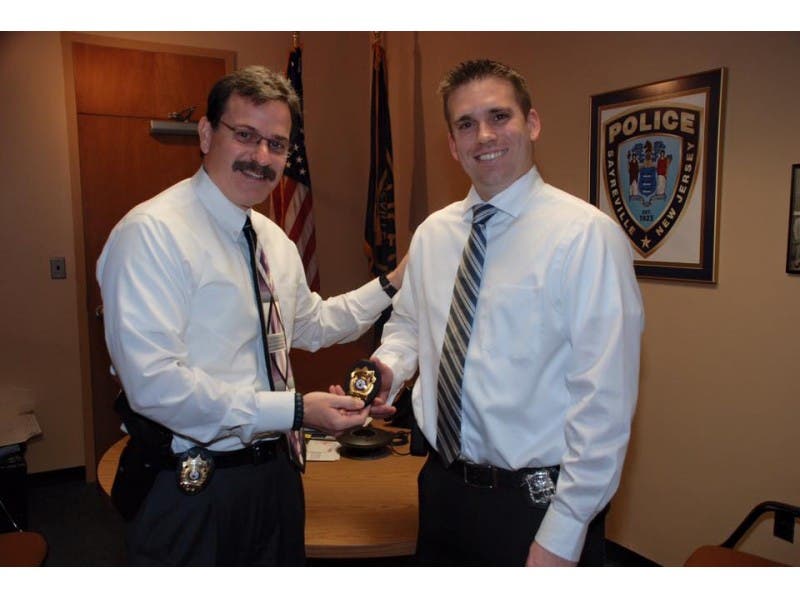
Police officers suicides in New Jersey are on the rise, and the state's finest are looking to spread awareness - and perhaps find solutions - to the growing problem.
The New Jersey State Policemen's Benevolent Association has reported that 19 officers committed suicide in 2015 - compared to 55 suicides involving N.J. law enforcement between 2003 and 2007, an average of 11 suicides a year.
Nearly a decade after the N.J. Police Suicide Task Force put together a report showing that the suicide trend was on the rise between 2003 and 2007, the union remains frustrated that the trend continues upward, noting that six have died so far this year.
Find out what's happening in Woodbridgefor free with the latest updates from Patch.
"For every one officer killed in the line of duty (nationally), 6 will take their own life," said Capt. James Ryan of the South Brunswick Police Department, who has served as a spokesman for the New Jersey State Policemen's Benevolent Association.
The recent death of a Sayreville cop brought renewed attention to New Jersey police officer suicides, particularly since they're 30 percent more likely to commit suicide than the general population.
Find out what's happening in Woodbridgefor free with the latest updates from Patch.
Ryan acknowledged that stress is always an issue, saying the union and others are doing everything they can to address the problem.
"It's the inherent nature of our job," he said. "It's the highs and lows of our job."
Detective Matthew Kurtz, 34, who once saved an 83-year-old man in a fire, was found outside the Amboy Cinemas building off the Garden State Parkway last month, the victim of suicide, authorities said.
Sayreville Police Chief John J. Zebrowski said the officer's death "sheds more light on an insidious predator that has taken his life and so many others in law enforcement as well."
"Sadly, suicide remains a leading cause of police officer deaths," he said. "Thus, the method by which he lost his life does not make our loss any less tragic. In fact, it leaves only a greater void as many questions will remain unanswered."
He also said on the department's Facebook page, following Kurtz's death:
"I am reminded of the last paragraph in the Police Officer Prayer to Saint Michael which reads: 'We will be as proud to guard the throne of God as we have been to guard the city of men.' The men and women of the Sayreville Police Department are confident that Matthew is now on that Watch and adeptly handling those duties.
"Once again, we greatly appreciate the respectful and considerate support that has been received."
In a recent study, the International Journal of Emergency Mental Health noted that the problem is not confined to New Jersey, though national numbers of suicide have actually dropped.
A six-month sampling - July through December - of suicides was taken during 2015, showing a total of 51 police suicides nationwide.
In the journal's 2012 study of police suicides, there were 141 in 2008, rising slightly to 143 in 2009 before dropping to 126 in 2012.
"This is encouraging news that we tentatively attribute to the increased number of departments adopting peer support programs and the increased willingness of officers, many of them younger, to seek professional assistance—not only when they have a problem, but before problems develop," according to the The Badge of Life website, a police officer support site that published the study.
Indeed, the New Jersey suicide task force report identified the prevalent causes of suicides involving the state's police officers - even as it's still not clear what drove Kurtz to end his life, despite the fact that he was considered a "hero" among police officers.
The report noted that the most common risk factor for suicide is a mental illness, particularly depression or bipolar disorder, which can often act as silent and undetected problems among police officers.
Other issues, according to the report, that are considered lethal include the fact that police officers have easy access to firearms, which could explain why the suicide rate among cops is so much higher than that of the general public.
Others issues identified include relationship problems, particularly with intimate partners, as well as acute crises on the job.
"Stress stemming from upsetting or critical incidents present a unique occupational hazard for law enforcement officers," according to the report. "Finally, factors related to shift work and the consequences of officer schedules for family relationships are also significant."
The NJSBA noted that they're working to spread awareness of the problem through the media, in schools and also on the web, providing police officers with the tools they need to deal with stressful situations.
While the work of the task force ended with the Corzine administration, Ryan noted New Jersey has a Cop 2 Cop crisis intervention hotline that offers police confidential peer counseling. It's also staffed 24 hours daily by volunteer retired law enforcement personnel and mental health professionals.
The NJSBA provides a 24-hour emergency number for Dr. Eugene Stefanelli at (732) 609-3554.
The state also provides the New Jersey Critical Incident Stress Management Team and the New Jersey Crisis Intervention Response Network, which also provide hotlines and counseling to emergency responders.
Get more local news delivered straight to your inbox. Sign up for free Patch newsletters and alerts.