Neighbor News
Stroke Awareness Month
Mary Logan was among the first patients in the pioneering Cardiac Rehabilitation of Stroke Survivors (CROSS) trials at JFK Johnson

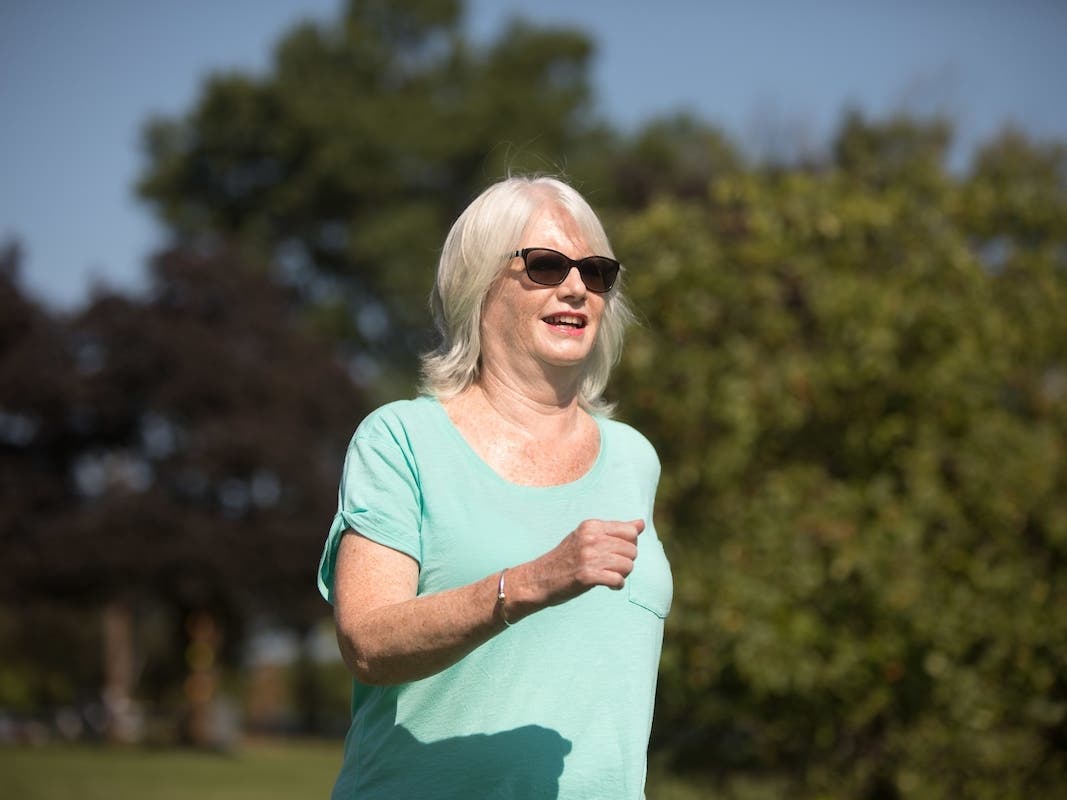
Six years ago, Mary Logan was among the first patients in the pioneering Cardiac Rehabilitation of Stroke Survivors (CROSS) trials at Hackensack Meridian JFK Johnson Rehabilitation Institute.
Today, the 66-year-old Middlesex woman says she would be “six-feet-under” without the groundbreaking initiative that aims to fundamentally change rehabilitation for American stroke survivors.
The CROSS trials explore the benefits of the JFK Johnson Stroke Recovery Program that, unlike traditional stroke rehabilitation, includes cardiac conditioning similar to what is used in cardiac rehabilitation. The research found that stroke survivors who completed the program improved on every measure studied: reduced hospital readmissions, improved cardiac performance, and improved overall function. Most strikingly, the program reduced the chances of death within one year after the stroke by 76 percent.
Find out what's happening in Woodbridgefor free with the latest updates from Patch.
“I loved the program. It was fantastic,” said Logan. “People who have had stroke can and should exercise. I found myself getting stronger and stronger all the time. I still exercise every day. The program really turned my life around.”
The cardiovascular aerobic conditioning program is modified for stoke patients who may have problems with muscle movement, or plegia, because of their stroke. The participants are monitored, and encouraged, by a professional medical team.
Find out what's happening in Woodbridgefor free with the latest updates from Patch.
Logan experienced her stroke six years ago, when she was working as a waitress. One morning, she found herself feeling “pulled to the right. … I had to fight to go to the left.” She continued with her life, even working, until after three days she finally drove herself to RWJ University Hospital Somerset just as she lost the use of her right arm, leg, and shoulder.
She received emergency treatment and was then sent for acute in-patient rehabilitation at JFK Johnson Rehabilitation Institute, where she spent 10 days. But her recovery was not over after her time in acute rehabilitation. Her physicians suggested she consider the clinical trials examining the JFK Johnson Stroke Recovery Program. The program includes 36 sessions of medically monitored interval cardiovascular training; follow-up visits with a Physical Medicine and Rehabilitation physician providing stroke-specific risk factor education such as smoking cessation and nutrition; and traditional stroke rehabilitation to address stroke-related issues.
Sara Cuccurullo, M.D., Medical Director of JFK Johnson, and Talya Fleming, M.D., Director of the Stroke Recovery Program & Aftercare Program, have been leading the research while advocating for more effective rehabilitation for stroke survivors. The JFK Johnson researchers are now in discussions with key rehabilitation institutes across the country to expand the research nationally.
Both stroke and cardiac disease involve the vascular system. In a stroke, the vascular system of the brain is affected, and, in cardiac disease, the vascular system of the heart is affected. Currently, Medicare and other health care insurers typically provide coverage for a comprehensive cardiovascular aerobic conditioning rehabilitation program only for cardiac disease, but not for those recovering from a stroke.
Dr. Cuccurullo and Dr. Fleming say data from the CROSS trials show stroke patients would greatly benefit from access to cardiac rehabilitation.
Logan was unaware at the time that her cardiac rehabilitation was groundbreaking and was not typically provided to stroke survivors. She recognizes that the cardiac interval training as well as all the support involved in her rehabilitation set her up for a healthier future. Today Logan works as an Uber driver. She exercises every day.
“I think anyone who had a stroke should have the opportunity to benefit from this program,” she said.