Arts & Entertainment
Backyard Beekeeping
State urges gardeners to consider breeding pollinators to make up for the critical lack of bees.


Amateur beekeepers harvest millions of pounds of honey with the average hive producing thirty-two pounds! One pound of clover takes the nectar of 8 million flowers. A single worker bee will make approximately one-twelfth of a teaspoon of honey in its short life of 30 summer days. The average population of a hive is around 60,000.
History of Beekeeping
Beekeeping in olden times was a crude affair — jugs, clay pots, baskets and even hollowed out logs were used to gather “the nectar of the Gods.” Beekeeping can be traced back to 15,000 BC where the act of hunting and gathering food is recorded in the form of rock paintings. Cave paintings in Spain dating back to 10,000 BC depict ‘bee hunting’ and in 3,000 BC migratory records along the Nile were found in Ancient Egypt.
Find out what's happening in Wyckofffor free with the latest updates from Patch.
There are many references in the Bible: Exodus 3:8 defines Canaan as ‘the land of milk and honey’ and in Proverbs 24:13 “My son eat thou honey, because it is good, and the honeycomb is sweet to thy taste.” And the great Roman Poet Virgil (70-19BC) may have written the first “how to” book, advocating the clipping of the Queen Bee’s Wings as well as shading and wind protection.
In Greek Mythology, Aphrodite was called Melissa, the Queen Bee, and priests, “essenes”, which means drones, presided over marriage ceremonies and “Honey Moons.”
Find out what's happening in Wyckofffor free with the latest updates from Patch.
“Secret Life of Bees” author Sue Monk Kidd says the lore of Ancient times held that bees were considered a symbol of the sole, of death and rebirth. She found Medieval Hymns referring to the Virgin Mary as the Bee Hive or Queen Bee with Christ as the honey that flowed from her.
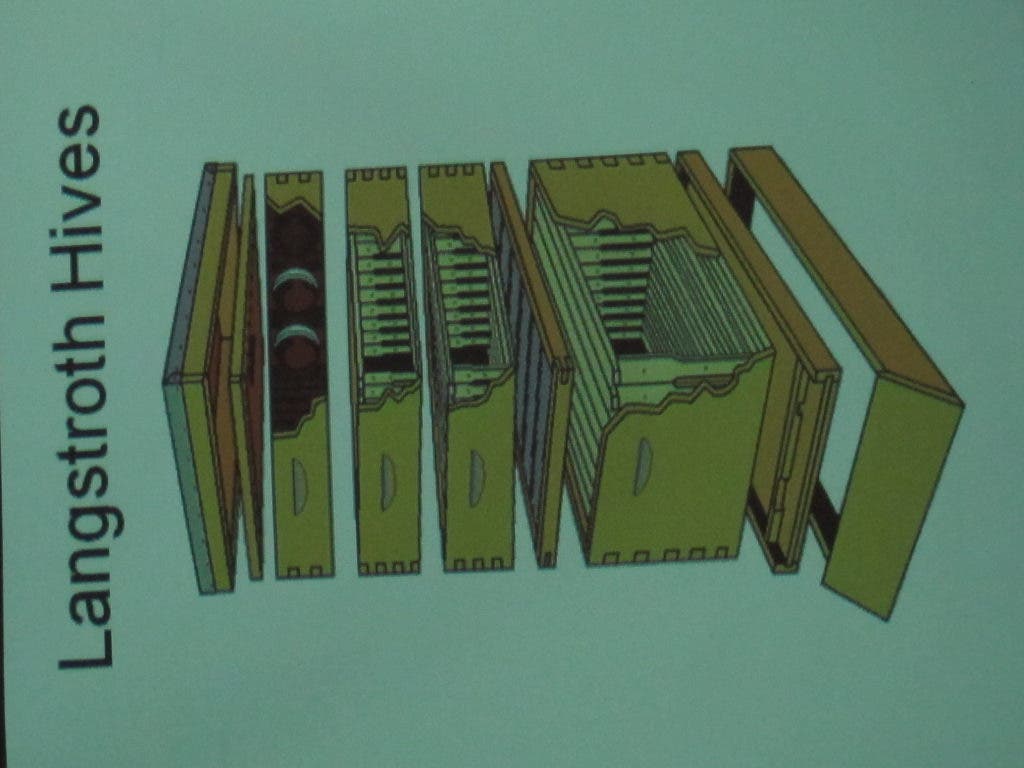
Irish and Norwegians may have brought the first bees to America in 800-900 AD and by the 1850’s, Honeybees had colonized all over the world. Lorenzo Langstroth, the “father of modern beekeeping” standardized the industry with a portable frame that is still used today.
Uses of Honey
Countries like China, Greece and Egypt have long used honey as a sweetener, but also medicinally. Researchers today confirm that many properties of honey are healing both topically and internally. Honey is commonly used in cough drops and tea at the first sign of a cold. It is soothing on a sore throat and helps to clear nasal passages. A tablespoon in warm milk is sure to enhance sleep.
Honey is composed of two sugars—levulose and dextrose which do not need to be broken down for digestion. They are absorbed into the bloodstream almost immediately and contain protein, vitamins, minerals and no cholesterol. Darker honey is more nutritious than lighter honey. Preventatively, honey contains minerals, nutrients and antioxidants that are good for the cardiovascular system.
Raw or unfiltered honey (has not been heated or pasteurized) helps with hay with hay fever as bits of pollen gathered from allergens work to desensitize sufferers in the same way as allergy shots. Honey is also used effectively in the treatment of wounds-honey has osmotic properties-that is it absorbs water. Wounds become infected when bacteria invade and begin multiplying. Water molecules react strongly with the sugars in honey-honey actually dehydrates bacteria to death.
Honey is used in lip balms for healing and is also used to store skin grafts for up to twelve weeks. It is also used in face masks to tighten pores.
According to the American Cancer Society, Japanese studies have found that certain solutions containing raw honey reduced cancer cells in the bladders of lab rats and have many anti-tumor properties.
Ok Already, I Want to Give Beekeeping a Try…
Starting your own backyard beekeeping may seem intimidating—one likened the endeavor to “having a lion tied up in your garden.” According to New York Botanical Garden Instructor Megan Paskas, bees are highly organized, very clean and extremely sociable—“the last magic creatures in the land.” Paskas herself took many courses in beekeeping creating a simplified version to demystify what seemed complicated.
“Bees will sting if not handled properly,” insists Paskas, “and although swarms can certainly be dangerous, they can be prevented.” She highly recommends taking classes before ordering any supplies.
Although Beekeeping companies advertise many different products for home and commercial uses-there are a few basics necessary for a productive hive. Essential gear includes gloves, a hat and veil for protection. A "smoker" to calm the bees for handling. Bee ‘supers’-stacking boxes (bee housing) that hold the frames bees breed in, a metal multi-purpose scraping tool, a utility brush and of course the bees-a queen, drones and workers. (Bees, with Italian reigning as the beginners’ choice, come in a box with an established queen-one who is fertilized.)
You must have a sunny place in your garden or roof-top, one that is quiet and free from invasion by pets or noisy children. Dappled late afternoon light is preferred to keep the heat down in the hive, and to encourage a cycle of bees working and sleeping. Worker bees will go on foraging missions-flying out to find pollen as far away as a mile.
Besides the Honey, Bees are Important Because….
Bees are responsible for pollinating nearly three-quarters of all known plants. Over 70 percent of plants and crops around the world are at risk as the population of bees has been declining drastically for decades. The apple trees in my own back yard, once laden with fruit, had absolutely no apples last year. Where are all of the bees? Colony Collapse Disorder, CCD, has become simultaneously rampant around the world, threatening the viability of most fruiting and flowering crops. Scientists are scrambling for answers and remedies for the mites, funguses, viruses and overuse of chemical sprays and pesticides calling the disappearance of bees “a crisis bigger than Global Warming.”
(Alternatives such as the reliance on wind pollination are unpredictable and hand pollination, though effective, is not practical.)
The New Jersey Department of Agriculture recognizes the impact the loss of bees are to the Garden State whose annual revenues for crops such as apples, blueberries, tomatoes, cucumbers, pumpkins, squash, cantelopes, cranberries and watermelons are in the hundreds of millions of dollars and are encouraging individuals to not only become individual beekeepers, but to consider commercially bringing hives to local farms in their area.
Today’s beekeepers are serious about the environment with an emphasis on green living. Many are gardeners who wish to create a productive haven in backyards, on rooftops and in schools for both practical and educational reasons. “Bee” healthy and happy while helping a cause…”Bee”-come a Backyard Beekeeper!
For more info on the History of Beekeeping: www.beeclass.com – A Short History of Beekeepers.
Read The Complete Idiot’s Guide to Beekeeping by Dean Stiglitz and Laurie Herboldsheimer and The Backyard Beekeeper by Kim Flottum. Walter T Kelley is a good source for beekeeping supplies: http://kelleybees.com
For information of classes contact The New York Botanical Garden: nybg.org, 718-817-8700 or Rutgers for beginner and advanced courses: Bill Eisele, course coordinator-609-628-3220, beeeisele@comcast.net