Community Corner
Birth of a Nation: Revolutionary Officer Remembered
John Van Blarcom's grave sits in cemetery that's seen better days


As fireworks call citizens to a rocket's red glare, and the smell of hot dogs and hamburgers cook over the open fires for this Fourth of July weekend, one officer who served in the American Revolution rests in a nearby cemetery.
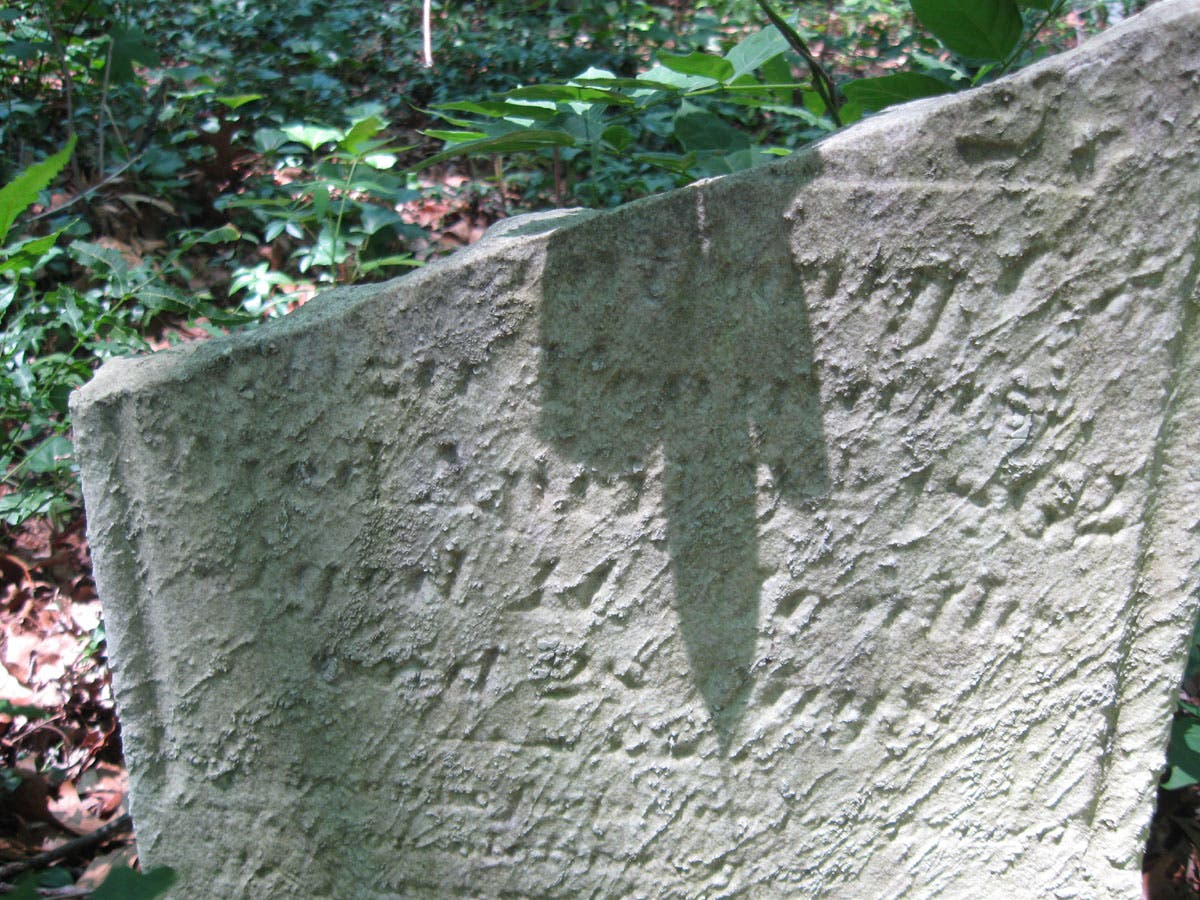
John Van Blarcom's grave can be found in the Union Cemetery off Franklin Avenue, amid weeds, trees and an explosion of poison ivy. The sign for the cemetery has been removed for repairs, and the area features stones that have been knocked over, broken and rubbed away by time.
But in the cemetery, resting beneath a red stone that has, to quote a descendant, "miraculously survived the years," rests John Van Blarcom.
According to the Wyckoff Historical Society, "During the Revolutionary War, the Wyckoff area was not affected much, probably due to the sparse population and no major troop movements through the town. Local resident John Van Blarcom served as an officer in the Continental army."
According to his tombstone, which was covered with weeds, Van Blarcom was 77 years old when he "departed this life" on March 31, 1829.
"Blessed are the dead which die in the Lord, they rest... and their works do follow them."
David Van Blarcom, a genealogist and historian from Ramsey, said John Van Blarcom's choice to fight for the Continental Army against the British was a difficult one.
"Many residents in Bergen County were loyalists to the crown of King George because they were 'landed' and owned plantations," David Van Blarcom said.
He added, "Many young men from family names like the Hoppers, the Van Blarcoms, the Zabriskies, and the Smiths wanted to keep their lands."
David Van Blarcom explained John Van Blarcom's half-brother, Isaac, who had been loyal to the crown, had his lands seized at the time by a pro-Colonial government, an occurrence that wasn't rare.
With John Van Blarcom fighting for the Continentals, David Van Blarcom said it is not hard to speculate tension existed between the brothers.
"It was not easy," he said.
David Van Blarcom said John went on to help co-found the New Prospect Methodist Episcopal Church on what is today Franklin Avenue. The Union Cemetery had been associated with the church, which was destroyed by fire. It was re-built on Franklin Turnpike in Waldwick near where the Hermitage is today.
After the war, John Van Blarcom would inherit a cranberry plantation farm from his family.
Today, the Wyckoff Assembly of God is located near the Union Cemetery. The church's pastor, Wes Kenyon, has walked back to the cemetery on several occasions.
"I did not realize an American Revolutionary War soldier was here," said Kenyon, who has served as pastor of the church for three and a half years. "However, I am glad to know that."
He said it helps a community to understand its heritage.
"We have a society that moves around, and it is nice to know about this," said Kenyon.
Dr. Richard Lynch, president of the Wyckoff Historical Society, agreed. He explained that while General Marquis De Lafayette had been encamped in what it is today Hawthorne, Wyckoff had not seen much action in the Revolution.
"Even though Wyckoff was fairly isolated, I am proud to know and share our heritage," Lynch said.
The society's website says, "Today, the Wyckoff Historical Society still abides by its original mission to research, preserve and educate about the rich history of Wyckoff, New Jersey." It adds, "The next time you drive around Wyckoff, drive a bit slower, and remember Wyckoff's past."
But with the cemetery covered with weeds, trees and poison ivy, and with tombstones in disrepair, will it last another 234 years?
David Van Blarcom said that by calling attention to John Van Blarcom's final resting place and with the repairs Lynch said the society is hoping to make in the future, the cemetery will continue to preserve a piece of Wyckoff's history.