Arts & Entertainment
Did You Know That February is National Indoor Gardening Month?
Dig into Hydroponics for some winter fun!
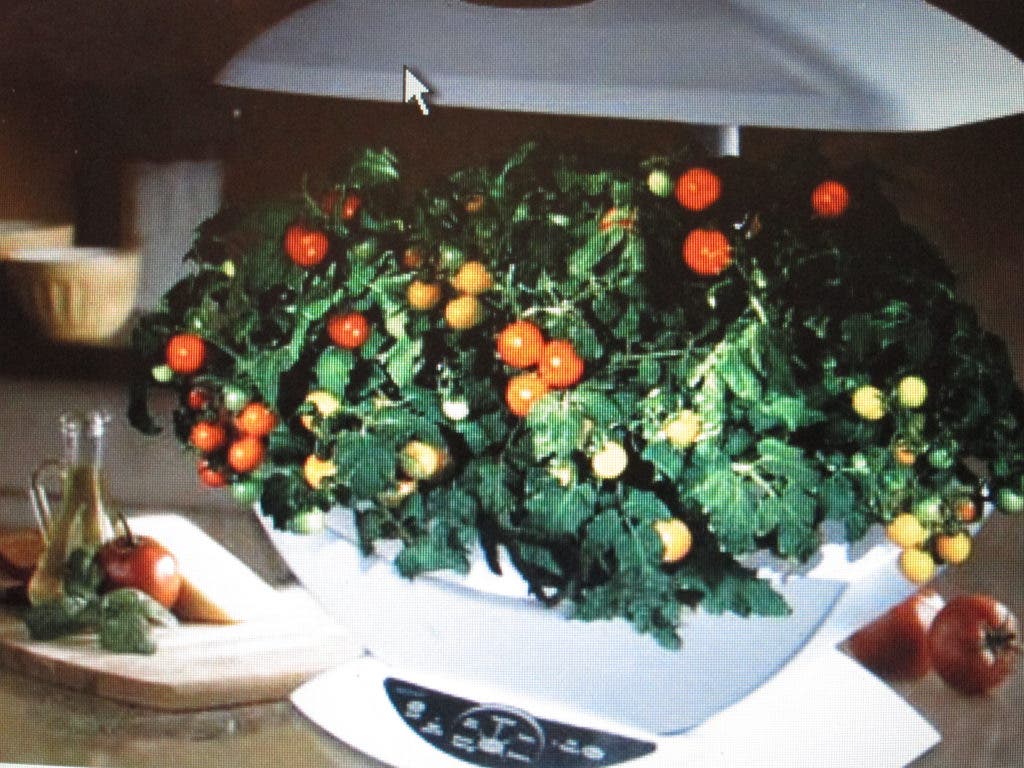
What do store-bought tomatoes in the middle of winter have to do to taste like those that we buy at a roadside stands in August? Same seeds, same soil, same water…so why do hot house tomatoes lack that same abundant flavor?
Plants grown outdoors have the advantage of pollination by bees and the wind, while the hothouse varieties are pollinated by hand or “buzzer pollinator.” Both methods are time intensive and factor exclusive, and both can be subject to attack by a variety of insects, molds and fungi. (Ahh, a gardener’s challenges.)
So how about a way to grow plants and veggies that is neater, easier and more predictable, not to mention more successful and without the bending, digging, and weeding?
Find out what's happening in Wyckofffor free with the latest updates from Patch.
Enter the space-aged aerogarden! A self-contained, highly portable, extremely attractive and productive table-top gardening system, capable of growing nearly any type of flower or vegetable all year long-all without soil.
This aeroponic garden is based on the science of hydroponics, originating from Greek words “hydro” (water) and “pono” (labor). Hydroponics is a method of growing plants using mineral solutions in water, without soil.
Find out what's happening in Wyckofffor free with the latest updates from Patch.
According to Aerogrow’s Vice President of Marketing John Thompson, the difference between hydroponics and its derivative, aeroponics, is the amount of time roots spend immersed in water.
“In aeroponics, the water stream is intermittent, allowing for more oxygenation of the roots,” said Thompson, “and studies clearly show that roots with the precise amount of exposure to oxygen and water take up more nutrients, grow larger, supplying the rest of the plant with beneficial ingredients.”
Terrestrial plants, such as orchids, can grow with roots immersed in a mineral solution or in an inert, also soil-less medium such as perlite, mineral wool or coconut husks.
A Very Little Science Here
Plants absorb essential mineral nutrients “as in organic ions” in water. In regular growing conditions, the soil acts as a mineral nutrient reservoir, but the soil itself is not essential to growth. NASA scientists pared away non-essential elements to promote soil-less growth in order to produce fresh greens in space. As long as the roots have an infusion of mineral nutrients in water, soil becomes unnecessary.
A lot of Little History Too
The concept of soil-less growing has its roots in the 1600s, beginning with a book written in 1627 by Sir Francis Bacon titled “Sylva Sylvarum,” exploring ten centuries of natural history. In 1649, John Woodward discovered that spearmint grew better in less pure water than in distilled water. In the mid 1800s, German botanists Julius von Sachs and Wilhelm Knopp identified nine essential elements needed for growth, leading the way to soil- less cultivation.
In 1929, Professor William Frederick Gericke developed a liquid solution of minerals and consistently grew 25-ft. tomato vines in his back yard completely soil-less, thus the birth of the term “hydroponics” (1937).
Although Gericke refused to divulge his exact formula, he did provide plenty of useful information in his 1940s book “The Complete Guide to Soil-less Gardening.”
Hydroponic technology was used by Pan Am Airlines at Wake Island, a rocky atoll and refueling stop in the Pacific. Vegetables were grown in this soil-less landscape to use as food for passengers. Mid-century lighthouse keepers living in remote areas could have used this technology rather than hauling bags of dirt up craggy cliffs, only to have winter winds blow it all away.
In the 1980s, Walt Disney got in on the act and built EPCOT Center’s Land Pavillion. This exhibit featured astounding displays of soil-less growing. Great columns of herbs, enormous pumpkins and other gourds hung pendulously overhead, and trees and shrubs of every size and the beloved tomato vining were displayed throughout the exhibit.
But it was NASA’s “Controlled Ecological Life Support System” (CELSS) whose research really got hydroponics off the ground. Its commercial cousin Aerogrow launched the laymen’s version of NASA technology and brought areoponics into American homes.
The resulting tabletop aerogarden uses "smart" timers which control everything from the frequency and length of the roots’ exposure to air and water to when it is time for human intervention--that is to add liquid nutrients and additional water. Intense lights with reflective shields are also timed and last twice as long as the older units.
A Bit More Science
“Aerogardens make nutrient-rich water available to the roots of plants,” said Thompson, adding that keeping them actively aerated and alternately hydrated with the circulating water rinses the roots, and possible bad bacteria along with it. The timed system also eliminates the possibility of anoxia-drowning plants by depriving them of oxygen--the number one cause of houseplant death.
Aerogardens are highly attractive, simple to use and 99 percent successful. Gardeners of any age and ability find them enjoyable as well as practical as just about any flower or crop can be raised.
The Aerogrow company has grown by leaps and bounds as they keep refining the gardens based on new research, as well as offering many accessories such as miniature gardening tools, seed starter kits, directions for adapting your own seeds to their units and discounts on multiple orders.