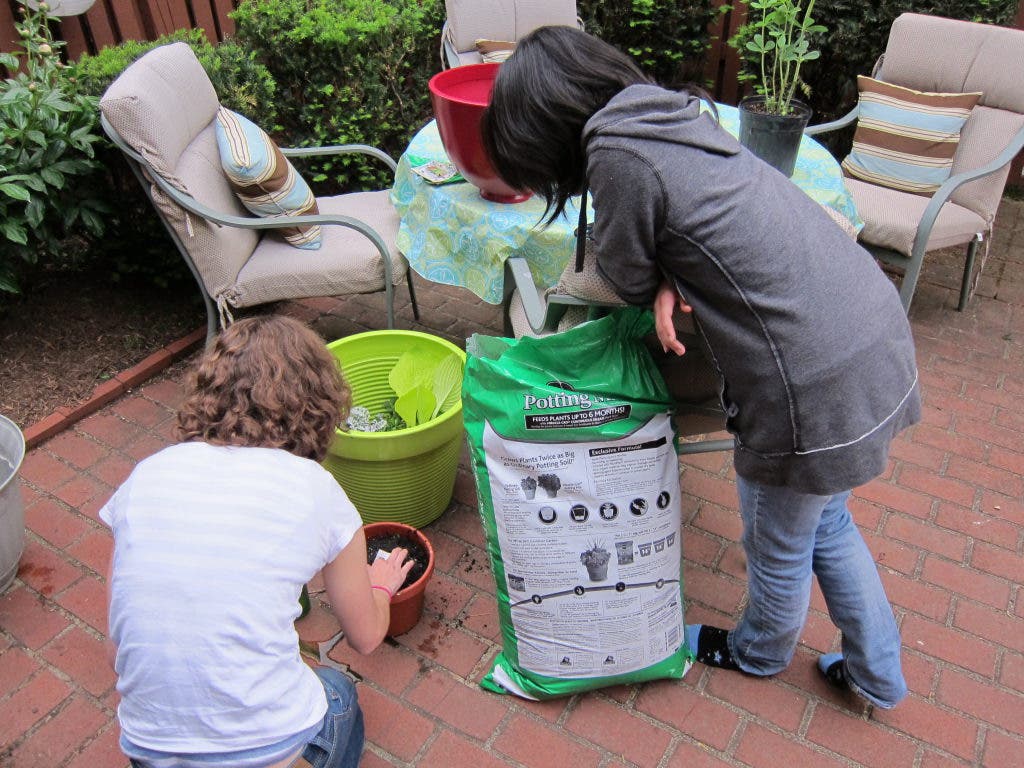


I think my favorite plants to grow are definitely herbs. They are easily grown both indoors and out and look as attractive as they are useful. Many such as sage, thyme, borage, chives, cilantro and sometimes parsely “winter over”, that is they survive the winter by either re-seeding themselves as in the case of cilantro/coriander or going dormant under leaves or mulch. Herbs will grow in average soil, but potting soil is good and fertilization about every two weeks during growth periods is advisable.
It is easy enough to grow indoors herbs all year long as long as they are in a sunny window for at least six hours. Outdoors, they need five-six hours of sun as well as moisture, deep watering and frequent pinching back of their tops to promote filling out. Many people grow herbs in single pots, but I like a nice big barrel of them with either an Asian Eggplant or tomato plant in the center and herbs all around the edges interspersed with a few Marigolds for color and resistance to bugs. You can also grow herbs in hanging baskets, old strawberry pots or whimsical containers as long as there are several holes drilled into the bottom for drainage. Herbs make an attractive window box display.
The herbs listed below are popular and versatile—with both culinary and proven medicinal uses. Many are known commonly for one or the other but seldom both. Some herbs such as chives, thyme and hyssop are beautiful for their lavender, blue or magenta flowers and all have wonderful scents and should be planted close to the kitchen for practicality and aroma.
Find out what's happening in Wyckofffor free with the latest updates from Patch.
Aloe Leaf: Alleviates the pain of burns and speeds healing including sunburns. Immerse the affected area in cold water, pat dry and apply aloe generously. Simply cut off a leaf or two, trim the prickly parts and split the leave in half, lengthwise, rubbing the cooling gel on the affected area.
Comfrey Leaf/Root: like aloe, comfrey is a natural bandaid and helps to heal burns. Comfrey is very quick to regenerate skin tissue so thoroughly wash affected area before application to avoid bacteria being trapped inside.
Find out what's happening in Wyckofffor free with the latest updates from Patch.
Dandelion Root: the leaves of Italian Dandelion plants are excellent in salads, however they can also be used as a diuretic which stimulates liver and kidney function. Cut into small pieces and simmer in a glass or enamel vessel for at least 10 minutes before straining or drinking as a tea.
Echinacea: an immune system stimulant. Is also an anti-septic and is anti-viral used for sore throats, flu, colds, infections and allergies. Prepare as in Dandelion. This perennial multiplies each year and can be transplanted easily.
Chamomile: German chamomile is the strongest grower in our area. Harvest the flowers and dry in the microwave before boiling and straining for tea. Chamomile is excellent for insomnia as well as for indigestion.
Garlic Bulb: antibiotic effect. Can be eaten raw at the onset of a cold or flu. A garlic cough syrup can be made by simmering freshly chopped garlic in apple cider vinegar for 10 minutes. Strain the resulting liquid and add 2 to 3 Tablespoons of honey, simmering again until thick and syrupy. The vinegar neutralizes the strong garlic taste. Garlic can be planted in the Spring, but is best planted in the fall.
Ginger root: is both an anti-inflammatory and a decongestant. ¼ tsp added to 1 cup of warm water alleviates nausea/morning sickness/motion sickness. Also helps with digestion, relieving problems that have to do with the build-up of gas. Plant a two inch piece of Ginger Root in potting soil.
Basil: although known mainly for cooking, Basil can be used for bronchial infections. It also helps to fight fatigue and stress. Thai Basil, Greek, Italian Green Globe, Genovese and Lemon basils are the most effective. Basil is easily grown from seeds, indoors and out. It also roots very easily in water and can be re-planted in pots out of doors. Makes an excellent companion to tomato plants.
Mint: is excellent for stomach aches and can be chewed raw or made into tea. It can be combined effectively and deliciously with Chamomile. Easily grown in pots or in ground. Is invasive and best grown in ground within the confines of a container to control spreading.
Thyme: good in soups and stews as well as meat and fish, thyme has also long been known to clear up mucus and as a pain reliever, especially for migraines. It is also said to remove warts and blemishes in poultice form. Grows in an upright form as well as weeping. English, German, lemon and variegated are attractive hardy and easy to grow.
Parsley: flat Italian or curly, parsley is a diuretic and good for stomach aches. Parsley tea eases indigestion while parsley pancakes a tasty vegetarian side-dish. Grows in small spaces.
Sage: helps with sore throats, breaks fevers, can ease a headache and is a known anti-oxidant. Winters over becoming almost shrub-like. Can be dried to use in cooking.
Lavender: grown for looks and fragrance, lavender oil is an aromatic said to ease stress. This herb needs at least 6-7 hours of strong sunlight, but dappled afternoon sun is ok.
Dill: good for indigestion. Boil water in a glass vessel, steeping seeds for 10 minutes. Can be grown in pots or in average, but well-drained soil in ground.
Other easy to grow essential herbs are Chives (very mild onions used in salad dressings), French Tarragon, and Rosemary (aromatic good on meats, potatoes and fish). Pinch plants back frequently during the season to prevent flowering or “going to seed”, which renders most plants bitter.
There are many beneficial from the garden that can be used effectively against Spring Allergens including:
Locally grown honey: Bees usually pollinate plants within 2 miles of their hives, depositing pollen into the honey, exposing you slowly to allergens. (Children under 1 year cannot safely process honey)
Stinging Nettle Weed: Although the acid on the edge of these weeds may irritate or sting your skin, it is safe to drink. Steep the tea for 10 minutes to obtain the full beneficial amount of anti-histamine, which also helps to dry out mucus.
Eucalyptus/Rosemary Oils: For immediate relief of congestion, add 4 drops of eucalyptus and 3 drops of rosemary oil to a pot of simmering water. Inhale the resulting steam for benefits that will last up to two hours.
Herbs have long had their place in Medieval, Colonial and Victorian Gardens and are making their way back into today’s kitchen gardens. Although they are grown decoratively in many knot gardens or in formal borders, they are beloved for their hardiness and practicality—herbs grown at home cost pennies compared to store-bought—give them a try!