Arts & Entertainment
Historic 'Stone House' Finds Potential Buyer
One of the original 'Stone Houses' of Bergen County, the Van Blarcom House on Godwin Avenue, is under contract.
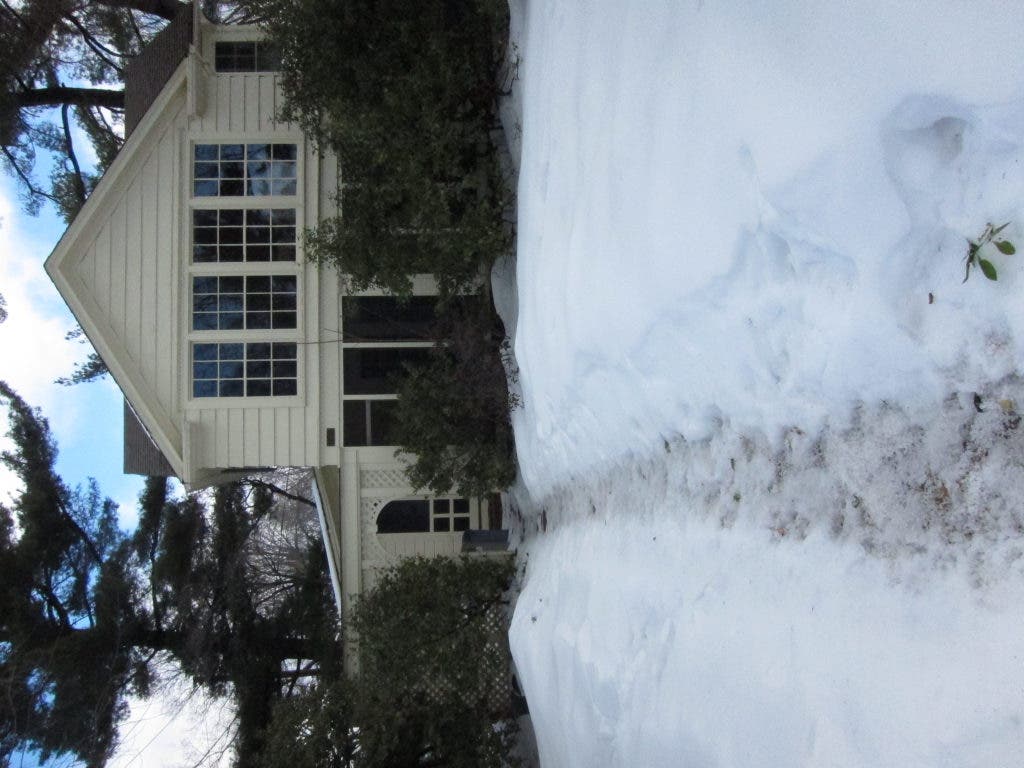


A piece of Bergen County history appears ready to change hands. The Van Blarcom House, 131 Godwin Ave., Wyckoff, one of the 204 Stone Houses of Bergen County, is under contract after being put on the market.
“Old Stone” has seen a lot of history — and is need of a little TLC — but remnants of its past are everywhere and the stories echo in its halls. Narrow hallways with nooks that invite pauses and a certain coziness that accompanies old houses. French doors grace several opening, wavy window glass lets in glorious morning and afternoon sun. Dental mouldings are elegant and charming and layers of beautiful wallpapers bespeak the tastes of not only time periods, but of young women making a pleasing respite for their families from the outside world.
The house was built by Peter Van Blarcom in 1739, 70 years before the “Redmen” left their camp on Clinton Avenue and many years before the Revolution. The home is an example of vernacular architecture, “a building tradition that emerged without formal training that is passed down from father to son” using mostly local materials or those found close by, Bob Craig, Director of the New Jersey Historic Preservation Office, explains.
Find out what's happening in Wyckofffor free with the latest updates from Patch.
“The Stone Houses are a strong architectural signature for New Jersey. You can tell where you are in the state by what architecture survives," Craig noted. "These houses are not usually found outside the State, in fact the majority of them stand in a handful of counties: Bergen, Hudson, Passaic, Morris and Essex and represent the cultural traditions of mainly ‘Jersey Dutch’, although many English and Germans settled here as well."
Though some considered the Jersey Dutch “boorish,” Craig noted they were “cheerful, practical, faithful, hardworking and highly skilled.” The Dutch considered their ways “the better ways” and were often successful because of their frugality and perseverance. The Dutch Stone Farmhouse was often very small, built in “the double plan” with two large rooms attached, each with its own outside entrance. This arrangement was for a married son to live with his family.
Find out what's happening in Wyckofffor free with the latest updates from Patch.
Most Dutch Farmhouses were built with high roofs to give more room in the attic for use and storage. Roofs swept down and well over the structure below, intended to bring water away from the house as well as for shading, and the walls are more than a foot thick. The house at 131 Godwin appeared to have been a two story structure with an “open second story room” that was commonly used by the family in summer as a sleeping loft. The downstairs addition may have housed slaves or was converted to a kitchen at a later date.
Houses on the State and national Register are classified in several ways. Most of the Stone Houses are registered as significant because of “architecture/engineering” in the time of “settlement and exploration.” This house is also noted for a significant “event,” however, the National Register of Historic Places archives are still in the process of being digitized and they could not immediately say what the event may have been. Wyckoff has at least one other house with a history of being part of “the Underground Railroad.”
A Peek Into Colonial Life
Van Blarcom’s house harkens to a simpler time in Wyckoff more representative of the country life or an agrarian society. People made their own clothes, mended their own shoes, dipped their own candles, churned butter and ground grain into meal to make bread. Farming and dairying represent the industry of the town, which was also known for chicken farms and even a Cranberry Farm.
There were bounties for “predatory animals” with $10 the going rate for the head of a wolf and only 50 cents for a fox or wildcat. If you wanted to go to New York City, you had to first travel by Oxcart to Weehawkin and then board a flatbed ferry or a paddlewheel.Hired hands made about $8 a month including board and apple pickers were paid $5 for 50 bushels.
A great deal of life revolved around the Pond’s Church in Oakland before Wyckoff built its own church. Services were in Dutch for a long time. The churches sponsored hay rides, Strawberry and Cake Festivals, and hay rides and sleigh rides. Quilting bees, corn husking, fence raising and harvest times were big community events.
There were reputed to be two “giants” in Wyckoff-one named “Samson” Van Blarcom and the other “Strongman” Stagg. They were “familiar characters of their time” and supposedly “shook” the earth when they rumbled by. “Samson” was known to pick up a whiskey barrel and “drink a full quart right from the bunghole.” “Strongman’s” claim to fame was walking with an armload of five-foot fence posts dropping them in one by one to pre-dug holes. (Most men could only carry one).
There were several Van Blarcom Houses between Wyckoff and Franklin Lakes, all built with the same practicality. Houses back then were usually small with tiny windows because of the rarity and expense of glass as well as the fear of Indians. It is believed that the Lenni Lenape named the area ‘wickof’ meaning “higher ground” with ‘sicomac’ meaning “happy hunting ground”. Chief Oratum was on the Native American ‘Who’s Who’ in Wyckoff.
Up the street at 161 Godwin was built up the street by the Terhune Family several years later. A Terhune eventually bought 131 and a Van Blarcom, 161. Many families lived in both houses in succession right up until the present time. Johanis Van Zile bought 131 a mere five years after Peter and so on until its present owner, Doris Landre came along 22 years ago. Now the home sits, with its fireplace waiting to be lit. It's history still in the making.