I am among those born during the Baby Boom Generation (born 1946-1964), so I am well aware of the level of competition that we have all experienced since entering the workforce. Baby Boomers comprise the largest single-generation workforce in history, as unlike its predecessor, the Postwar Generation (born 1925-1945), both household members have been actively employed. Competition for jobs is very high, as this is a generation made up of about 81 million people.
Some marketing experts and other commentators have split this generation into two distinct segments, since those born during the first and second halves of the generation have had very unique life experiences. Attitudes, behaviors and society were vastly different for those born during the first half when compared to those born during the second, causing there to be a disconnect between early and later Baby Boomers. In effect, all the elements that help to define a cohort were violated by the broad span of years originally included for the full Baby Boom Generation.
The first segment of Baby Boomers (born 1946-1954) came of age during a period of time that included events such as the Kennedy Administration, his and Martin Luther King, Jr.’s assassinations, the Civil Rights movement, and the Vietnam War. They were heavily involved in protests, and because of the war, the country saw one of the most fervent and violent oppositions to the draft since the Civil War. However, this half of the Baby Boom Generation also had some very good economic opportunities, and many were largely optimistic about the potential for America and their own lives, despite the turmoil occurring at the time. The Baby Boomers born during the second half of the generation, who director/producer Jonathan Pontell nicknamed the “Jones Generation,” missed that whole period of history.
Find out what's happening in Wyckofffor free with the latest updates from Patch.
The second segment of Baby Boomers (born 1955-1964) were the first post-Watergate generation, and lost much of its trust in government, as well as the optimistic views of their predecessors. The economic struggles of the 1970’s, including a major recession, the oil crises of 1973 and 1979, and “stagflation,” reinforced a sense of individualism and narcissism (novelist Tom Wolfe described the 1970’s as the “Me” decade). There was a focus on self-help, and skepticism of the media and institutions of authority is representative of the attitudes of this segment of the generation.
As advances were made in medicine, health care, and personal training, people were living longer and healthier than ever before, which also had an impact on the way things worked. There was less turnover in the job and housing markets, which contributed to shortages in both areas – something that has had a significant long-term effect on the country. The youngest members of the Baby Boom Generation, as well as those of Generation X continue to feel the consequences of this long shadow cast by the early Baby Boomers.
Find out what's happening in Wyckofffor free with the latest updates from Patch.
By the end of 2014, every Baby Boomer will have reached at least fifty-years-old, and many are still finding that landing a job in this market is very difficult. A potential employee’s prior work experience and personal character is not being given as much significance by employers as it should be, with a higher value being placed on things like lower salaries or personal connections to the recruiter instead. Baby Boomers clearly face discrimination in the job market, something that is hard to prove or enforce in an environment where there is only one job for every eight to ten people that need one.
As Baby Boomers have to work longer, the government is considering increasing the retirement age to seventy, and many of us who have no savings or retirement funds will be forced to continue even beyond that. This will reduce the jobs available for the new generations entering the workforce, thus perpetuating the ongoing problems and passing it on to them. Is this really what we want our children to inherit? Our legacy should be more than a failing economy and an overloaded job market, but something needs to change for us to begin building it back up again. More than ever, experimental programs or innovative solutions will be a welcomed alternative to these cross-generational struggles – now all we need to do is figure out how to put them into action. It’d be a shame is the next Steve Jobs is overlooked because he or she can’t get their foot in the door.
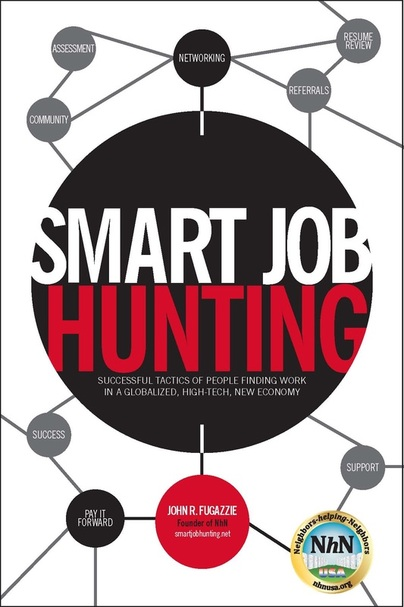
John R. Fugazzie’s - Smart Job Hunting