Business & Tech
How To: Choosing a Child's First Fishing Gear
Patch went fishing for advice and caught it at Trophy Tackle.
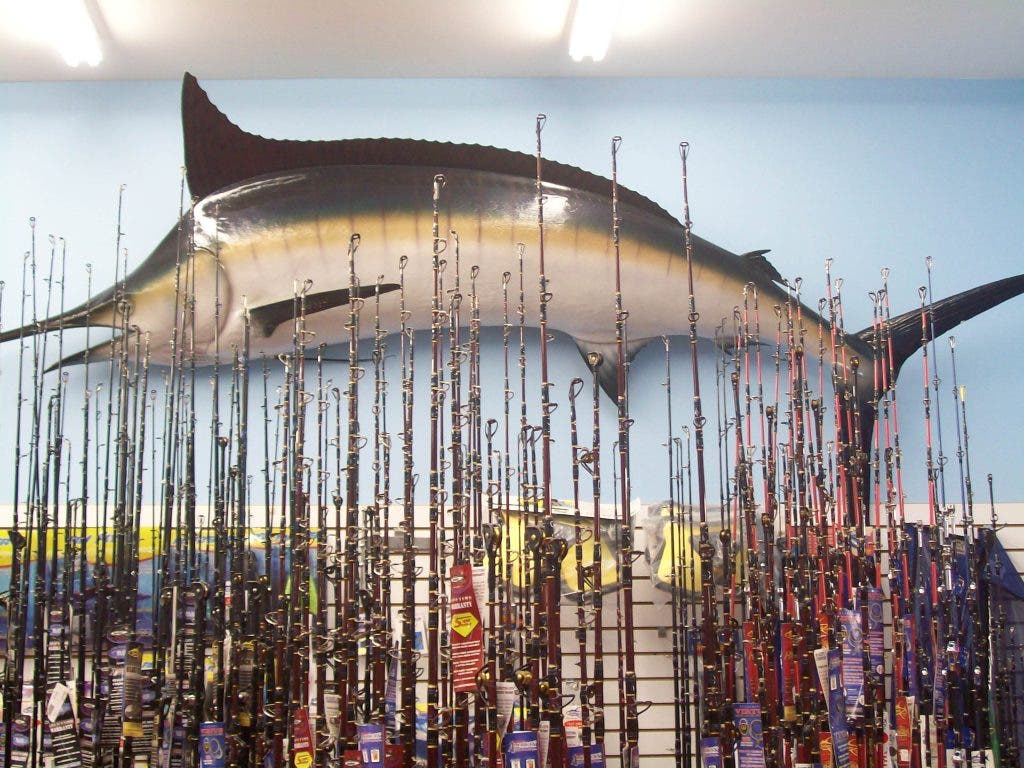


Whether it's from a boat, the docks or even Argyle Lake, Babylon Village is a paradise for those who like to fish. And sooner or later, lots of kids want to get in on the action.
So Patch visited recently with John Nappo, owner of Trophy Tackle on Fire Island Avenue, to gather tips and insight on how to choose a youngster's first rod and reel.
Nappo is a good person to ask. In addition to running the 3,200-square-foot tackle business for six years (the past three seasons at its present location), Nappo spent 15 years as a commercial fisherman and holds a captain’s license. He’s also been teaching maritime science at Kingsborough Community College for the past decade.
Nappo offered the following advice when getting a young angler started.
Find out what's happening in Babylon Villagefor free with the latest updates from Patch.
Reel: The reel is one of the prime considerations, says Nappo. The choice is either a conventional reel (which is a standard open-face), or, a spinning reel. The spinning reel is the best option for young children and beginners, because it offers better control during casting (which kids love to do, says Nappo), and because it reduces backlashes and tangles. Nappo recommends a spinning reel for kids ten and under.
If the child is a teen or a particularly avid and capable youngster, a conventional reel may be considered. Nappo says this should be determined on an individual basis, as the standard reel requires a lot more control from the user.
Find out what's happening in Babylon Villagefor free with the latest updates from Patch.
Rod: For children, Nappo recommends short rods with a maximum six-foot length. "Five feet is optimal," he says. "The more in tune a rod is with a kid’s height, the better their control."
As for material, the rod should be made of solid fiberglass, which is more forgiving of rough treatment, more durable and less expensive.
Line: For fishing line, Nappo recommends monofilament fishing line, made of nylon, which is very “easy on the fingers.” Other types of line, such as braided line made of plastic fiber, is considered too abrasive for the youthful user.
The line should be "10-15 lb. test" (an indication of the breaking strength of a line).
Bobbers, hooks and sinkers: These items depend upon where the child is fishing. For fishing from the docks or at Argyle, Nappo recommends bobber floats of 3/4-1 1/4” diameter.
A #10 hook should be used to catch snappers from the bay, while a #4 bait holder can be used to fish for pickerel, bass and carp in Argyle Lake.
For bottom fishing in salt water, a 1-2 ounce sinker should be used. For lake fishing, the sinker is not allowed to be made of lead. A zinc or tin sinker should be used instead.
Bait: Nappo says to use worms for fishing at Argyle. From the piers and in the bay, use spearing to catch snappers, and use clams and squid for bottom fishing.
Safety: Safety is always paramount. “PFDs (personal flotation devices) are required on boats,” says Nappo. “It’s also good safety practice to have children wear them anywhere near water, such as when they fish from the docks or by the side of a lake. And children should be supervised constantly by a responsible adult throughout the entire fishing process for their safety and well-being.”
For further information, it's a good idea to consult with a knowledgeable dealer in fishing tackle, such as Nappo, in order to base your purchase on the most comprehensive information available and the specific needs of the child.