Health & Fitness
Contaminated Bay Shore Site Deemed Safe For Public Health: NYSDEC
After nine years of cleanup, a former storage facility for hazardous waste is now safe for the environment and public health, NYSDEC says.


BAY SHORE, NY — After years of cleanup, a previously contaminated site in Bay Shore is now safer for the environment and public health, the New York State Department of Environmental Conservation announced Wednesday.
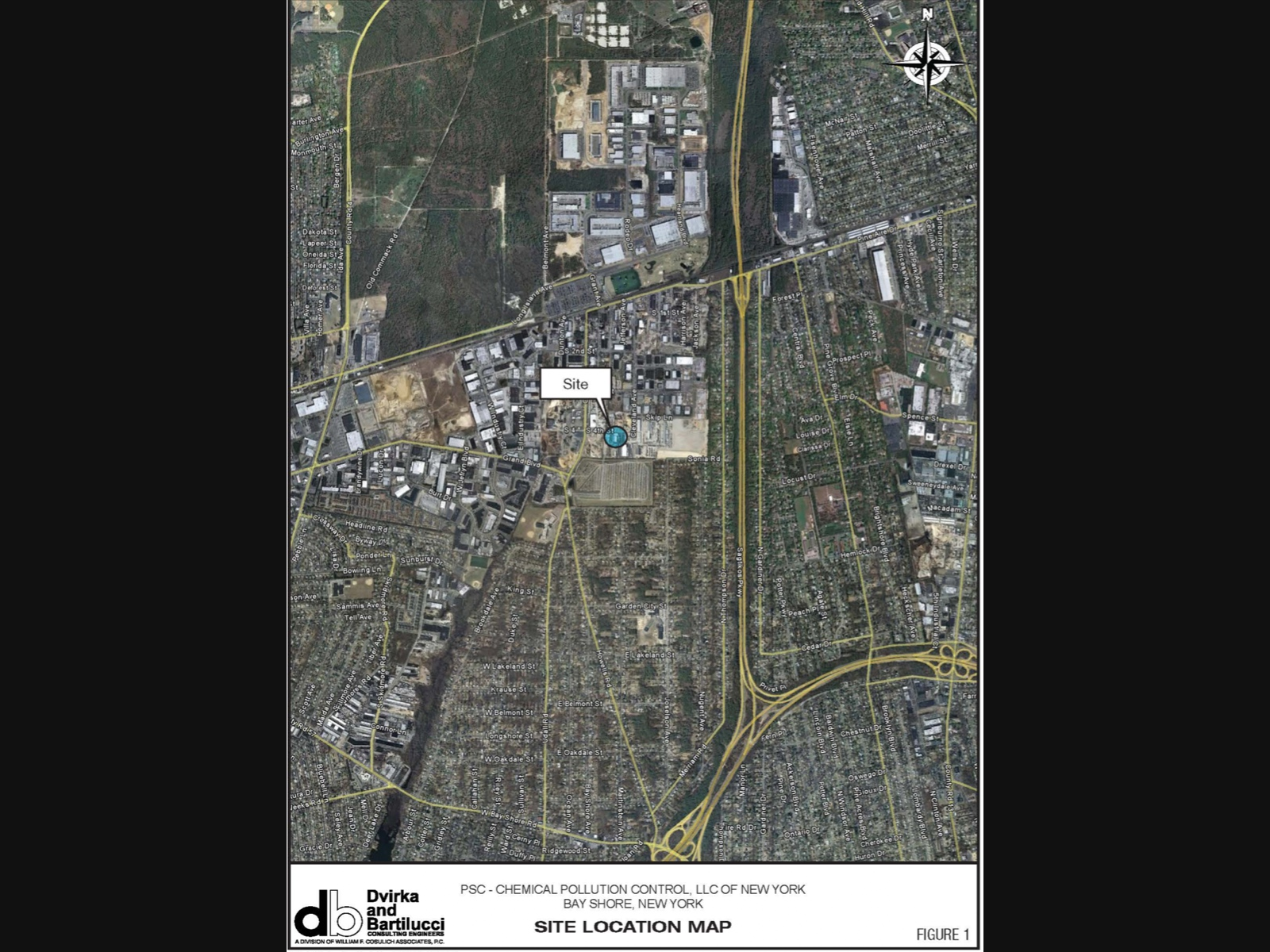
The chemical pollution control, or CPC, site, located at 120 South Fourth Street, was officially reclassified from a Class 2 — a significant threat to the public health or environment where action required — to a Class 4 — where the site is properly closed but still requires continued management.
According to the state's environmental conservation law, there are five classifications for hazardous waste sites, Class 1 being a site which presents imminent danger to public health, where Class 5 is a properly closed site and does not need continued management.
Find out what's happening in Bay Shorefor free with the latest updates from Patch.
CPC operated as a facility for the treatment, storage, and transfer of hazardous wastes from 1975 to 2012.
The area, which is 2,500 feet west of the Sagtikos State Parkway, first underwent cleanup in 2012 through the inactive hazardous waste disposal site program — the state's Superfund program — when operations ceased at the site.
Find out what's happening in Bay Shorefor free with the latest updates from Patch.
On-site buildings, tanks, and pads were closed, demolished and disposed off-site in accordance with the Resource Conservation and Recovery Act, the New York State Department of Environmental Conservation said.
According to a report, approximately 3,037 cubic yards of contaminated soils were excavated and disposed off-site. In-situ chemical oxidation, an environmental remediation technique used to reduce concentrations of environmental contaminants, was implemented to treat chlorinated volatile organic compounds in groundwater.
Volatile organic compounds can move underground in an aqueduct systems and can come up through groundwater and migrate into buildings, creating short- and long-term adverse health effects.
Contaminants of concerns found at CPC included phenol, tetrachloroethene (PCE), lead, dieldrin, 1,1 dichloroethene, silver, DDT (dichlorodiphenyltrichloroethane), DDP (dichlorodiphenyltrichloroethane), and 1,2-dichlorobenzene.
CPC originally operated from 1940 to 1960 as part of a Hubbard Sand and Gravel quarry. From 1960 to 1975, it was used by a bus company, a truck service company, and a milk bottling and distribution facility.
Get more local news delivered straight to your inbox. Sign up for free Patch newsletters and alerts.