Neighbor News
“I Thought It Was Anxiety”: After Driving Herself To ER With Heart Attack, LI Woman Flatlined — And Survived
A Bay Shore woman went into cardiac arrest minutes after arriving — on the anniversary of her mother's fatal heart attack — doctors say.


BAY SHORE, NY — Bay Shore resident Keri Richards did not think she was having a heart attack.
She thought it was anxiety.
On the night of Sept. 26, Richards began feeling severe chest pain, shortness of breath, and a wave of discomfort she could not explain — and drove herself to South Shore University Hospital while actively having a heart attack.
Find out what's happening in Bay Shorefor free with the latest updates from Patch.
The 47-year-old debated calling an ambulance but ultimately chose to make the five-minute drive.
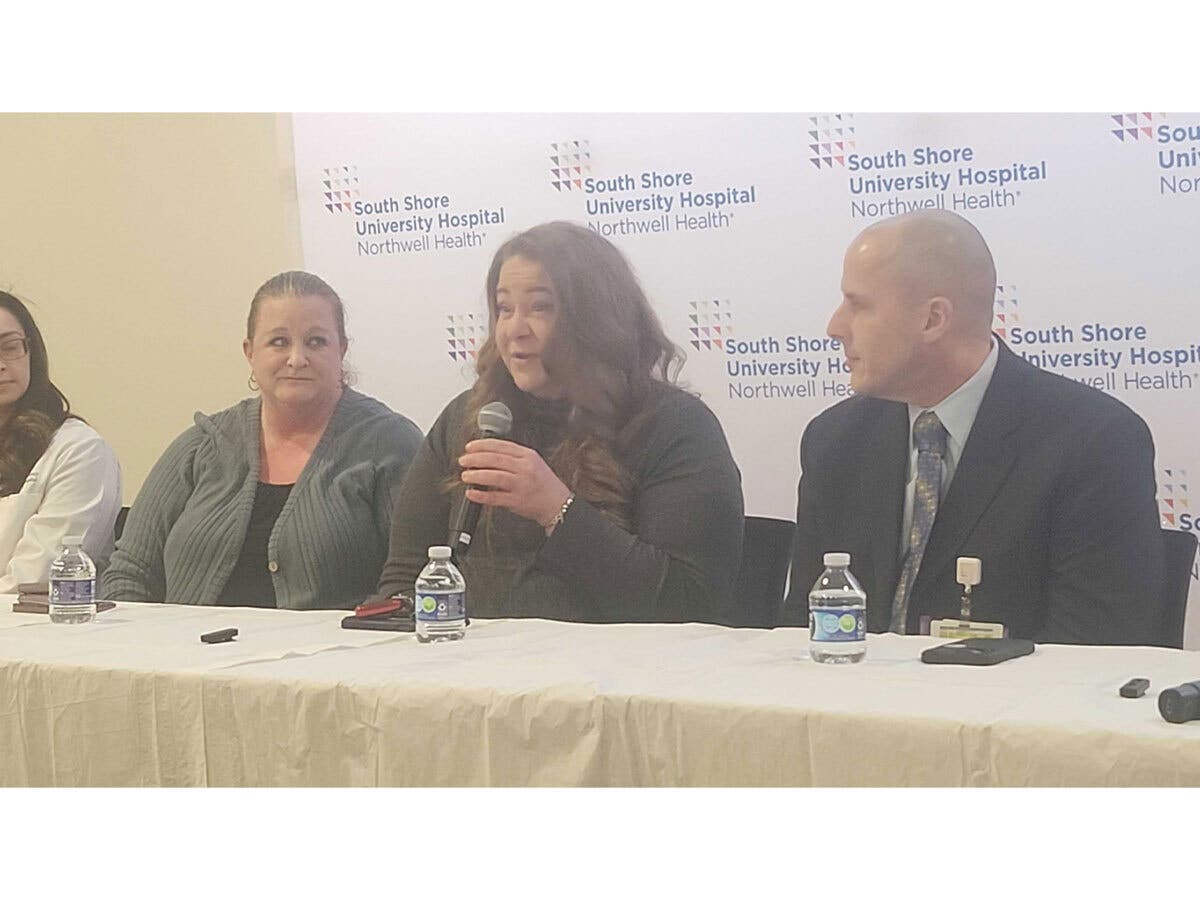
“It was a wild night,” Richards said Thursday when she reconnected with the care team that saved her life. “I didn’t want to be a burden. I didn't think I was having a heart attack when I drove myself. I thought I was having an anxiety attack. But I'll tell you that I just felt different. I never felt like that before.”
Find out what's happening in Bay Shorefor free with the latest updates from Patch.
The drive felt endless.
By the time she arrived, the emergency department was busy, and for a brief moment, she feared the worst.
“I thought I was going to die in the waiting room,” she said.
But within minutes of telling staff she was experiencing chest pain, Richards was rushed in for evaluation. An EKG quickly revealed what she did not expect — she was having a major heart attack.
Inside the emergency department, a multidisciplinary team moved quickly.
Senior nurse attendant Nicole Kaiser performed the initial EKG and immediately recognized something was wrong. The results showed a STEMI — a severe type of heart attack requiring urgent intervention.
“We knew immediately something was wrong — it looked like a STEMI,” said Dr. Nanette Matos, an emergency medicine physician.
What initially appeared to be a standard — though serious — cardiac case escalated within moments.
Richards began sweating heavily and experiencing worsening pain, which she later said radiated across her chest, back, jaw and shoulders in a way she had never felt before.
“I just felt different — I knew something wasn’t right,” she said.
As the team worked around her, Richards sensed the urgency without anyone needing to explain it.
“When I saw how fast you were moving, I knew it was serious,” she said.
Then, everything changed.
“She said, ‘I’m dying,’ and then she flatlined,” nurse Samantha Vitti recalled.
Richards went into cardiac arrest inside the emergency department.
A Code Blue was called. Staff immediately began CPR while preparing defibrillation equipment. She was shocked, resuscitated and brought back — only to arrest again.
The cycle repeated.
“She arrested multiple times — it was a very intense case,” Vitti said.
Throughout the chaos, clinicians moved with precision, performing life-saving interventions in rapid succession.
“You just see people running — the whole team comes together,” Vitti said.
Cardiology staff, already preparing for her transfer, quickly adjusted as her condition worsened.
“When I turned back, she was being resuscitated,” said Frank Kurcz, a cardiology physician assistant who had just been speaking with Richards moments earlier.
Recognizing the urgency, the team expedited her transfer to the cardiac catheterization lab as soon as her heartbeat was restored.
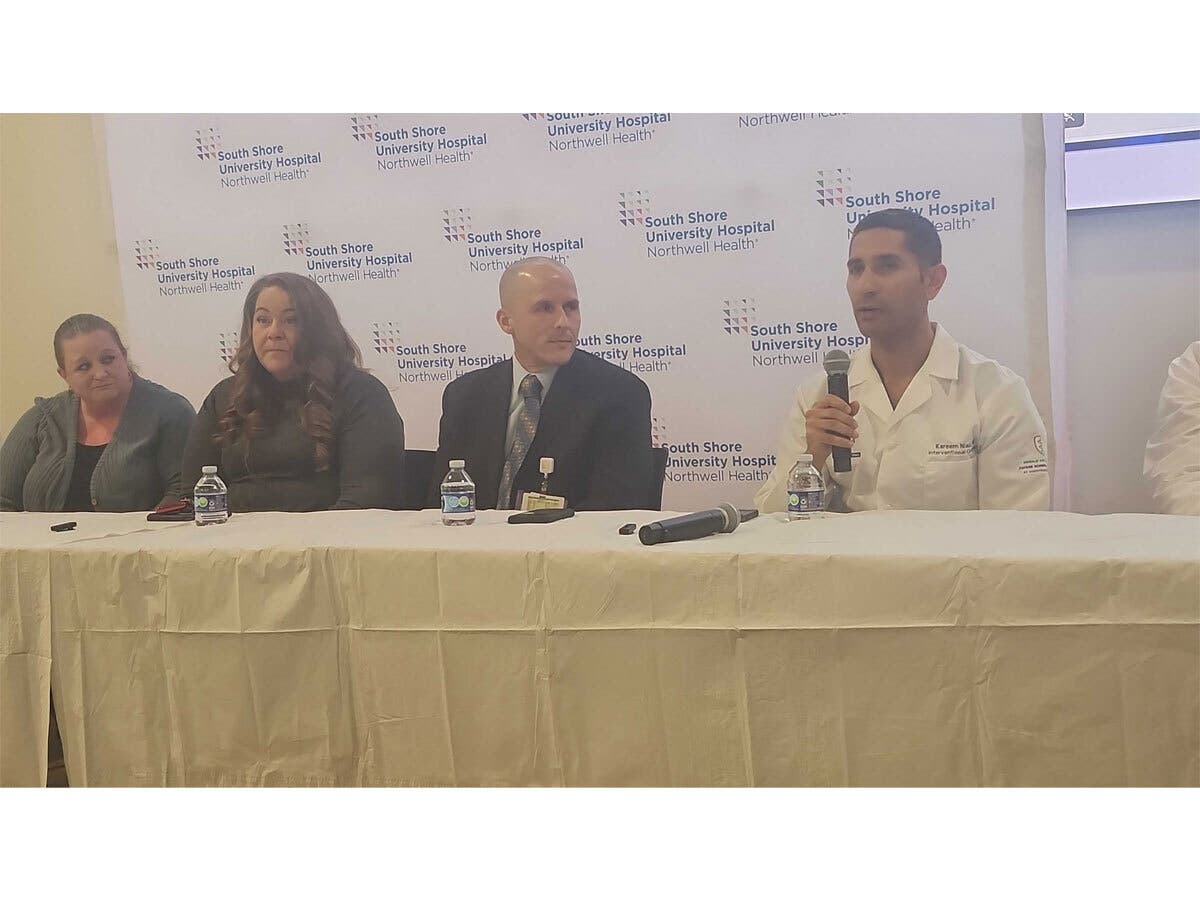
Dr. Karim Niazi, an interventional cardiologist, said Richards’ case highlights both the common and the rare.
“Heart attacks happen every 40 seconds in the United States,” Niazi said. “But cardiac arrest during a heart attack is much more dangerous.”
In Richards’ case, a blocked artery had deprived part of her heart of oxygen, triggering a lethal rhythm known as ventricular fibrillation.
“The ER team did an amazing job shocking her heart back into a normal rhythm,” he said.
Once in the cath lab, physicians identified multiple blockages in her coronary arteries. Using a catheter inserted through an artery, they restored blood flow by placing stents — small metal supports that keep the vessels open.
“When we opened the artery, she immediately felt better, and her EKG improved,” Niazi said.
Her condition stabilized, and she was transferred for further care.
“This case really shows that it takes many people to save a life,” he said. “From EMS to the ER to the cath lab and ICU — it’s a team effort.”
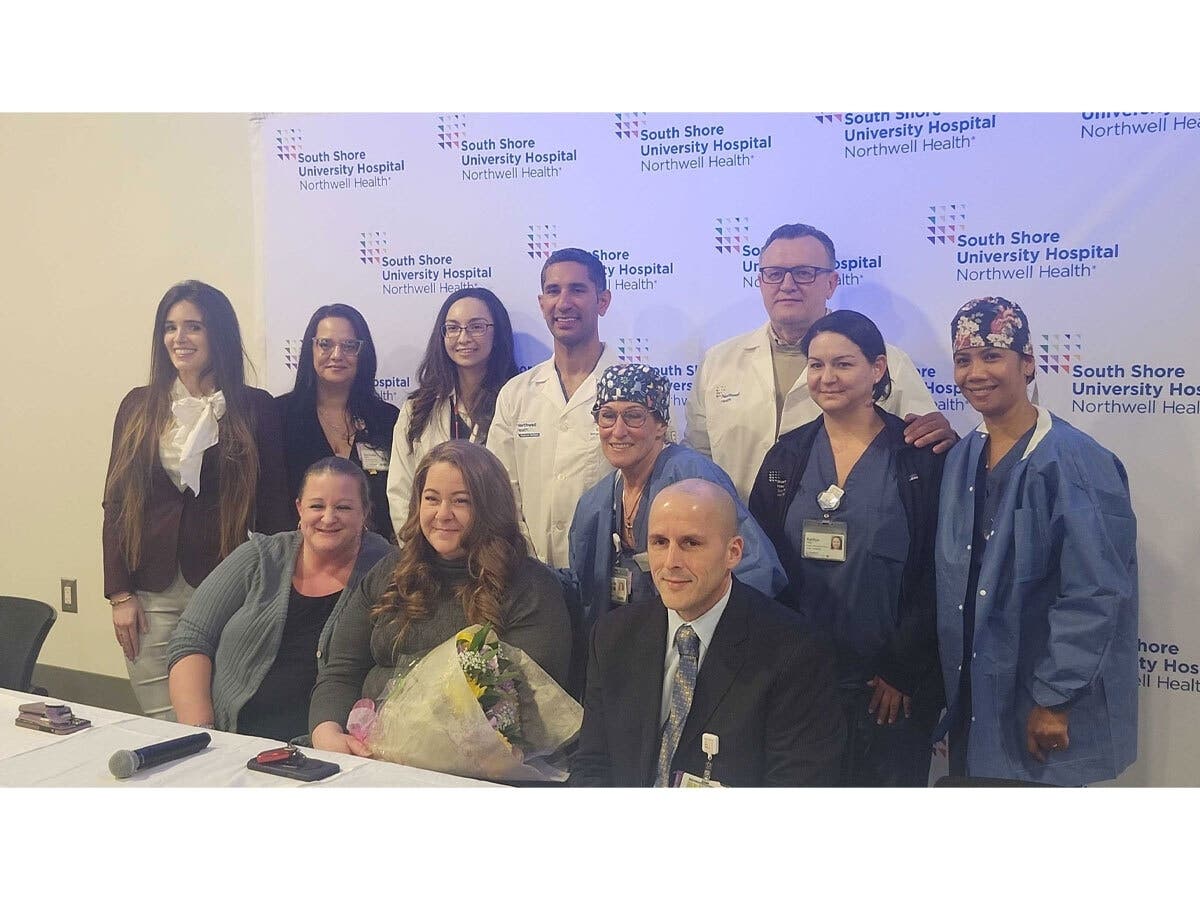
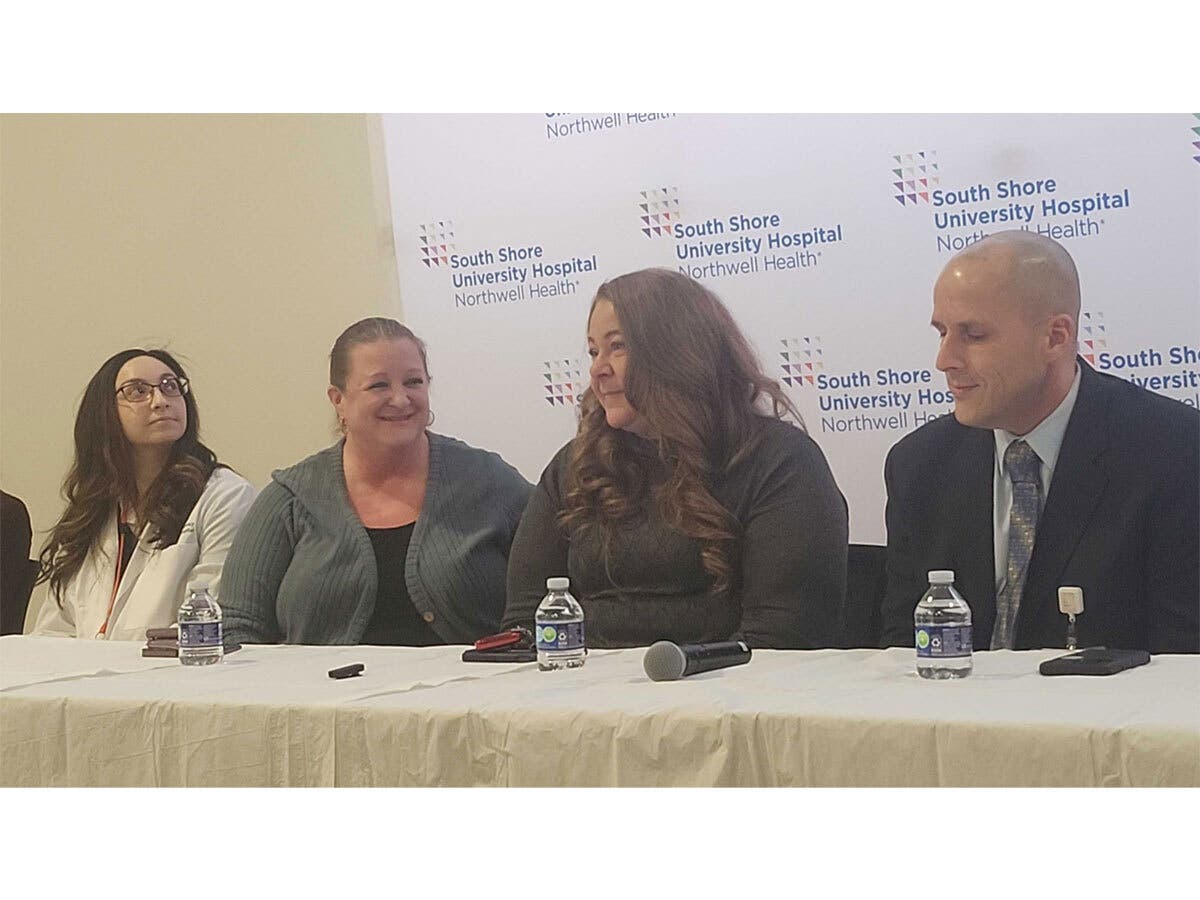
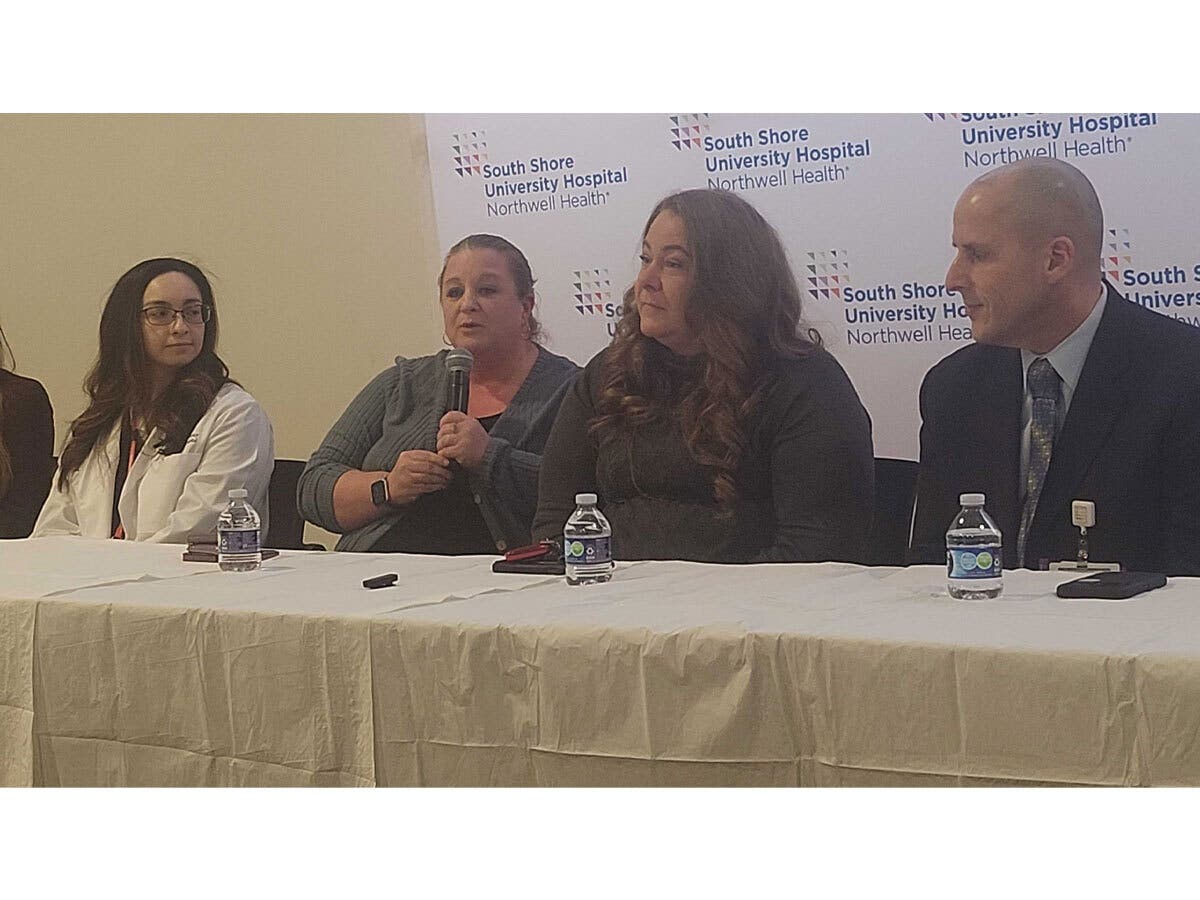
Months later, Richards returned to South Shore University Hospital — not as a patient, but as a survivor.
She reunited with the doctors, nurses and staff who saved her life during the hospital’s first “Thank a Lifesaver” event, part of a Northwell Health initiative that began at Huntington Hospital. The program allows patients to reconnect with the care teams they may never have seen again.
“In healthcare, we don’t always get to see the outcome,” said Dr. Jennifer Ashley Goebel, an emergency medicine physician who helped organize the event. “Today, we do.”
Standing before the team, Richards reflected on the night that nearly took her life.
“If one person wasn’t there that night, the outcome could have been different,” she said. “I never thought I’d see you again — and now I’m here.”
After her recovery, Richards realized her heart attack happened on Sept. 26 — the same date her mother had died of a heart attack 29 years earlier.
“It felt surreal,” she said.
A veteran who served in Iraq, Richards said she has long believed someone was watching over her.
“For it to happen on the night of her passing — you can’t help but feel like she was looking out for me,” she said.
Richards now shares her story with a sense of urgency, particularly for women who may dismiss symptoms or second-guess themselves.
“Listen to your body,” she said. “If something feels off, go. I probably should’ve called an ambulance. I could have died behind the wheel.”
Her experience also reshaped how she understands the warning signs.
“I was in pain everywhere — chest, back, jaw, shoulder — it was just radiating,” she said.
Even in the midst of cardiac arrest, fragments of the experience remain vivid.
“I remember grabbing someone’s arm,” she said. “I remember saying, ‘I’m leaving again.’ It felt like I was fading.”
For Richards’ family, the reunion was emotional.
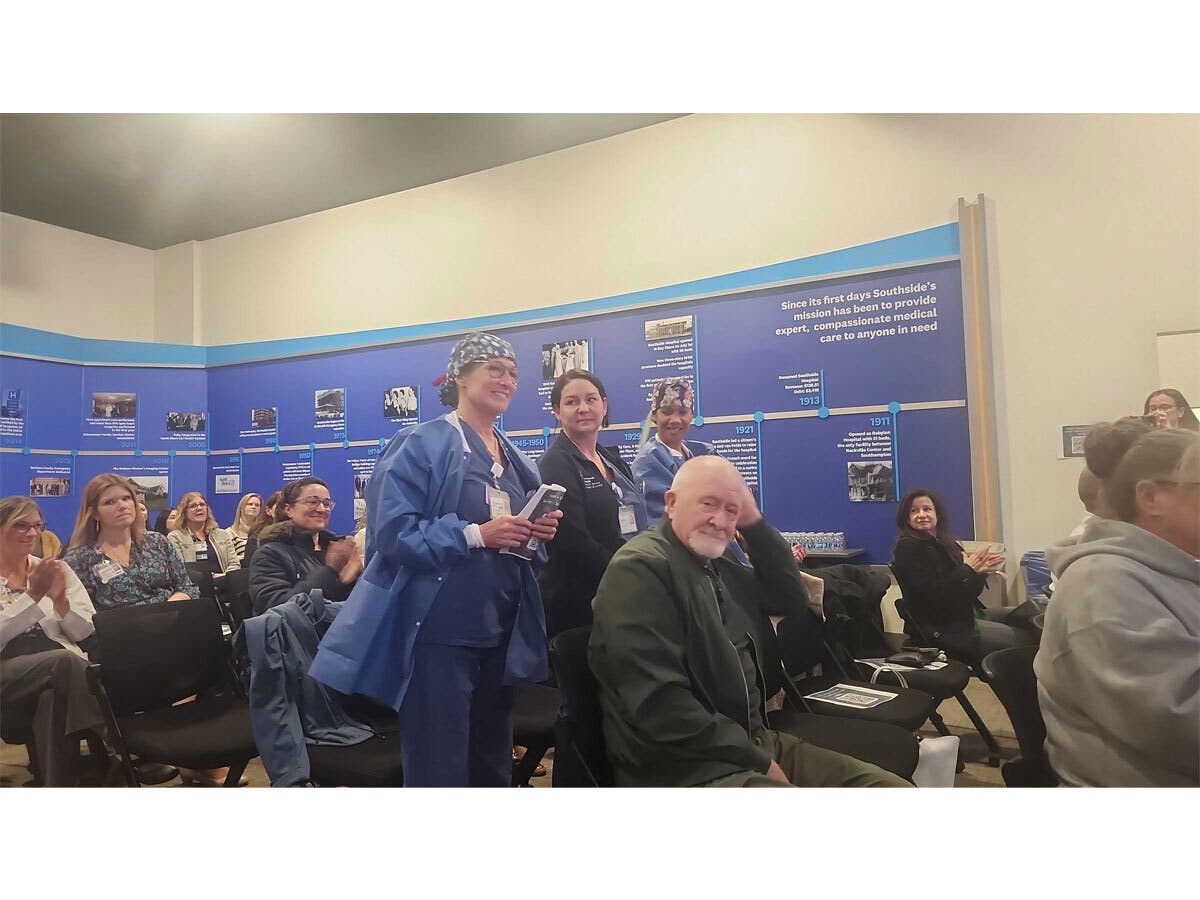
Her sister Kim described her as resilient — someone who has endured military service, cancer, and now a near-fatal heart attack.
“We are so thankful she’s still here because of you,” she told the care team.
Hospital leaders said the event serves as a reminder of the human impact behind clinical work.
“Moments like this remind us why we do what we do,” said David Siebel, the hospital’s director of experience.
For Richards, the meaning is simpler.
She is alive.
And for the first time since that night, she was able to stand in the same room with the people who made that possible.
“Thank you from the bottom of my heart,” she said. “I love you all.”
Get more local news delivered straight to your inbox. Sign up for free Patch newsletters and alerts.