Community Corner
A Walk of Pomp and Circumstance
A Bed-Stuy newcomer takes a walking tour of the neighborhood


Before I first moved to Bed-Stuy eight months ago, I had heard all the scary stories and preconceptions like everyone else outside of the neighborhood.
I was pelted with tales of the dicey sections, the bad times in the 1980s and the dubious honor of living in the old stomping grounds of hip-hop moguls Biggie Smalls and Jay-Z.
In the end, I didn’t have much of a choice: I moved here and made the best of it, by taking a passive-aggressive approach -- not even considering it "my" neighborhood, but rather, a place I came to every day to crash and eat.
Find out what's happening in Bed-Stuyfor free with the latest updates from Patch.
I didn’t want to get to know the place, because I felt I was unfairly placed here, like a child who deals with a parent re-marrying.
Then a week ago, I was told about a walking tour of Bed-Stuy called Morris Hill and Sparrow. It sounded interesting, although I didn’t really understand what there was to see.
Bed-Stuy had always felt like the Bermuda Triangle of West Brooklyn, in the middle of all of the higher-profile, real estate-competitive neighborhoods like Williamsburg, Park Slope, Fort Greene and Carroll Gardens. But offering little much for itself.
It was a hot and muggy day when I rode my skateboard up Nostrand Avenue to the Girls High School on Macon Street. I didn’t really expect much, and it didn’t help when I found the tour group standing on the front steps of the old school: two tour guides and one English-speaking local, that’s it.
Find out what's happening in Bed-Stuyfor free with the latest updates from Patch.
One bottle of water and a few minutes of awkward chit-chat about the diminutive size of the tour group, the chipper tour guides Suzanne Spellen and Morgan Munsey set us out on our journey.
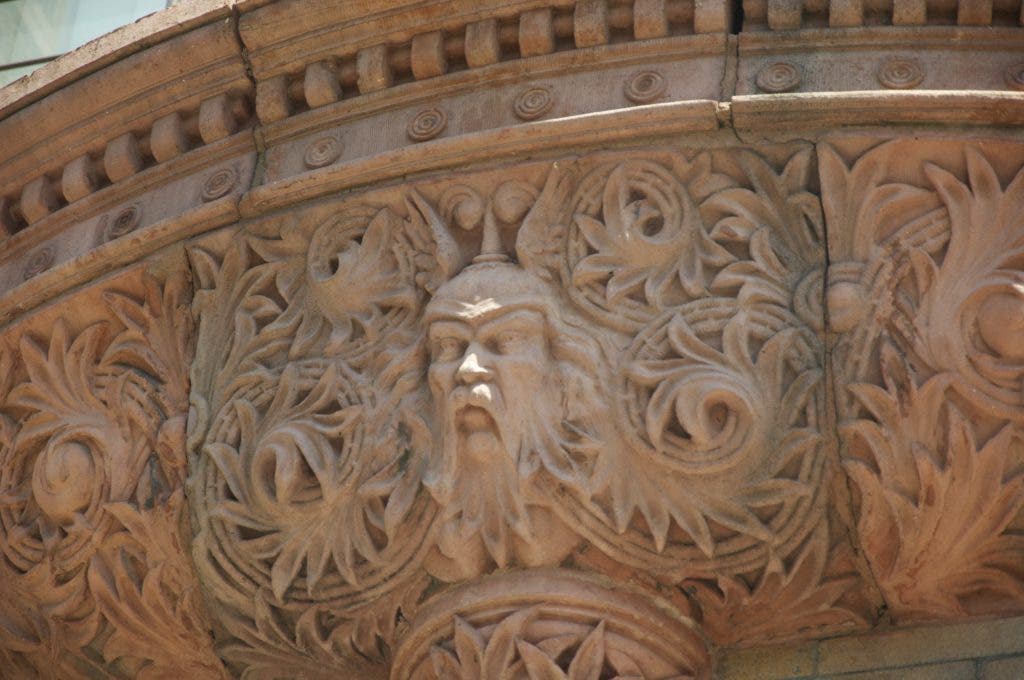
I ended up walking the entire tour with my head titled back, as it was a museum-like exhibition of 19th Century rooftop architecture. For the most part, the guides highlighted the greatest works of Brooklyn’s finest architects and frat-boy socialites Montrose W. Morris and William Reynolds and how they once made Bed-Stuy a high-end neighborhood for the upper-middle class with gorgeous brown-stones buildings and prestigious public schools.
However, it wasn’t just about stepping into a time portal of the 18th and 19th Century version of Bed-Stuy and reflecting on the urbanization of the once-prosperous Dutch colony streets during the Revolutionary War. It also exposed us to the old shooting locations of Spike Lee’s films like ‘Crooklyn’ and the hallways where Norman Mailer, Betty
Smith and William Levitt carried their lunch pales to class.
Not only was it a cultural discourse on the transformation of the neighborhood over the past 100 years, it even felt like an architecture 101 course as Munsey and Spellen lectured us on the different stylings of brownstones and the hordes of big-name architects who created the still beautiful streets of Hancock and MacDonough.
After the tour ended, I started noticing more of the grand arches, French carvings in the brown stones and especially the small faces of gloomy vikings peering out onto the disheveled concrete below. I finally felt like I knew a story about Bed-Stuy other than the clichés of guns, drugs and hard knocks I had been spoon fed over the years.
Since the tour, less do I get stuck on the repetition of barber shops and shapeless bodegas, and now more do I gaze out into at the empty lot that once housed the great Montrose W. Morris and his massive ego on Hancock Street and Marcy Avenue.
It should’ve seemed obvious that you would appreciate things once you learn their beginnings, their struggles, history and transformation. But it felt necessary to touch and smell the history of Bed-Stuy to get the real story.
And I’m glad I did.