Health & Fitness
Smell Flowers, Not Smoke
This piece is co-authored by Rachelle Rochelle and Tracey Capers.
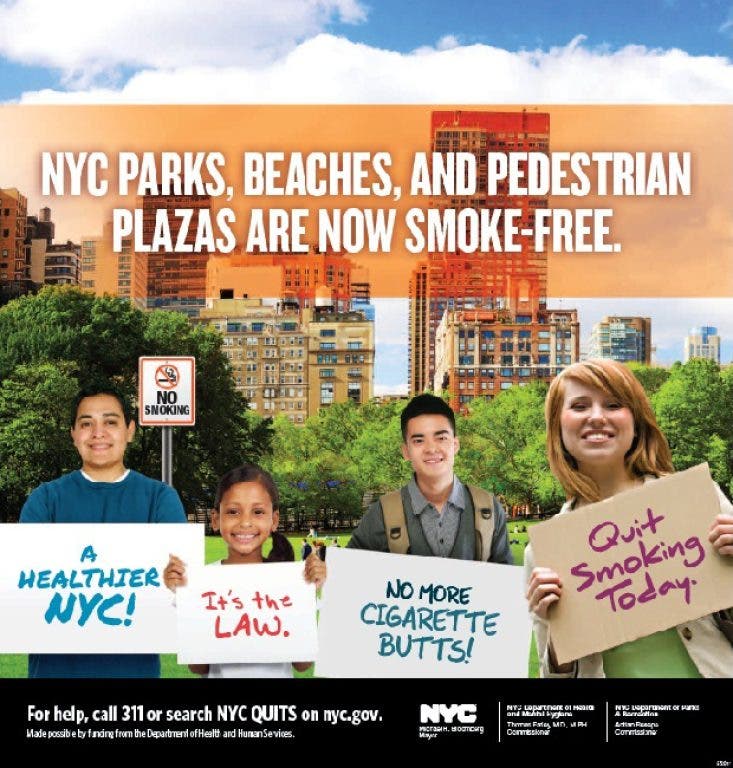
The Brooklyn Smoke-Free Partnership and Bedford Stuyvesant Restoration Corporation come together to celebrate the first anniversary of NYC’s smoke-free parks and beaches — you can breathe deeply this summer Brooklyn!
In all of our neighborhoods, whether you go for a jog in the park, or build a sandcastle with your child on the beach, you can breathe deeply, New York, and enjoy the smell of flowers, or fresh air — not cigarette smoke. One year ago New York City passed historic policy to make all of our city parks and beaches smoke-free.
On this first anniversary, the Brooklyn Smoke-Free Partnership is pleased to join forces with the Bedford Stuyvesant Restoration Corporation as a part of a citywide effort to promote smoke-free environments around our borough.
Find out what's happening in Bed-Stuyfor free with the latest updates from Patch.
The facts are indisputable and quite alarming! Tobacco kills more New Yorkers each year than AIDS, drugs, homicide and suicide combined. Secondhand smoke is a known Class A carcinogen. Even brief exposure to secondhand smoke can lead to more frequent asthma attacks in asthmatic children.
Tobacco smoke contains at least 172 toxic substances, including three regulated outdoor air pollutants, 33 hazardous air pollutants, 47 chemicals restricted as hazardous waste and 67 known human or animal carcinogens.
Find out what's happening in Bed-Stuyfor free with the latest updates from Patch.
Some may argue that the health risks associated with secondhand smoke outdoors is small. But the truth is that even those exposed to low levels of secondhand smoke can have the same type of lung abnormalities seen in smokers and are more likely to have reduced lung function and respiratory symptoms after exposure.
Also, let’s not forget the impact smoking has on our environment; cigarette butts are toxic, slow to decompose, costly to manage and growing in volume. 75 percent of the litter found on NYC beaches is cigarette butts.
Smoke-free environments help change behavior and the social acceptability of smoking. They challenge the perception that tobacco use is just normal adult behavior. This in turn can positively influence youth and prevent them from using tobacco.
Do you remember when we used to breathe smoke in offices, restaurants, workplaces? Today, this seems unimaginable to most New Yorkers! Everyone has the right to breathe clean air where they live, work, and play. So, while we applaud policy makers for standing up for the health of all New Yorkers on this issue, smoking is still the leading cause of preventable death.
In Brooklyn, a lot of work has been done to reduce smoking rates — we are now just below the city’s smoking rate, at 13.9% — leaving 249,000 Brooklyn residents still smoking.
While we are proud of our success — we know more work still needs to be done. This spring the Brooklyn Smoke-Free Partnership (BKSFP) and Bedford Stuyvesant Restoration Corporation (BSRC) have joined forces to educate and help reduce tobacco disparities throughout Brooklyn.
The BKSFP is a health advocacy group that increases awareness of tobacco control issues among community members and policy makers throughout the borough. BSRC is the first community development corporation in the country, and was selected to be the lead in the borough for the Partnership for a Healthier New York City.
This Partnership will support efforts to bring about environmental and grassroots changes to promote a healthier lifestyle throughout Brooklyn.
Smoke-free parks and beaches exemplify an environment of health, safety and fun. As summer approaches, let’s take time out to smell the flowers not the smoke in Brooklyn!
Rachelle Rochelle, Brooklyn Smoke-Free Partnership
Tracey Capers, Bedford Stuyvesant Restoration Corporation