Community Corner
Brooklynites Missed 80M Meals As City Hunger Rates Spike: Study
Brooklyn saw more than 80 million meals missed in 2016, data shows. That's about twice the number in Queens, The Bronx or Manhattan.


BROOKLYN, NEW YORK— Hunger is on the rise in New York City and in Brooklyn especially, where locals missed more than 80 million meals in one year, a new study found.
A Food Bank for New York analysis of New York City's hunger statistics shows that more New Yorkers rely on city food emergency services that resources stretched thin as the cost of groceries rose steadily across the five boroughs.
"Point blank and simple, it's rent," said Food Bank president Margarette Purvis. "More and more working people, educated people are finding themselves in a place of food insecurity.
Find out what's happening in Bed-Stuyfor free with the latest updates from Patch.
"Brooklynites are being driven into poverty because of higher rents."
Brooklyn saw more meals missed than any other borough — 80,885,000 in 2016 — and almost twice as many as the runner up, Queens, which saw 42 million missed meals, the Food Bank's report found.
Find out what's happening in Bed-Stuyfor free with the latest updates from Patch.
And more than 20 percent of Brooklynites said they rely on the Supplemental Nutrition Assistance Program (the system that replaced food stamps) to feed their families. Brooklyn has the second highest rate of SNAP-users in the city. The Bronx came in first with almost one-third of residents relying on the food assistance program.
Food insecurity is especially problematic in Williamsburg, Greenpoint, Bed-Stuy, Brownsville, East New York, Kensington and Borough Park, where about 44 percent of Brooklynites rely on SNAP, according to the report.
But Purvis noted that food insecurity is growing especially in Canarsie, where food emergency workers struggle to bring basic resources and many people who qualify for assistance don't have access to it.
"If we're struggling to get you apples, we are definitely struggling to get you SNAP," Purvis said. "People need to be aware of where these pockets of need happen to be. When we find those pockets, they are deep."
This spike in hunger has put an increased burden on local soup kitchens and food pantries, 80 percent of which report seeing longer lines with more senior citizens and children since the U.S. Congress effectively cut SNAP funding in 2013, the report found.
More than half of pantries reported running out of food, and almost a third reported turning people away because they ran out of food and 66 percent reported new members.
"That's always scary," Purvis said. "That many people falling into that position is a big deal."
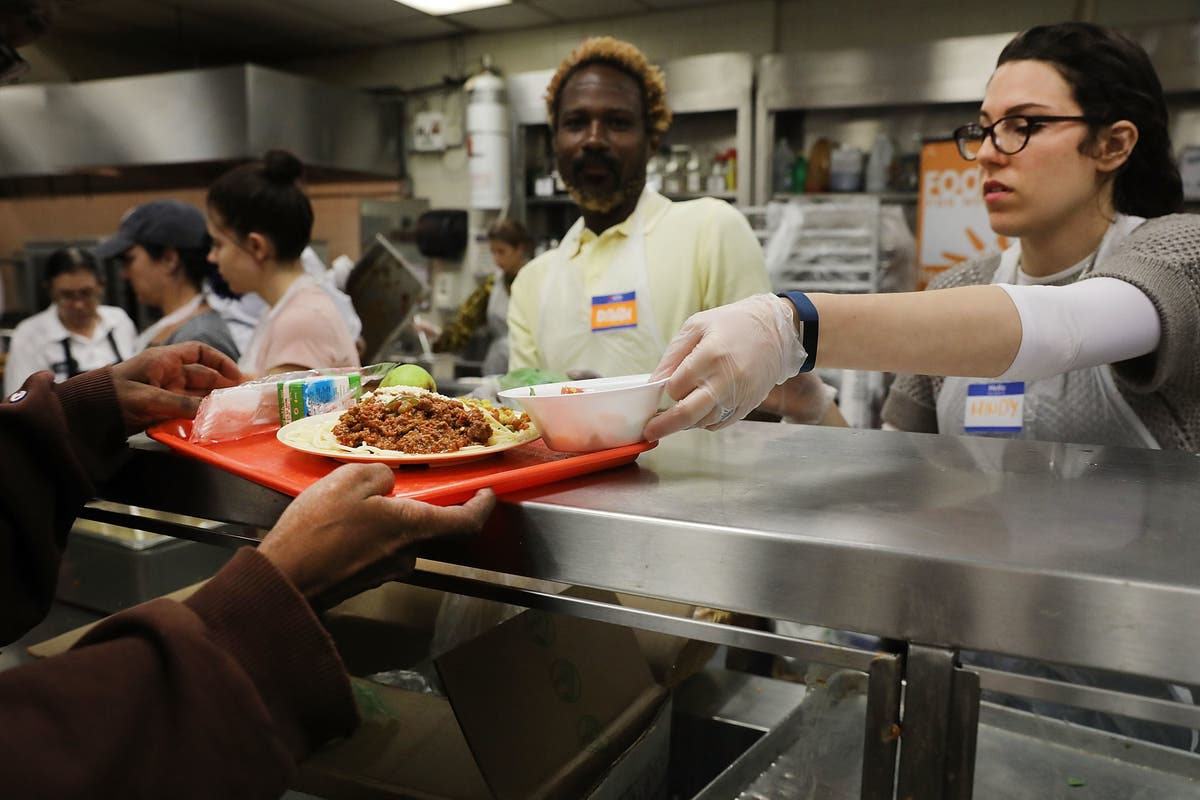
Volunteers serve an evening meal at the Food Bank For New York City community kitchen on May 15, 2017 in New York City. Photo by Spencer Platt/Getty Images)
Get more local news delivered straight to your inbox. Sign up for free Patch newsletters and alerts.