Schools
PCB's Found at P.S. 56
Communities like Bed-Stuy are largely unaware of the effects of PCB contamination


Many schools built in the United States between 1950 and 1978 have insulation material and lighting ballasts that contain polychlorinated biphenyls (PCB), a toxic chemical that has been linked to cancer and known to affect the respiratory and immune system.
PCB was favored for its ability to conduct heat and not explode. However, Congress banned the production of PCB chemicals in 1977 because of its toxicity, and the Environmental Protection Agency (EPA) prohibited the use of the chemical by 1979.
Still, some light fixtures and window caulking installed before the bans currently exist in school buildings.
Find out what's happening in Bed-Stuyfor free with the latest updates from Patch.
The results from recent tests of six New York City schools revealed the presence of exorbitant levels of PCB.
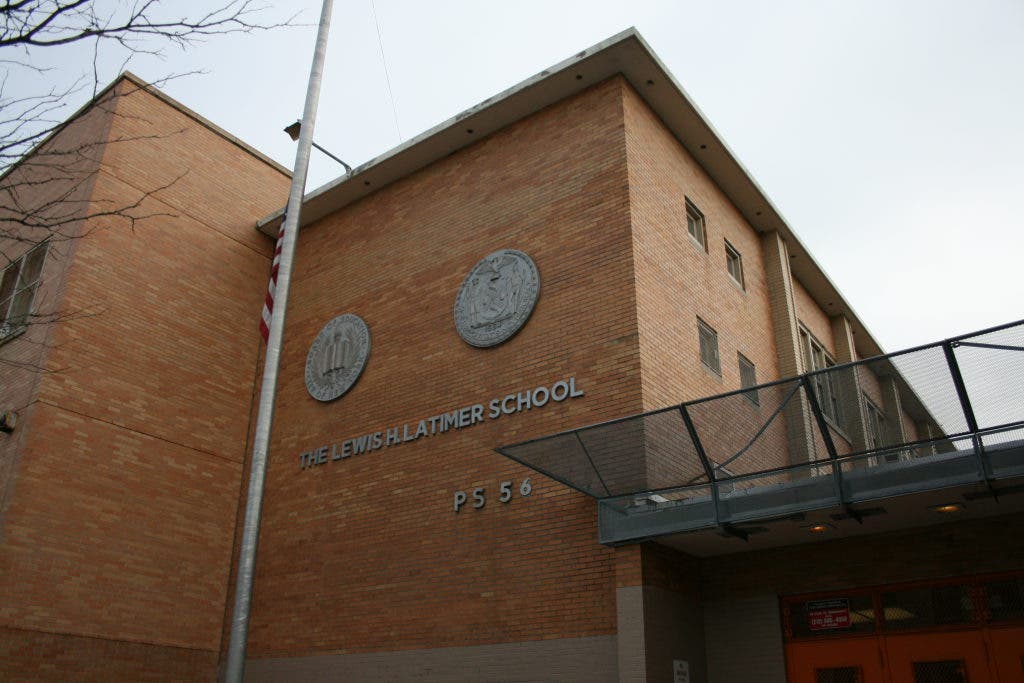
One of the schools tested was P.S. 56 Lewis H. Latimer on Gates Avenue in Bed-Stuy. The tests, conducted in December, further support results from a pilot study done over the summer by the city, in collaboration with the EPA.
Find out what's happening in Bed-Stuyfor free with the latest updates from Patch.
They looked at three others schools and results showed similar PCB leaks in window caulking and electrical components.
P.S. 56 Lewis H. Latimer came in at 287,000 parts per million (ppm), second to P.S. 332 in Brownsville, which had 325,000 ppm. The lowest count was at P.S. 16 in Staten Island with 25,960 ppm. The legal limit, under the Toxic Substances Control Act, is 50 ppm. Principal Deborah Clark-Johnson of P.S. 56 Lewis H. Latimer was not available for comment.
The New York City Department of Education has been slow to react to the pilot study results and reluctant to facilitate change because of the cost associated with replacing the light fixtures, according to Mandela Jones, spokesperson for councilman Al Vann.
The price tag is $1 billion to replace light fixtures in about 800 schools.
Furthermore, communities like Bed-Stuy are still largely unaware of the effects of PCB contamination, said Jones.
But all of that is about to change.
“The DOE’s refusal to immediately and seriously address the potentially high PCB levels within many public school buildings is unacceptable,” said councilman Al Vann in an email. “My colleagues in government and I will continue to push for the testing and remediation of all potentially affected schools and for the DOE to comply with federal EPA rules.”
With the help of New York Lawyers for the Public Interest (NYLPI) and New York Communities for Change (NYCC), parents and elected officials are rallying to increase awareness in local communities and pressure the city to tests more schools and change light fixtures.
“A lot of parents still don’t know that this is an issue,” said Celia Green, a parent leader at NYCC whose son is in the fifth grade at P.S. 56. “Parents need to be informed and if you know what it is, you need to tell another parent.”
The tests, which evaluated soil and caulk samples from six schools, were a concerted effort of NYLPI and NYCC. Prompted by the city’s slow reaction on the issue, along with the urgency to evaluate more schools, NYCC gathered test samples while NYLPI funded the tests.
“The results underscore the urgency of the parents’ demands,” said Miranda Massie, attorney at NYLPI. “The health risks posed by PCB levels like those the parents uncovered are serious and the city must address them.”
The EPA released an 11-page guidance manual in December to help school administrators and maintenance personnel safely remove PCB-laden light ballasts.
“As we continue to learn more about the potential risks of PCBs in older buildings, EPA will work closely with schools and local officials to ensure the safety of students and teachers,” said EPA administrator Lisa P. Jackson in a press release.