Arts & Entertainment
Exploring the Limits of U.S. Presidential Power
Noted authors present historical context to this dynamic and relevant topic in three upcoming lectures at John Jay Homestead State Historic Site.
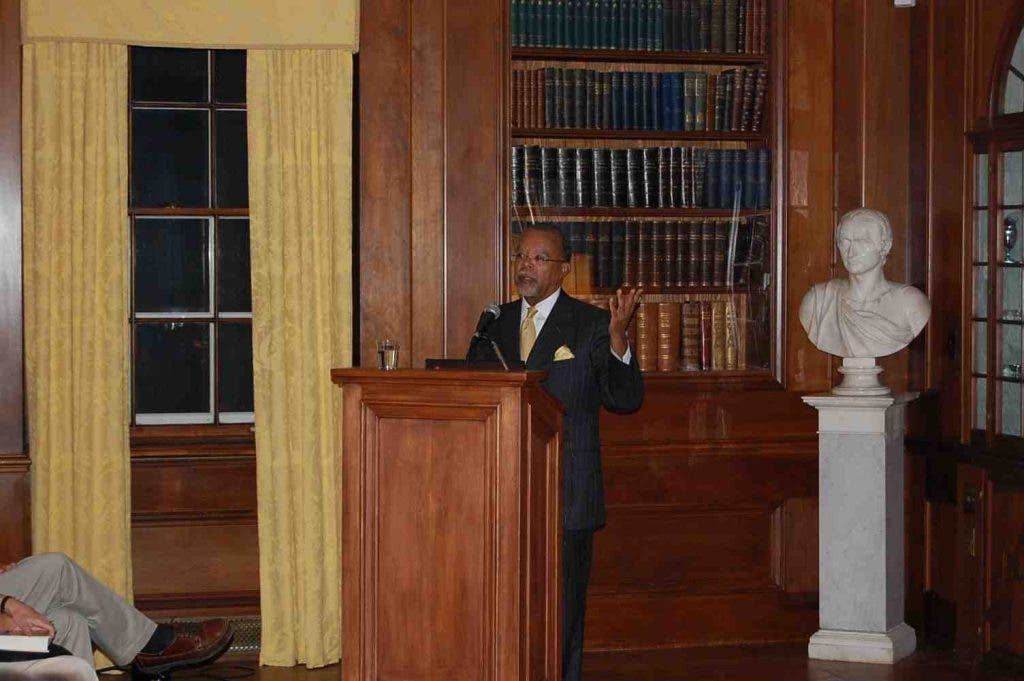


The debate rages daily in the media: Where should true power and decision-making reside in our national government? Is Congress the ultimate arbiter of tough choices? Is it the Supreme Court? The President?
Our Founding Fathers actively argued these same questions in the early years of our young government—a debate that, even today, has no succinct resolution.
Just in time for President’s Day, the 2011 John Jay Lecture Series, “Presidential Power and its Limits,” examines this subject in three upcoming presentations by noted authors. Sponsored by the Scholars Committee of Friends of John Jay Homestead in cooperation with John Jay State Historic Site, the lectures are open to the public.
Find out what's happening in Bedford-Katonahfor free with the latest updates from Patch.
American Caesars: Lives of the Presidents from Franklin D. Roosevelt to George W. Bush
Well-known British historian Nigel Hamilton presents the opening lecture in the series, Thursday, February 17 at 7:00 p.m., at . His current book, American Caesars: Lives of the Presidents from Franklin D. Roosevelt to George W. Bush, uses the template of Suetonius’s Twelve Caesars to examine twelve postwar American presidents.
Find out what's happening in Bedford-Katonahfor free with the latest updates from Patch.
“This fascinating book brings a decidedly global perspective to the presidential power question,” said Friends of John Jay Homestead President Melissa Vail. “We always think of politics as local, but viewing our government from abroad is a different way to look at presidential power,” she noted. “This British author examines America’s rise to empire from an international point of view.
“But it’s not all erudite musings about governing,” she said. “The book is very gossipy about these men and includes a deep focus on the moral consistency of each president’s foreign affairs and handling of the empire question. The author is also an opinionated and funny guy, so this promises to be a lively and provocative evening,” she added.
Andrew Johnson
On Friday, March 4 at 6:30 p.m. noted author and historian Annette Gordon Reed will return to John Jay Homestead to discuss her latest work, a biography of Andrew Johnson. “Andrew Johnson was an accidental president,” Vail explained. “He had only been vice president for six weeks and he was the least educated president in our history.”
Johnson is famous for having been impeached and for coming very close to being convicted and removed from office, she said.
“His tenure was extremely tumultuous,” Vail continued. “He totally abandoned Reconstruction— he believed this was and should stay a country by and for white people. Johnson’s opinion was that bringing rebel states back into the Union was more important than changing the power structure that supported slavery. Some would say, that in certain ways, that dynamic is still playing out today,” Vail said.
For Gordon-Reed, this will be a return to the Homestead’s Lecture Series podium. In April 2009, she discussed her breakthrough work, The Hemingses of Monticello: An American Family, a book which went on to win 16 awards, including the National Book Award and the Pulitzer Prize.
Supreme Power: Franklin Roosevelt v. the Supreme Court
Third up in the series will be Jeff Shesol presenting his book, Supreme Power: Franklin Roosevelt vs. the Supreme Court, examining FDR’s struggle with the Supreme Court to protect the New Deal. “This book explores a topic that is on everyone’s mind in Washington these days, with Constitutional challenges to President Obama’s domestic programs heading toward the Supreme Court,” Vail said.
“All three lectures promise to be fascinating,” said Scholars Committee Robert Saunders. “This year we are presenting a very interesting series on a truly timely topic,” he noted.
Saunders, who also serves as a Friends Trustee, has been active in organizing the series for a number of years. In addition to supporting the series financially, the 24 people on the Friends’ Scholars Committee contribute ideas and suggestions for speakers.
“Our goal is to bring intellectually stimulating writers to our community on subjects that relate to American history— which is, of course, the Friends’ primary topic as stewards of the home of one of our Founding Fathers,” Saunders said.
Vail noted that the current series relates directly to John Jay and the intellectual and political battles of his day. “How much power to give the president; how international treaties should be negotiated and what was the role of the Supreme Court— these were all critical questions in Jay’s time,” Vail said. “For his part, John Jay, as our first Chief Justice, thought the Supreme Court was a giant waste of time. It was John Marshall, the second Chief Justice, who introduced the concept of judicial review.”
How today’s version of this debate will play out in our current government is anyone’s guess. But those who take advantage of this lecture series will have a broad base of knowledge with which to engage in that debate.
The lectures are $15 for Friends’ members, $25 for non-members and free for students. For more information, visit the .