Community Corner
Hudson Valley Now 'Within Range' of Mosquitoes with Zika Virus: CDC
Mosquitoes that can transmit the Zika virus may live in a much larger area than previously thought, including the Hudson Valley.



BY TOM DAVIS
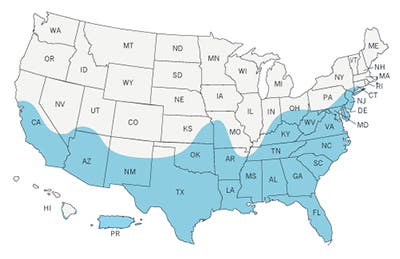
Mosquitoes that can transmit the Zika virus may live in a much larger area than previously thought, extending into the Hudson Valley and to all of Long Island.
The Centers for Disease Control and Prevention has posted new maps of the estimated range of Aedes aegypti mosquitoes on its website, showing that that the southern parts of New York and all of New Jersey could become home to the potentially dangerous insect.
Find out what's happening in Bedford-Katonahfor free with the latest updates from Patch.
The Zika virus has been linked to birth defects, and pregnant women have been identified as a group that's particularly at-risk.
The mosquitoes were once thought to be a threat to only the southern areas of the United States. The maps also show the mosquito's cousin, Aedes albopictus, reaching well into New York and much of New England. The map even shows the mosquito reaching as far north as the lower halves of Vermont and New Hampshire and the southern portion of Maine.
Find out what's happening in Bedford-Katonahfor free with the latest updates from Patch.
The CDC has reported 346 Zika cases in the United States, including 55 in New York–the 2nd highest number of cases in the country, the highest being Florida at 78. There have been no reported cases of Zika transmitted through a mosquito bite, according to the agency.
Many cases involved people coming from people who traveled to Zika-affected countries. Six cases were transmitted sexually, according to CDC statistics.
According to the CDC:
These maps show CDC’s best estimate of the potential range of Aedes aegypti and Aedes albopictus in the United States. These maps include areas where mosquitoes are or have been previously found. Maps are not meant to represent risk for spread of disease. Aedes aegypti mosquitoes are more likely to spread viruses like Zika, dengue, chikungunya and other viruses than other types of mosquitoes such as Aedes albopictus mosquitoes.
Zika-affected countries have included: Colombia, Barbados, Bolivia, Brazil, Colombia, Dominican Republic, Ecuador, El Salvador, French Guiana, Guadeloupe, Guatemala, Guyana, Haiti, Honduras, Martinique, Mexico, Panama, Paraguay, Saint Martin, Suriname, Venezuela and Puerto Rico.
Currently, there is no vaccine to prevent or medicine to treat Zika. The best way to avoid Zika virus infection is to prevent mosquito bites. Four in five people who acquire Zika infection may have no symptoms. Illness from Zika is usually mild and does not require hospitalization.
Pregnant women contracting the virus is a concern due to the virus’ suspected connection to the condition microcephaly, which can cause babies to be born with small heads and damaged brains.
The state offers free advanced testing for Zika virus for pregnant women who have recently travelled to countries affected by the virus outbreak or pregnant women who have had unprotected sex with someone who has traveled to an area with active mosquito-borne transmission of Zika virus.
For mosquitoes to cause a Zika outbreak in the United States, the CDC says all of the following must happen:
- People infected with a virus (like Zika, dengue, or chikungunya) must enter the United States.
- An Aedes aegypti or Aedes albopictus mosquito in the United States bites an infected person during the first week of infection when the virus can be found in the person’s blood.
- The infected mosquito lives long enough for the virus to multiply and for the mosquito to bite another person.
- The cycle continues multiple times to start an outbreak.
Patch staff writer Michael Woyton contribute to this report.
Photo captions: No. 1 (blue) Map for Aedes aegypti; No. 2 (green) Map for Aedes albopictus. Source: CDC website.
Get more local news delivered straight to your inbox. Sign up for free Patch newsletters and alerts.